
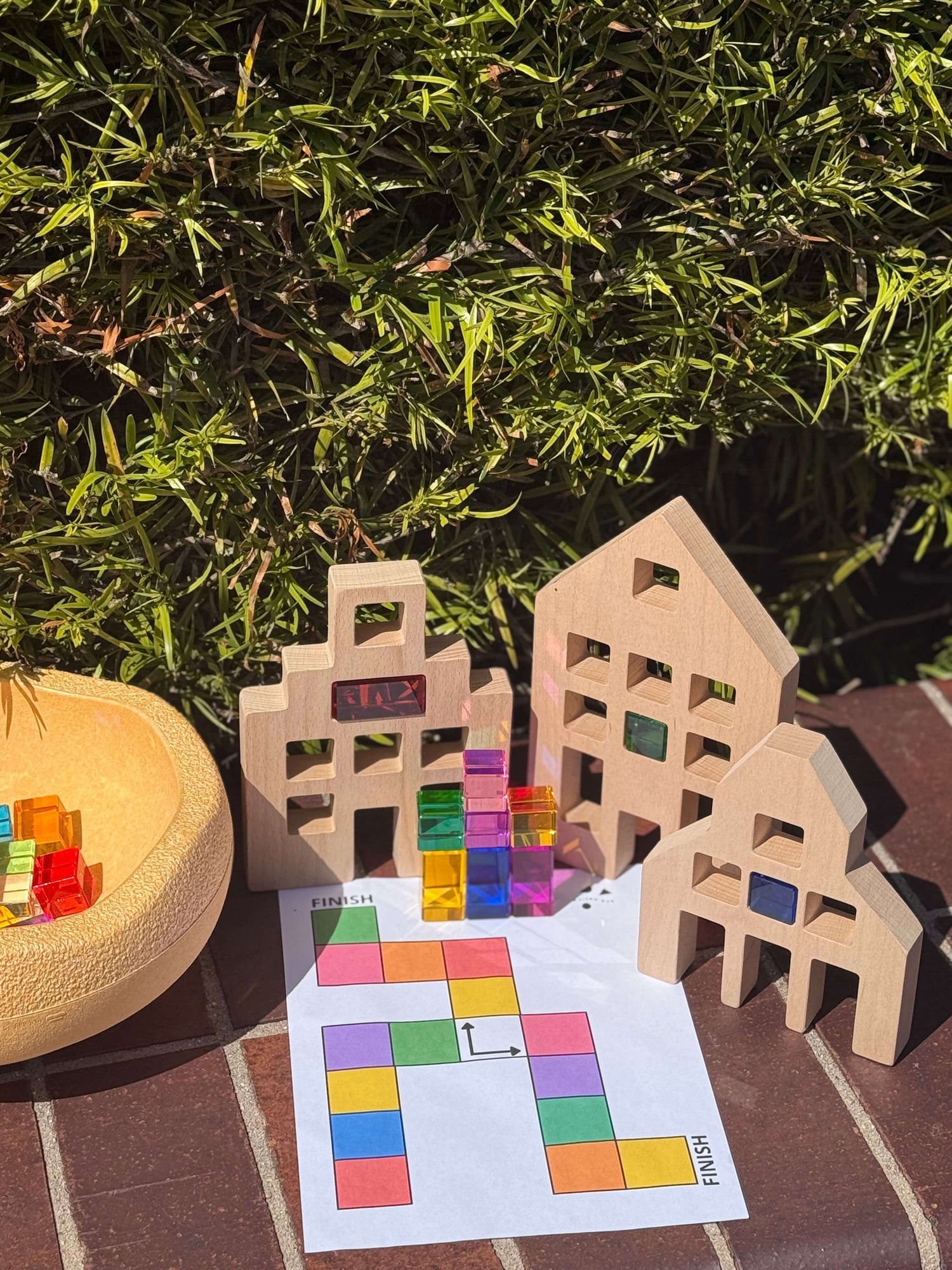
A Simple Board Game Activity For Kids That Teaches Through Play
Board games don’t need to be complicated to be meaningful.
This printable Riley City board game transforms early math and color recognition into something hands-on, visual, and engaging—while still feeling calm and open-ended (no flashing lights, no noise… just play doing its thing).
Whether you choose the color version or the number version, this activity grows with your child and adapts to different stages of learning.
What You’ll Need
- Riley City printable board game (download below)
- A die
- Small player pieces (wooden figures like the ones in our Bergen Block set work perfectly)
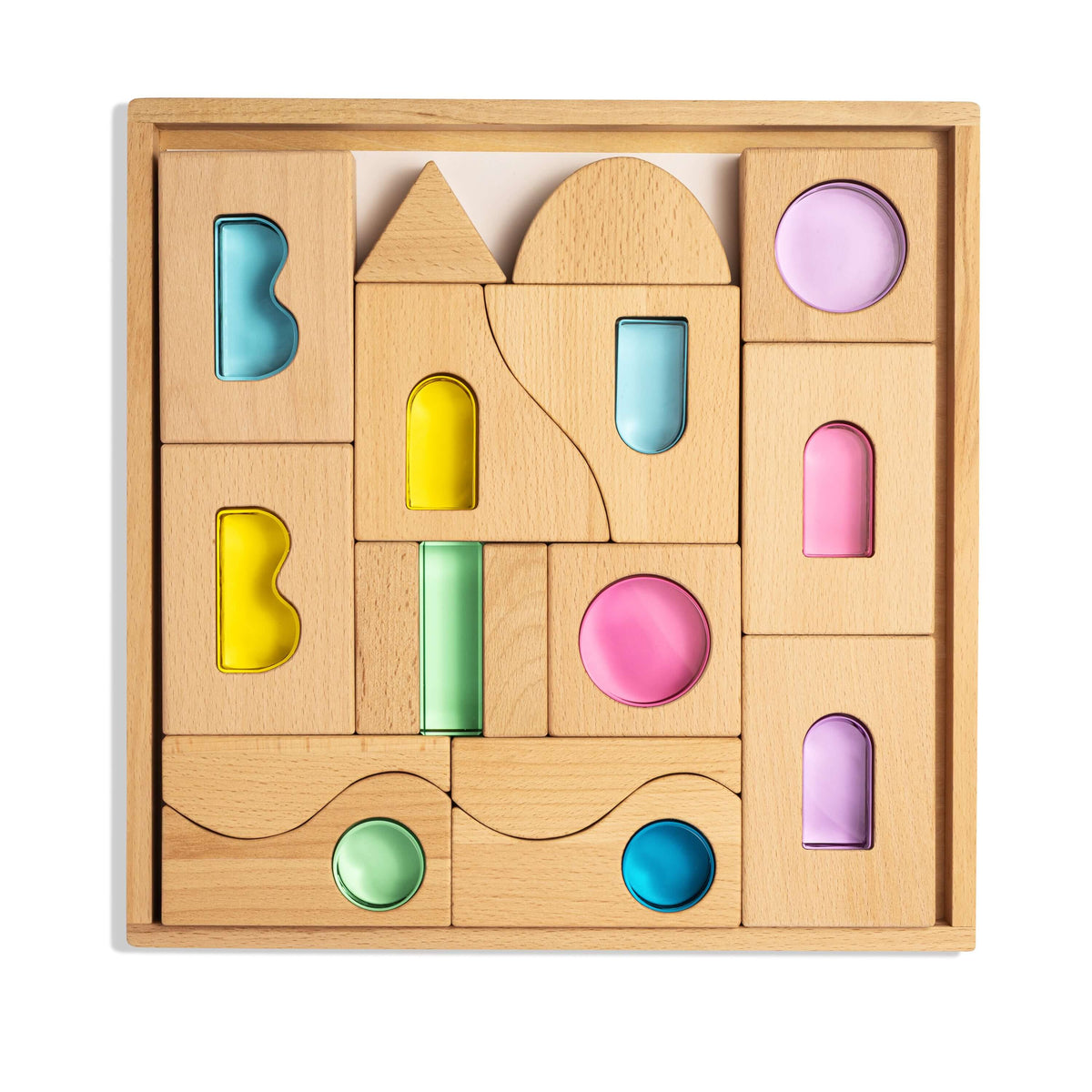
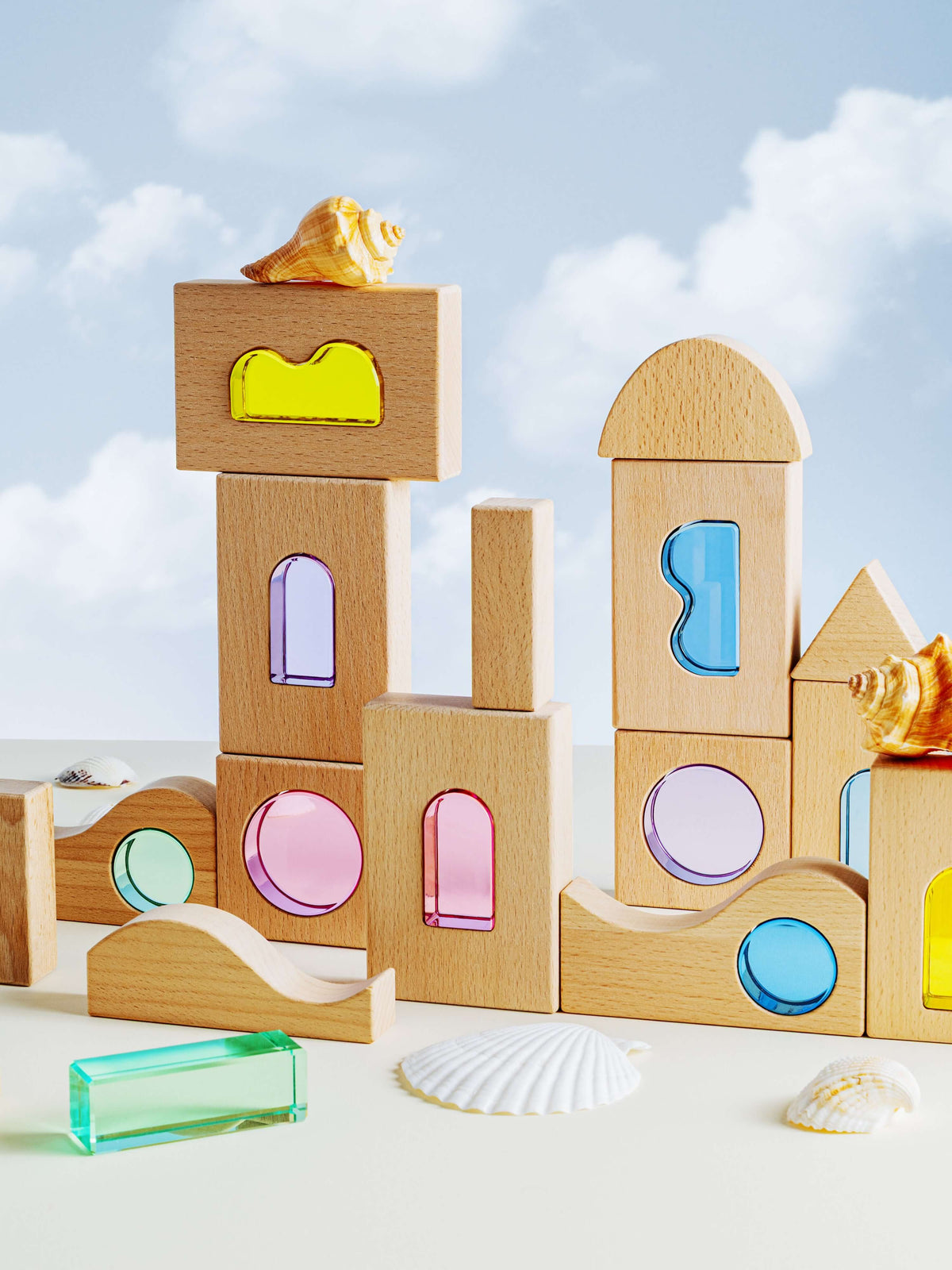
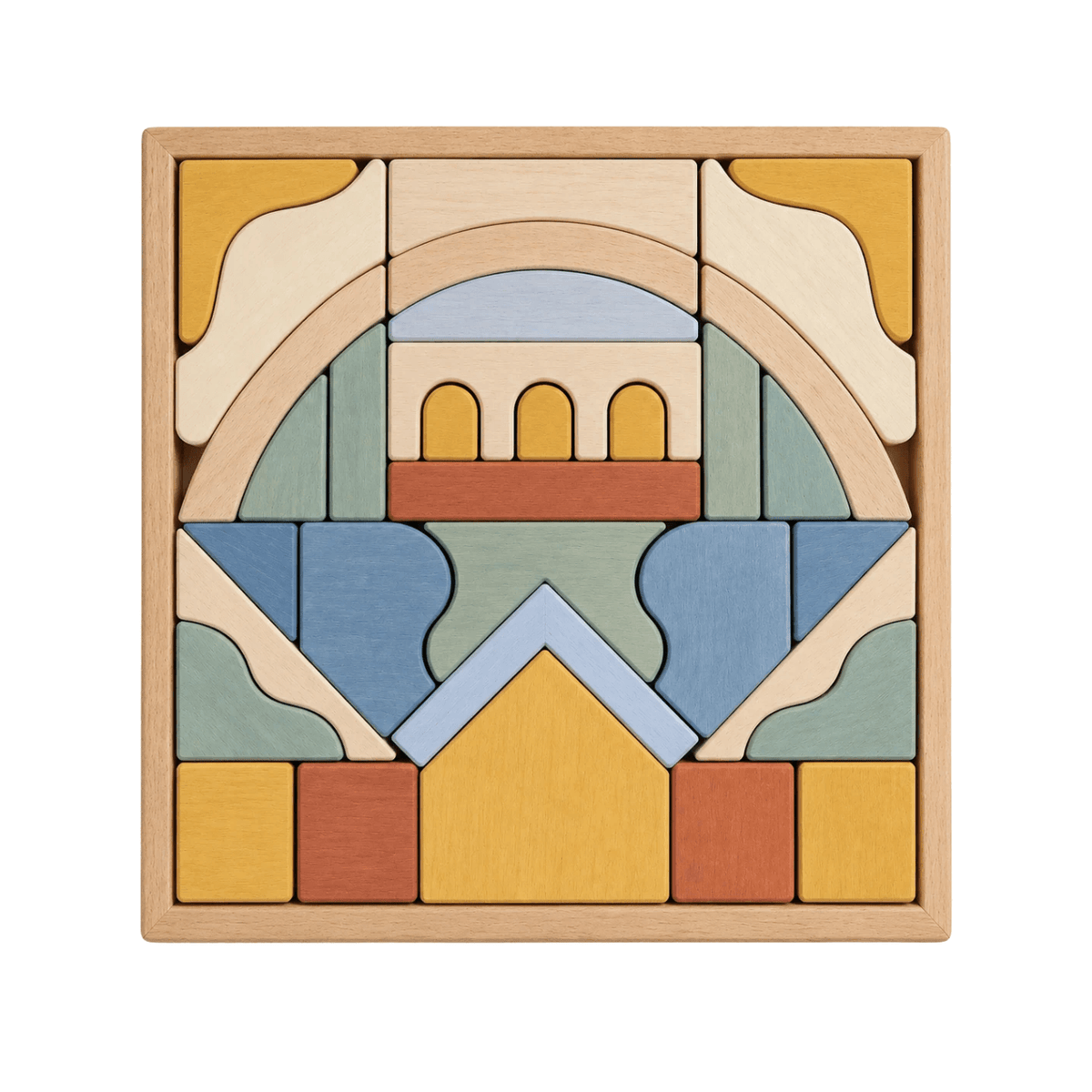
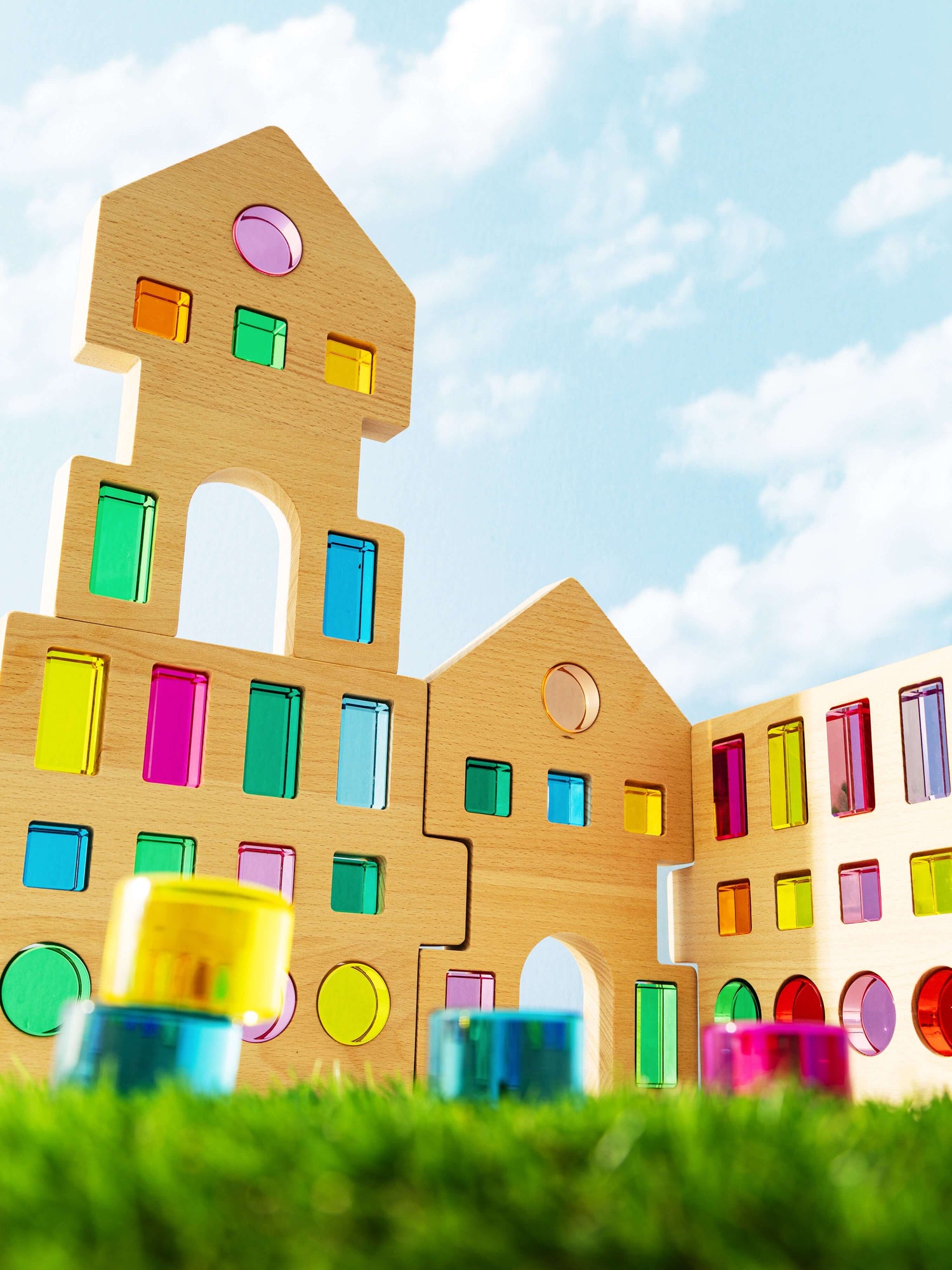
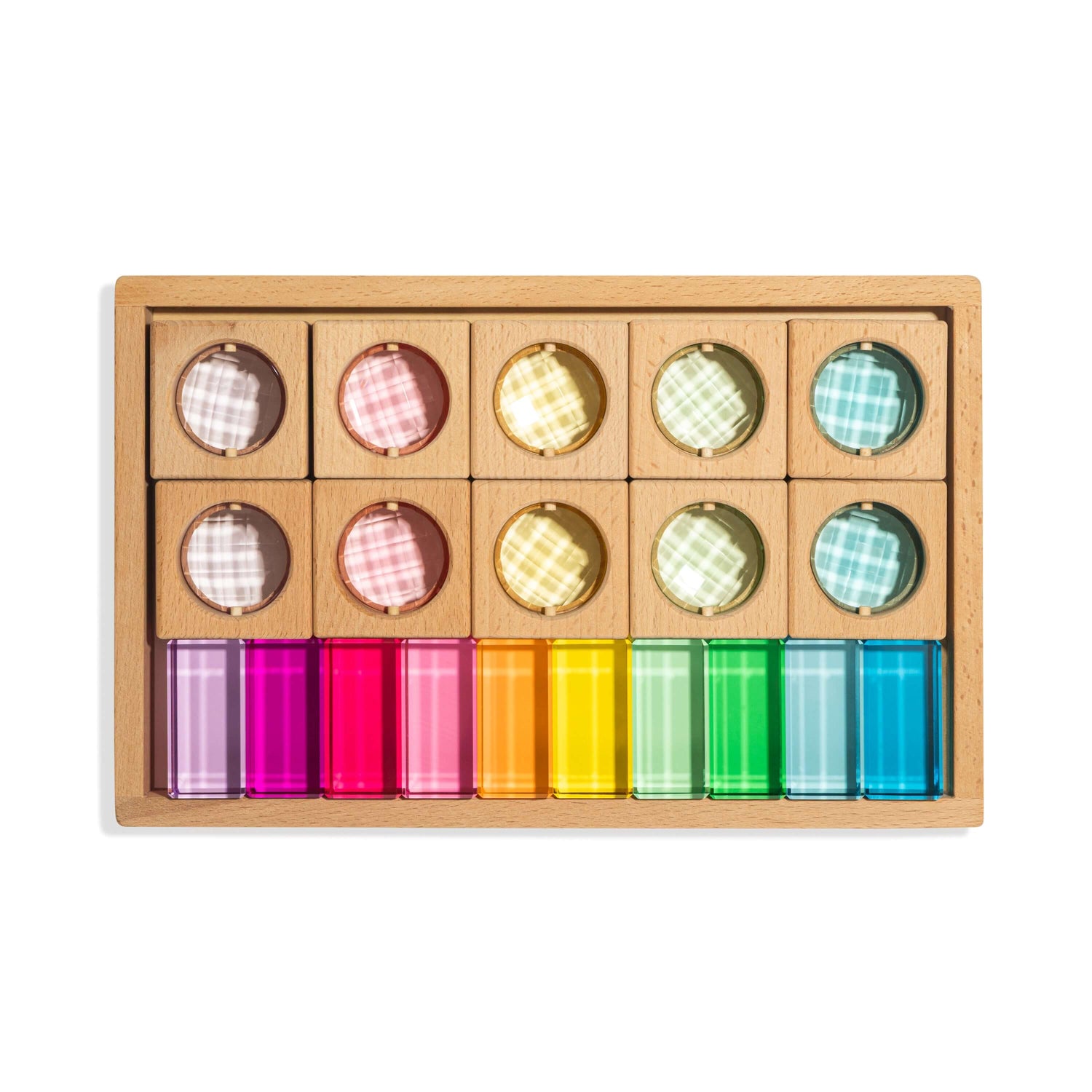
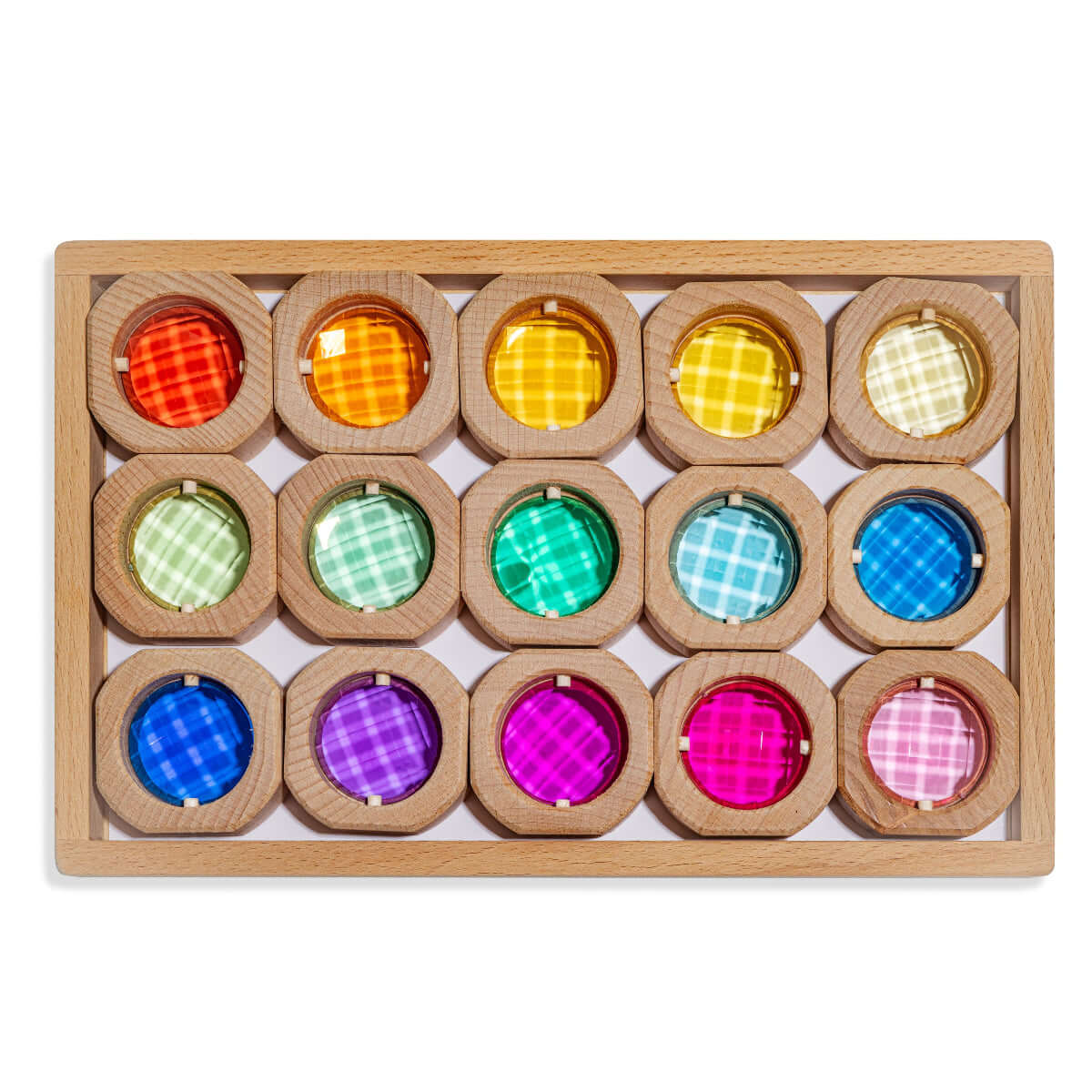
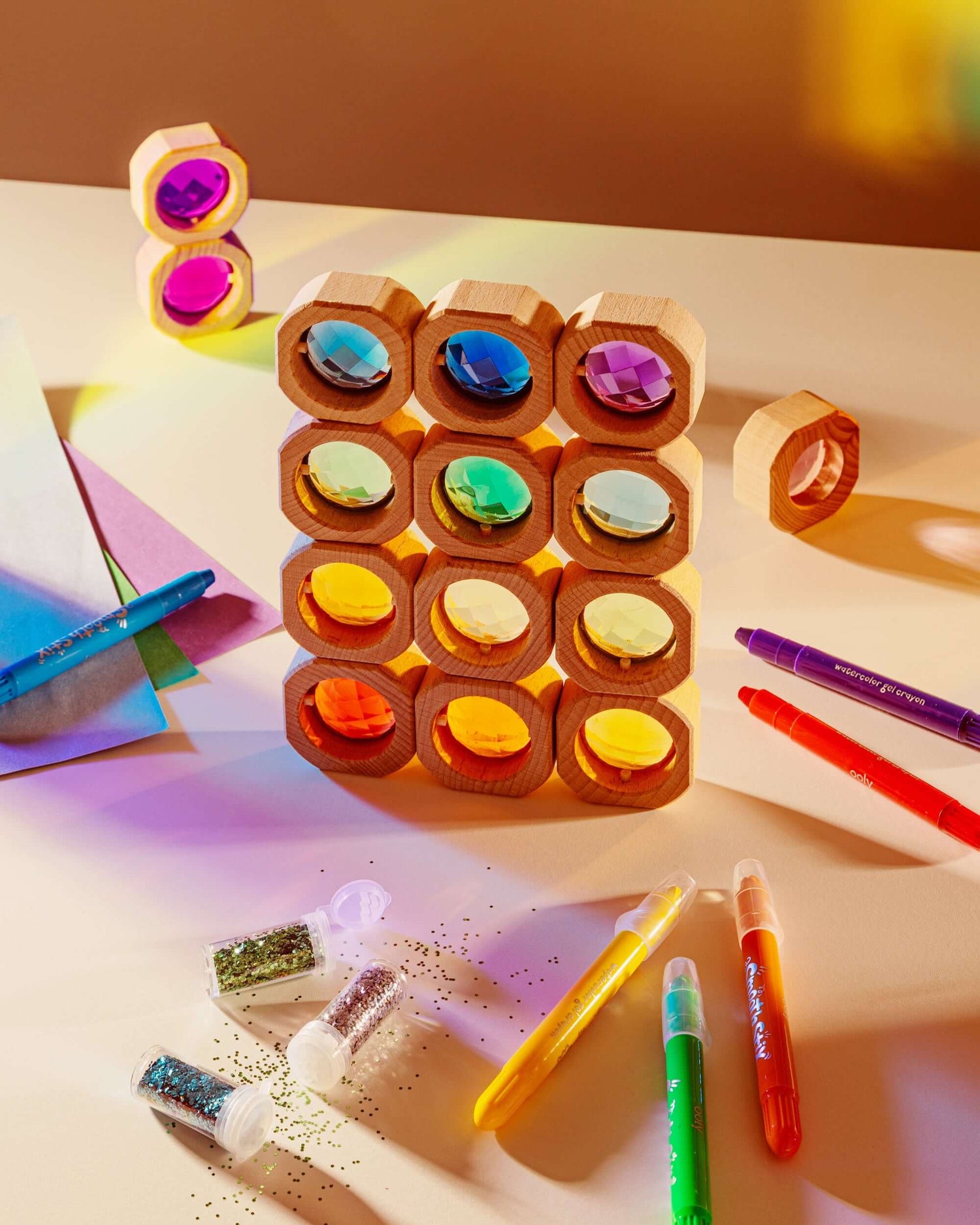
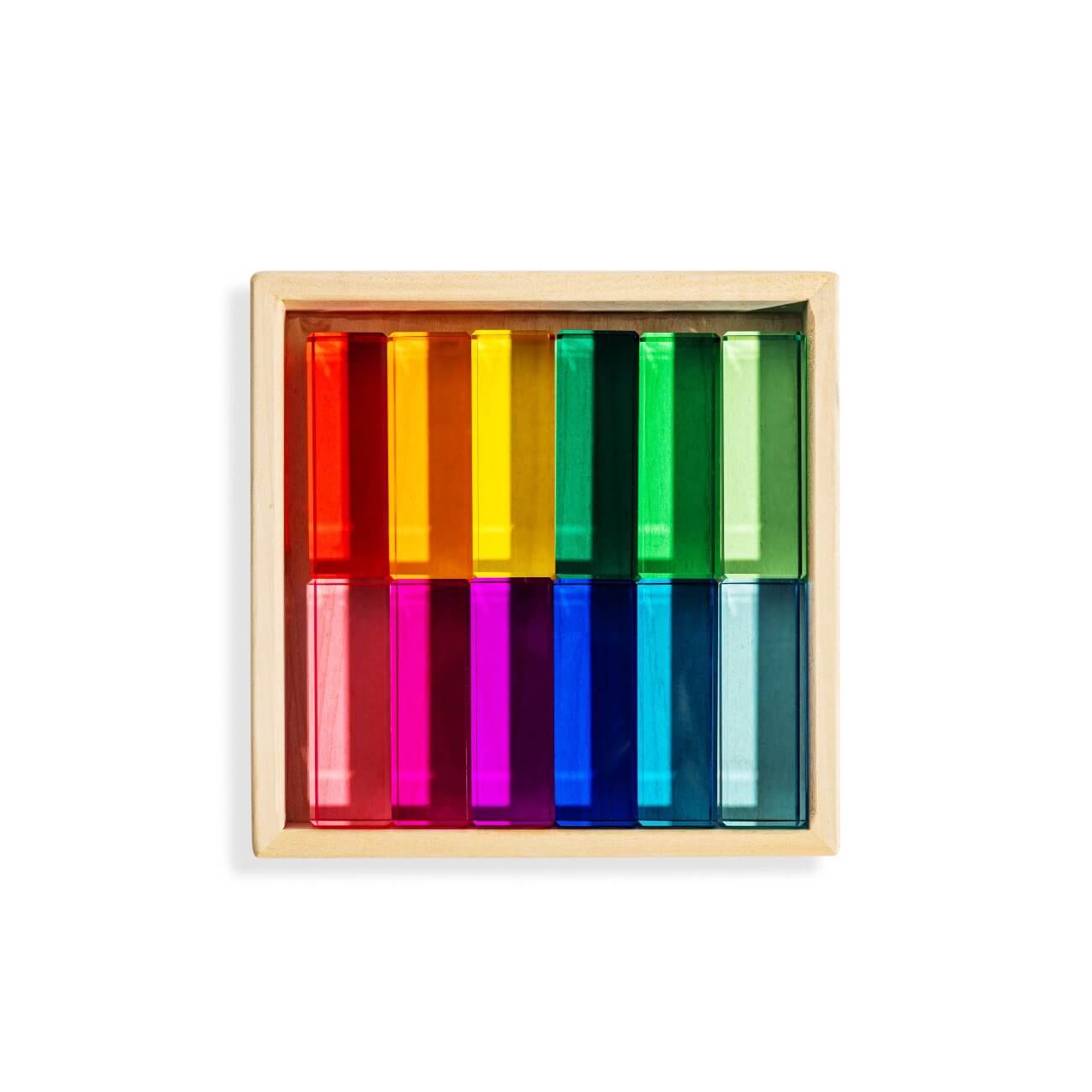
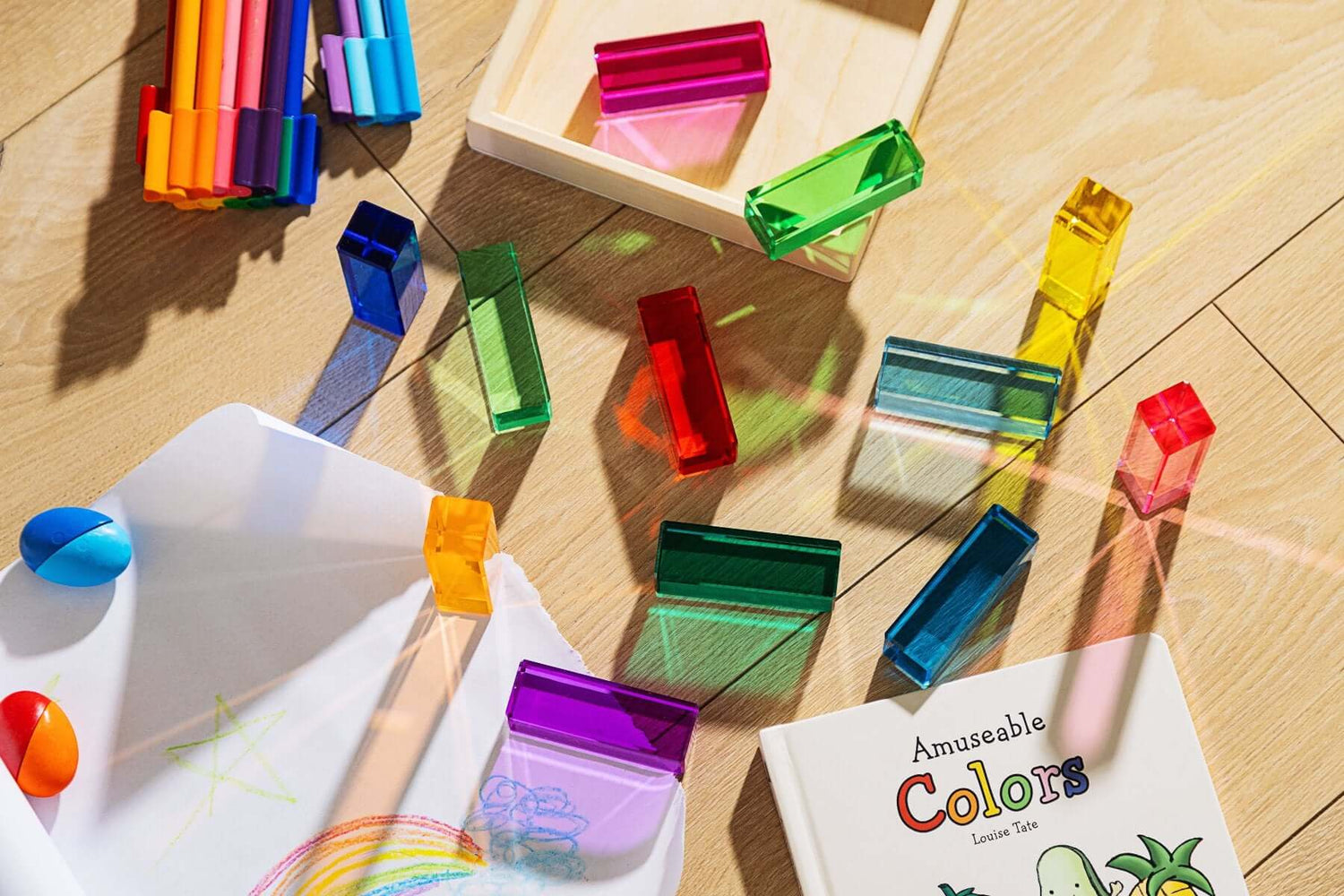
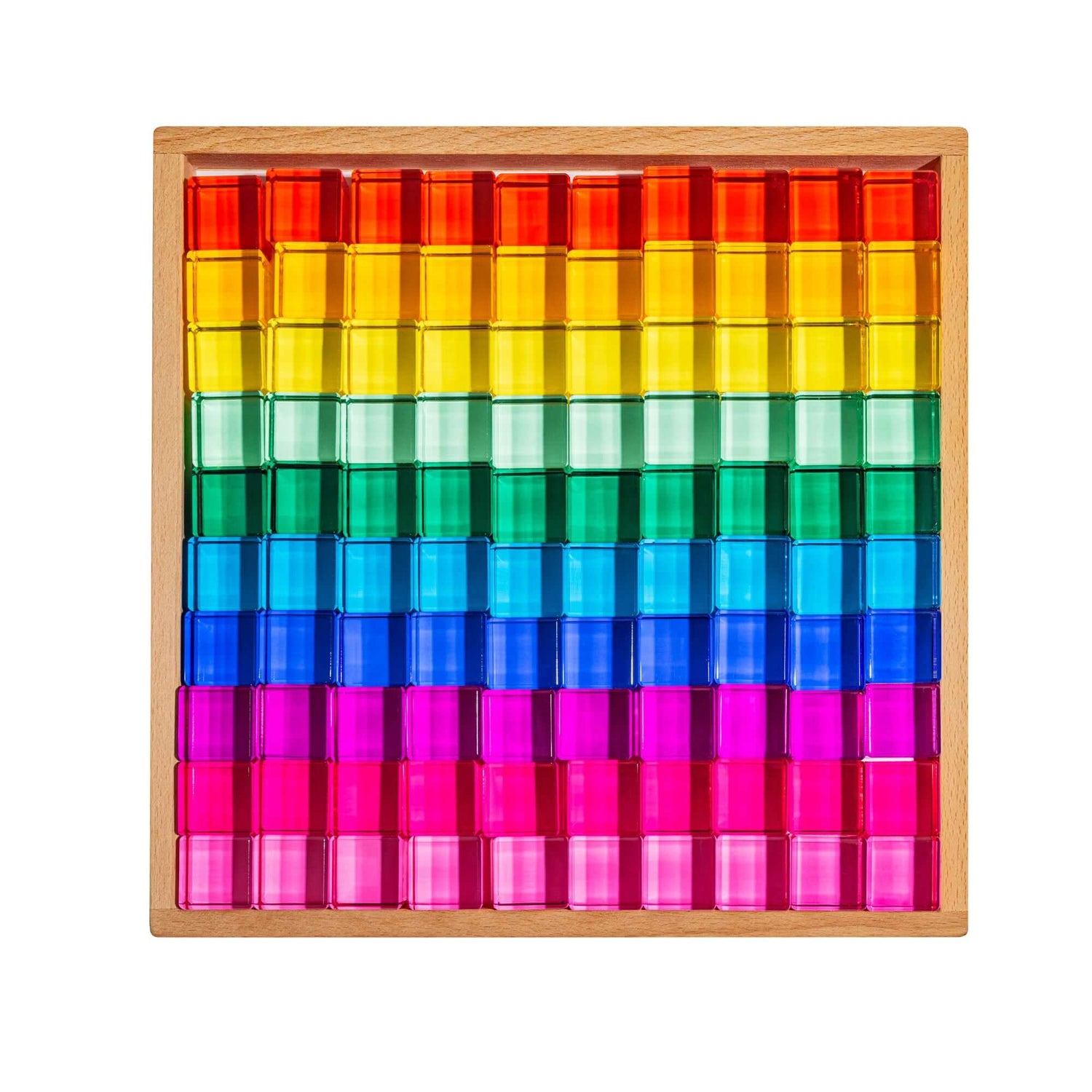
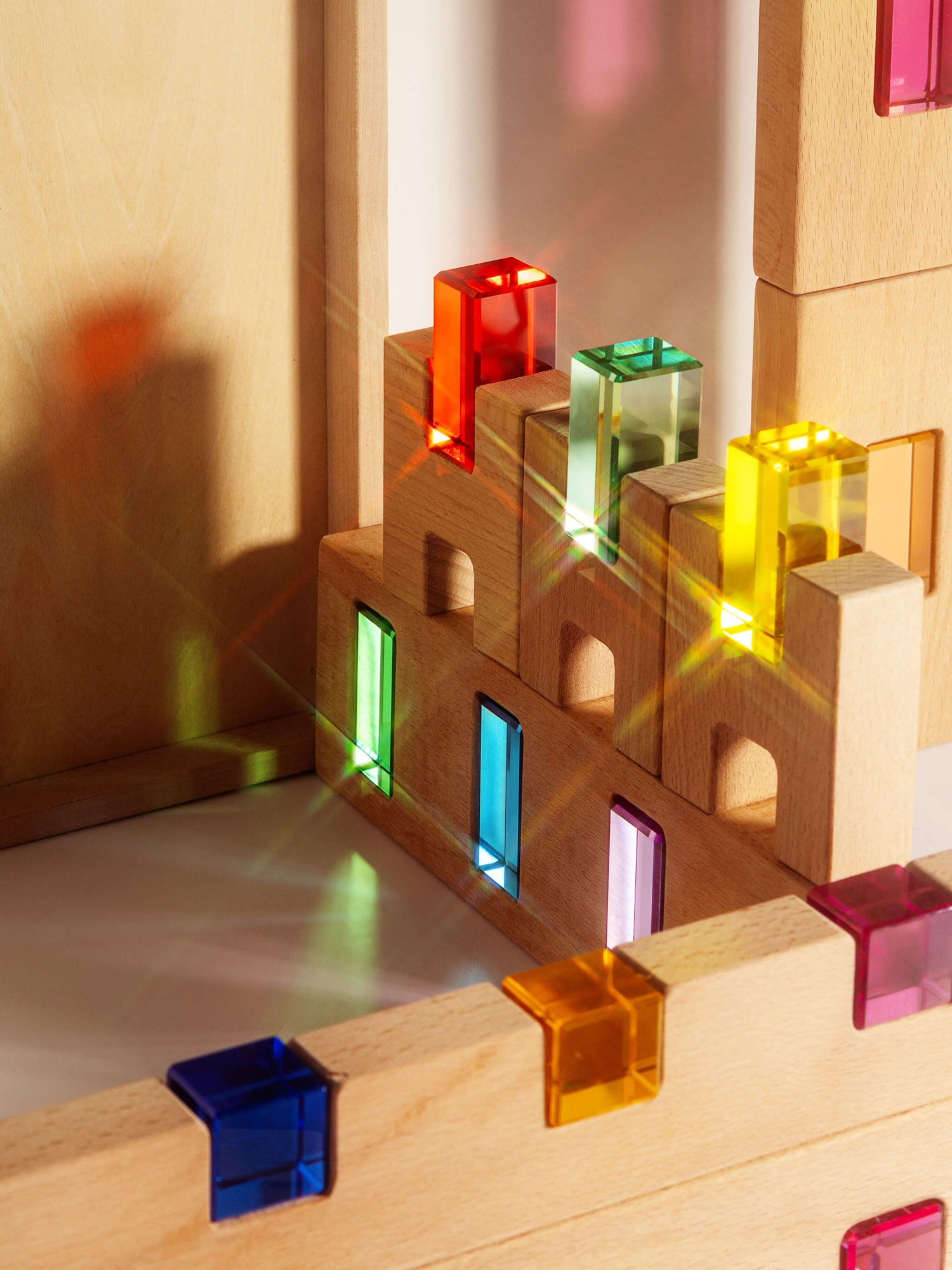
- The Riley Block Set
How to Play
1. Set Up the Game
Print your Riley City board and place it on a flat surface.
Each player chooses a small object to represent them—something simple and tactile makes it feel more special (and keeps tiny hands very invested).
2. Explain the Game
Before starting, walk through the rules together so your child understands what to expect.
(Or give them a very confident explanation and let them immediately change the rules—also developmentally appropriate.)
3. Take Turns Rolling & Moving
Players take turns:
- Rolling the die
- Counting aloud
- Moving their piece forward
Once they land on a space:
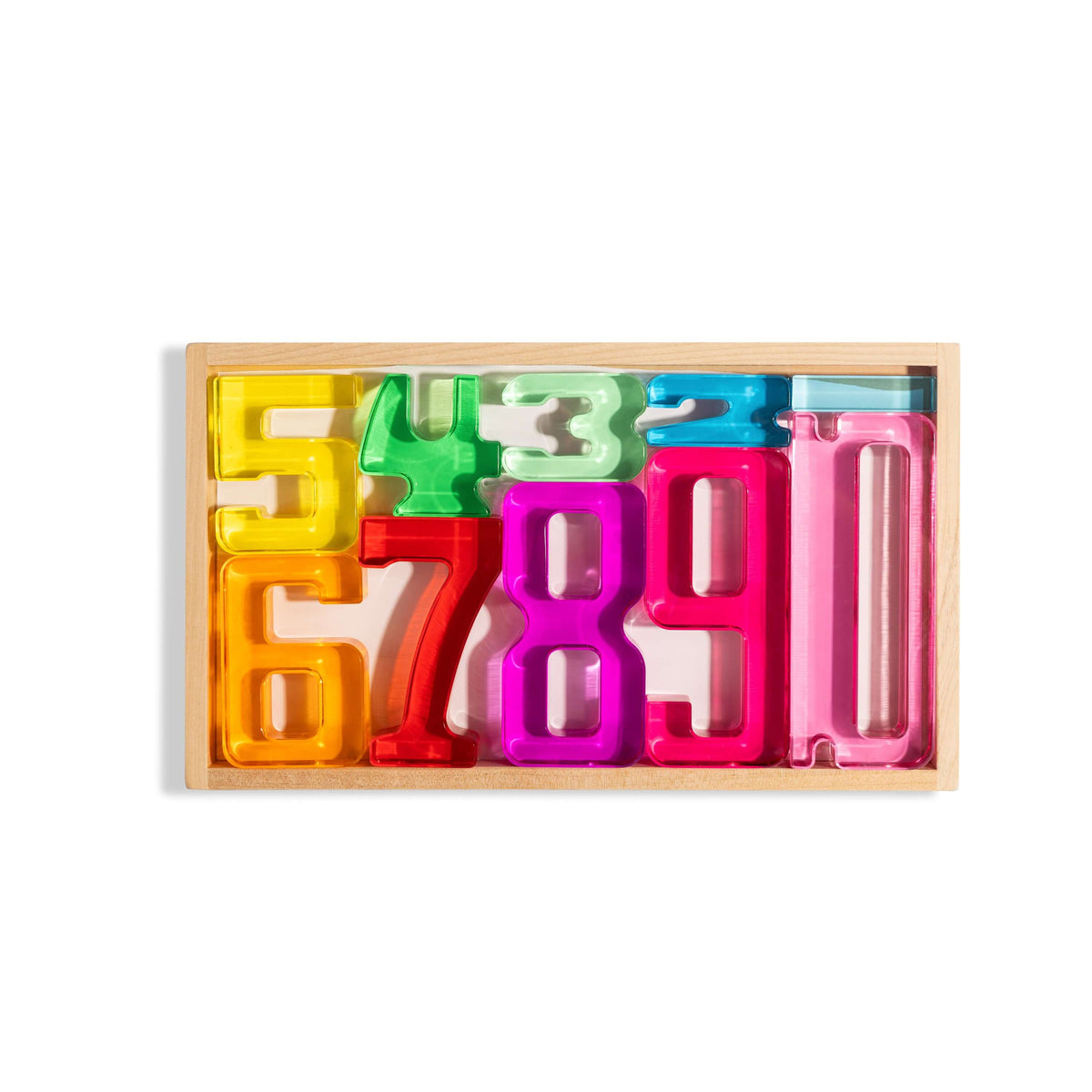
- Choose the matching color or number of blocks based on the version you’re playing
4. Choose Your Path
The first player to reach a turning point chooses the direction.
The second player must take the different path—adding a subtle layer of decision-making and strategy.
Two Ways to Play
Color Version (Collaborative Play)
- No winner, no rush
- Players move at their own pace
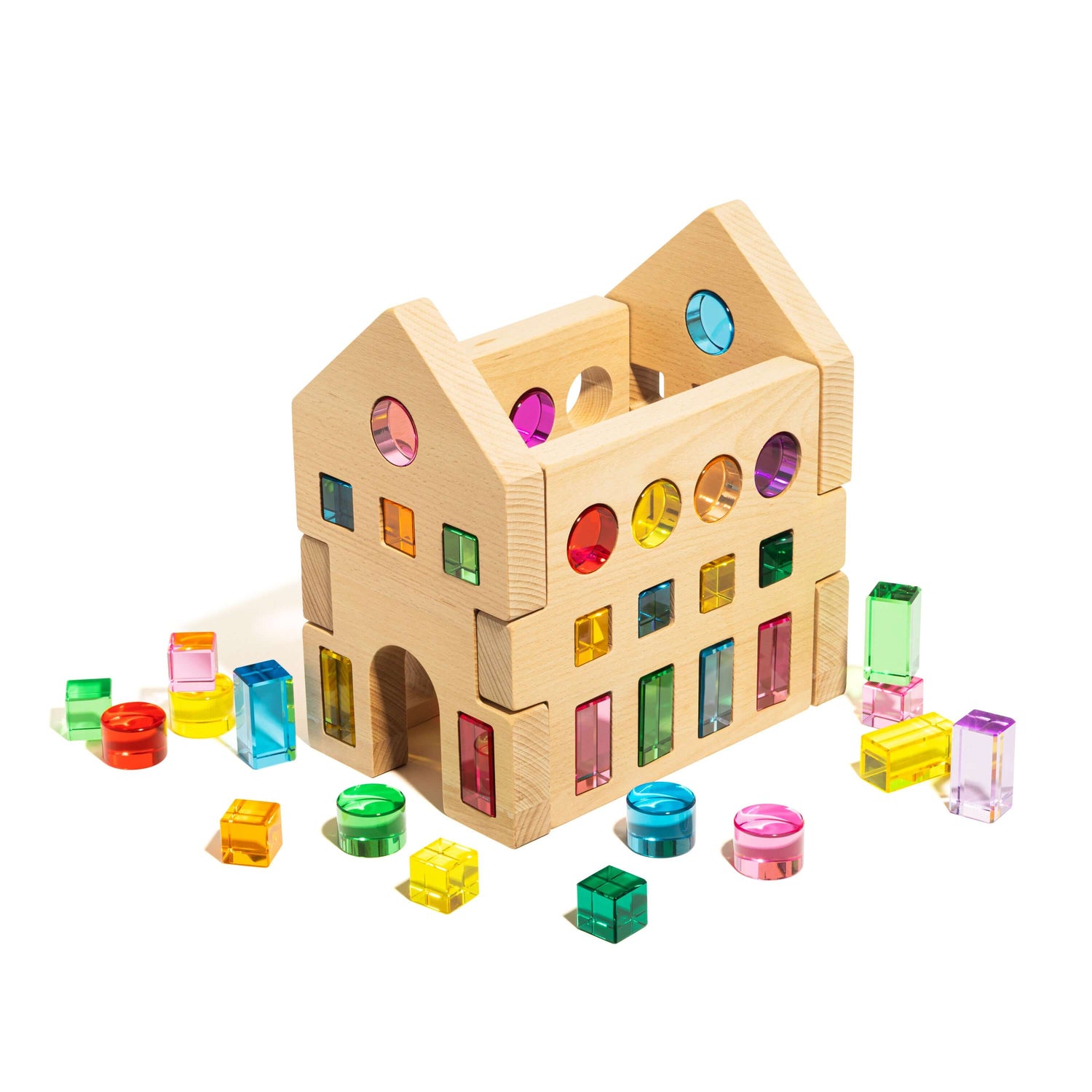
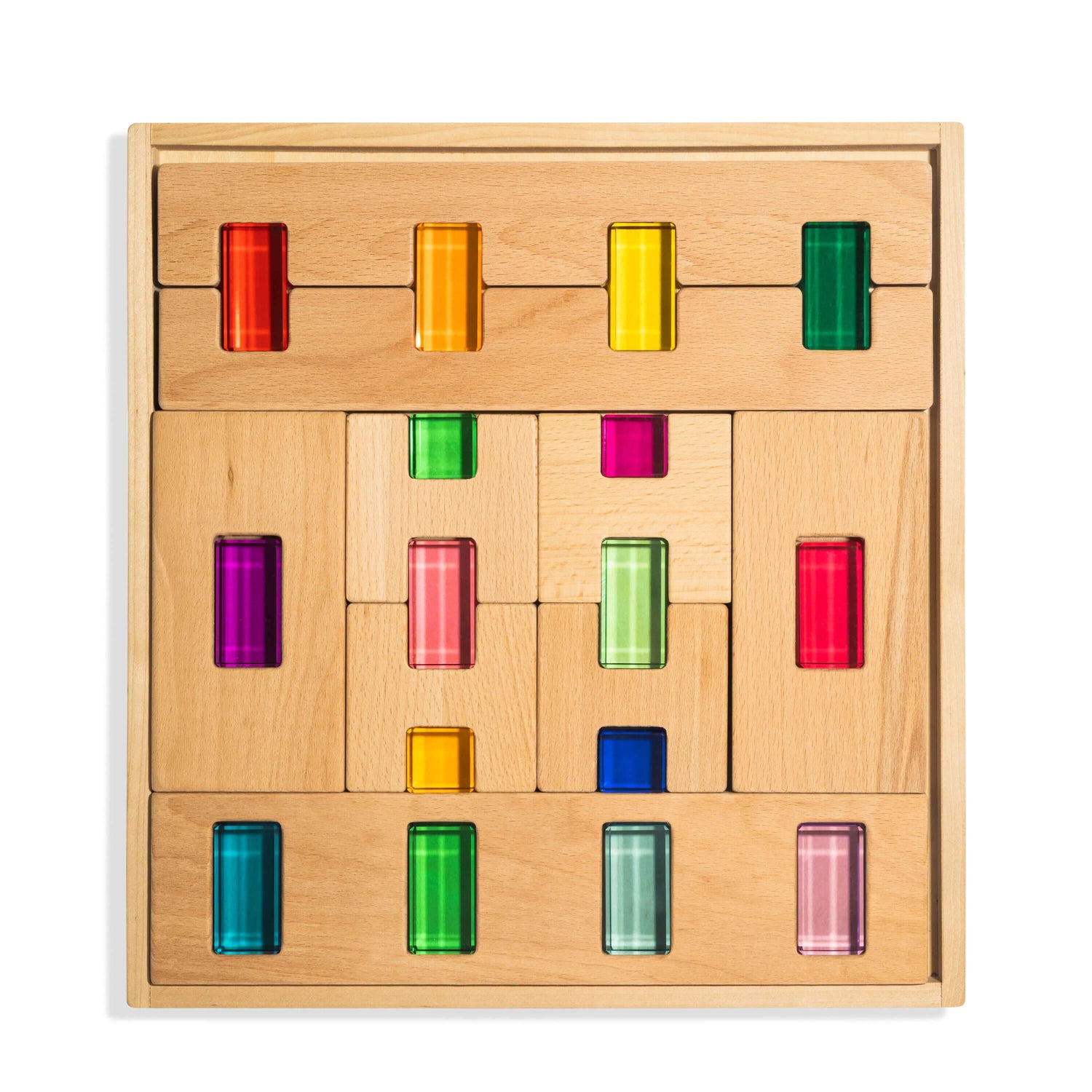
- Use collected blocks to fill the windows of a house
At the end:
- Count how many blocks each player gathered in their house
This version encourages:
- Color recognition
- Independent pacing
- Low-pressure play

Number Version (Classic Game Play)
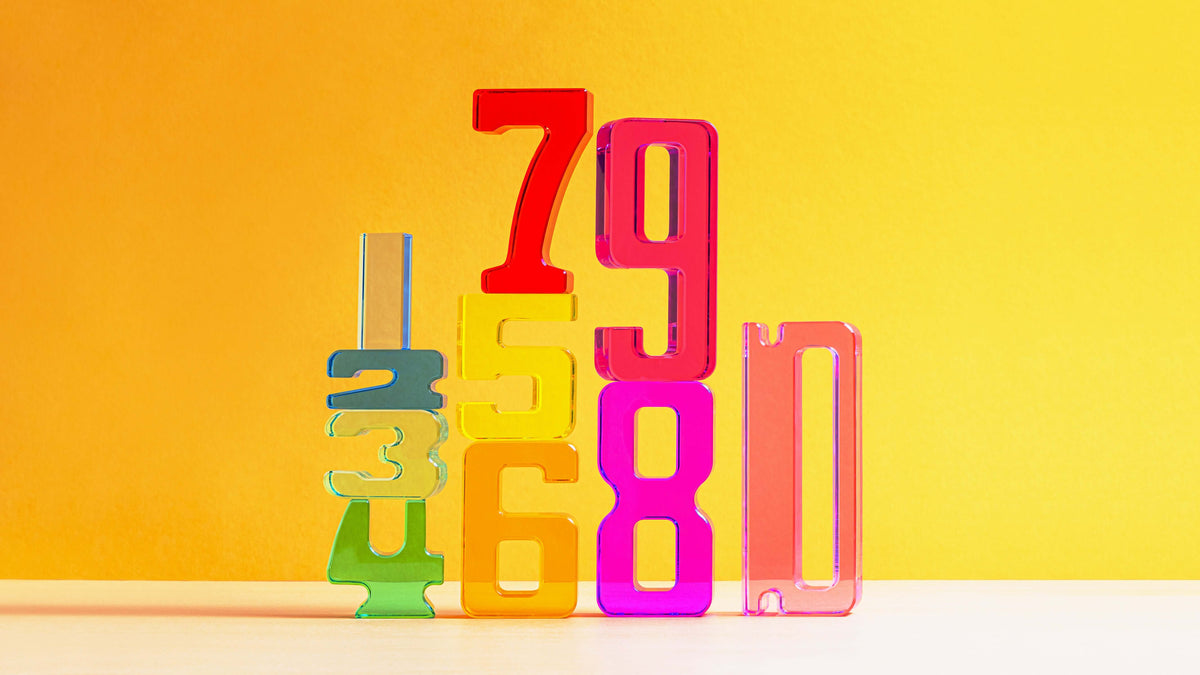
- Players collect blocks based on numbers rolled
- Once both players finish, count the blocks
The player with the most blocks wins
If there’s a tie:
- Celebrate (obviously)
- Or play again for a tiebreaker

Extend the Learning
Once the game ends, you can build on the experience:
- Create simple addition problems using collected blocks
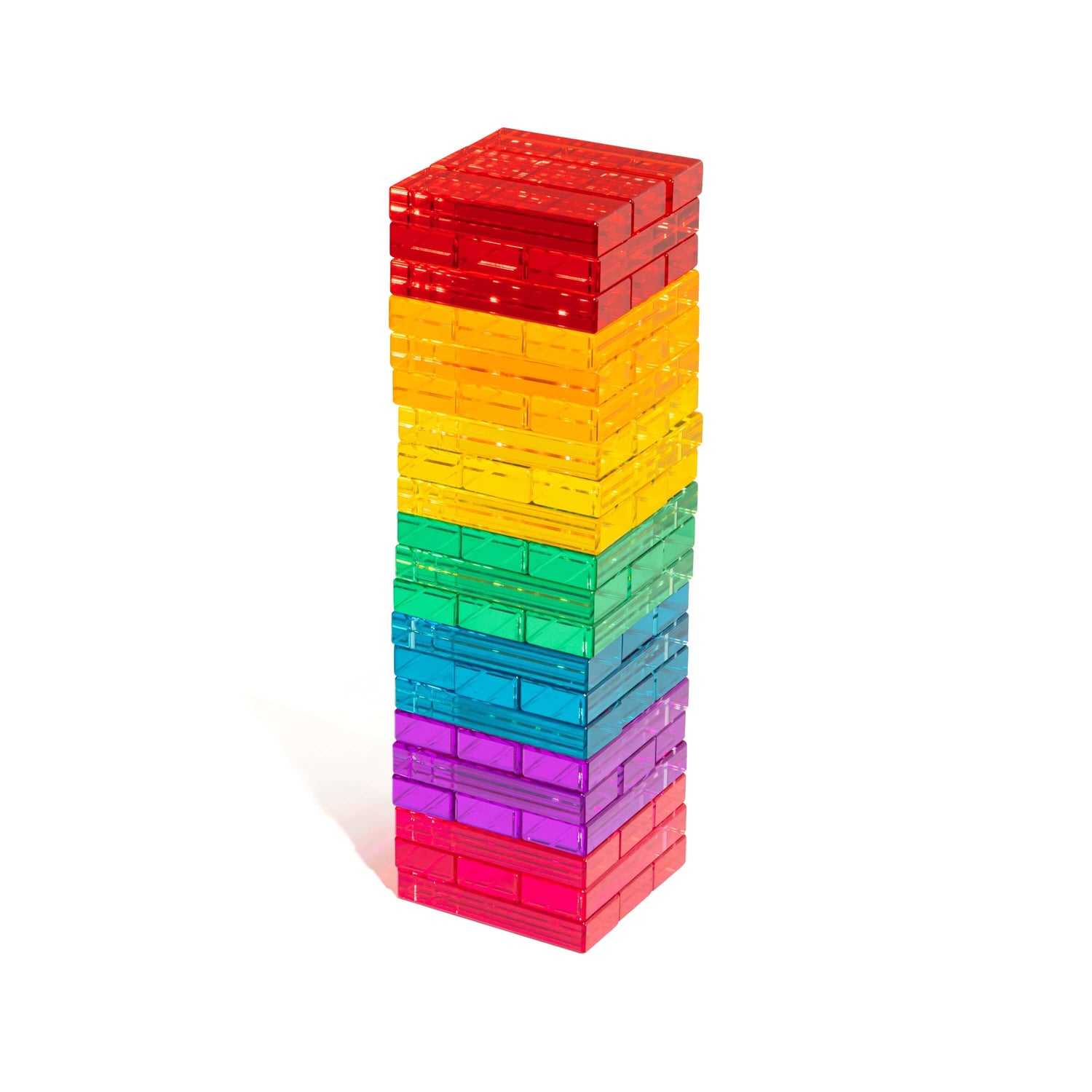
- Sort blocks by color, size, or shape
- Build structures using only the blocks you earned
For more activities check out this early math counting activity.
Why This Activity Matters
This board game supports:
- Early math skills (counting, number recognition)
- Color identification
- Turn-taking and patience
- Decision-making
- Fine motor development
And it does all of this through something children already love: play that feels like a game, not a lesson.
Download Your Riley City Board Game
A simple printable designed for playful learning—choose between color or number versions.
Pair This Activity With
- Riley City Blocks for building and storytelling
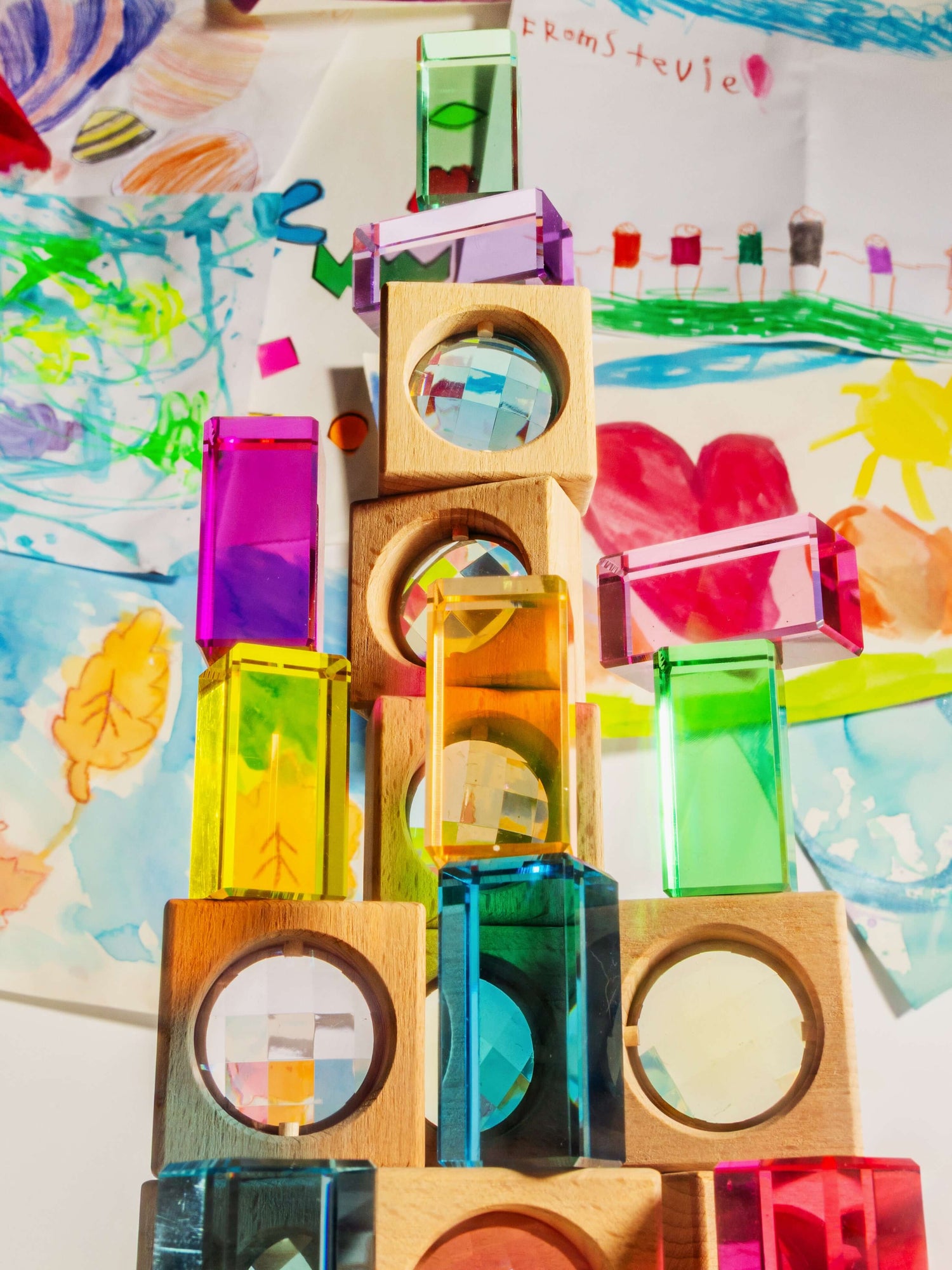
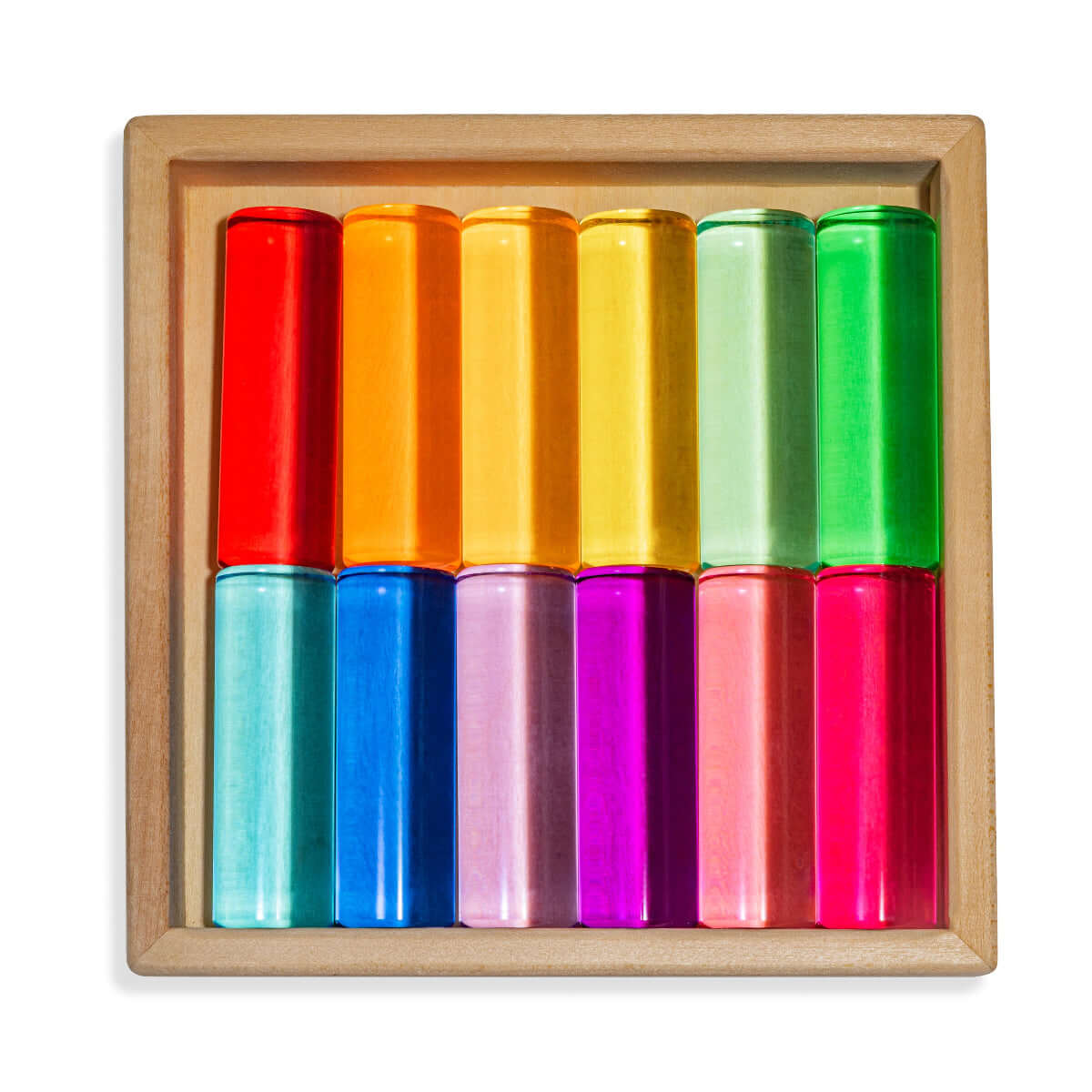
- Lucite blocks for color and light exploration
- Wooden figures for imaginative play
Final Thought
The best learning moments don’t feel structured.
They look like a child rolling a die, counting out loud, and proudly collecting their blocks—completely unaware they’re building foundational math skills along the way.
(And if they insist on winning every round… we’ll call that confidence.)




0 comments