
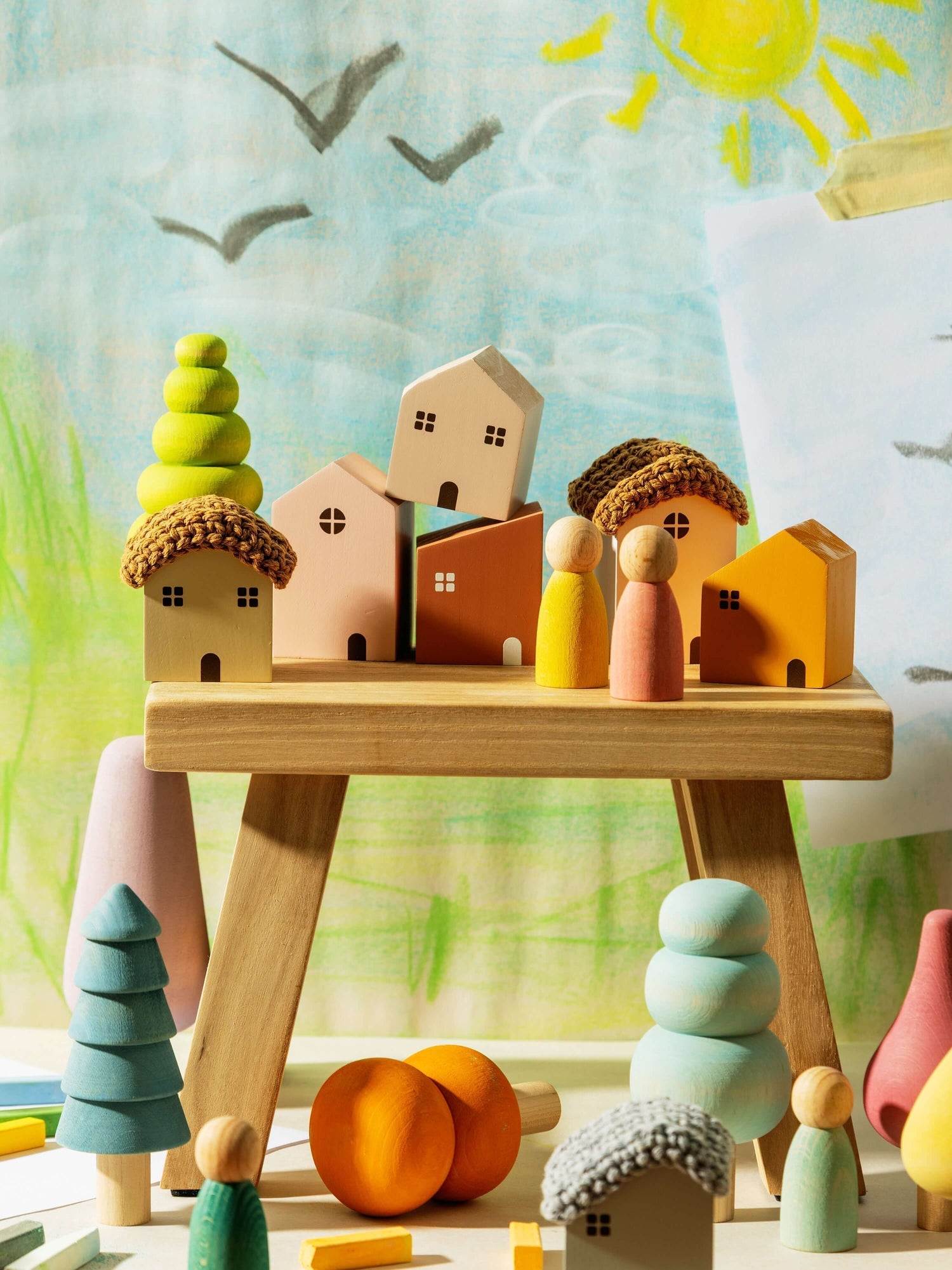
As a brand founded by an early childhood educator, we spend a lot of time thinking about what makes a toy genuinely valuable for a child's development. One of the biggest questions we hear from parents right now is a simple one: "Is this toy actually Montessori?" The honest answer might surprise you.
The Word 'Montessori' Means Nothing, Legally Speaking
You can find the word "Montessori" on plastic shape sorters, battery-powered tablets, and flashy electronic gadgets across every major online retailer. The label is completely unregulated. Maria Montessori never trademarked her name or her method, creating a legal vacuum that any brand, anywhere in the world, can exploit freely. Think of it as "Montessori washing," the toy industry's equivalent of greenwashing. The name sells. The philosophy takes more work.
What Genuine Montessori Materials Actually Are
According to the Association Montessori Internationale, authentic Montessori materials are those that "engage both the hands and the mind of the child." That definition is deceptively simple, but it carries real weight when you break it down.
Genuine Montessori materials share five defining characteristics:
- Natural materials such as wood, fabric, metal, or beeswax
- Minimalist design that avoids visual clutter and overstimulation
- Open-ended or self-correcting play that lets the child discover outcomes independently
- Real-world skill development connected to practical life
- Child-led exploration without adult direction or electronic prompts
Here is an important nuance that most "Montessori toy" listicles skip entirely: some genuine Montessori materials are actually close-ended. The classic cylinder block, for example, is a self-correcting puzzle with only one right answer, discovered through trial and error. Open-ended toys like wooden blocks are Montessori-aligned, but they represent a different category within the philosophy. Both have value. The distinction matters.
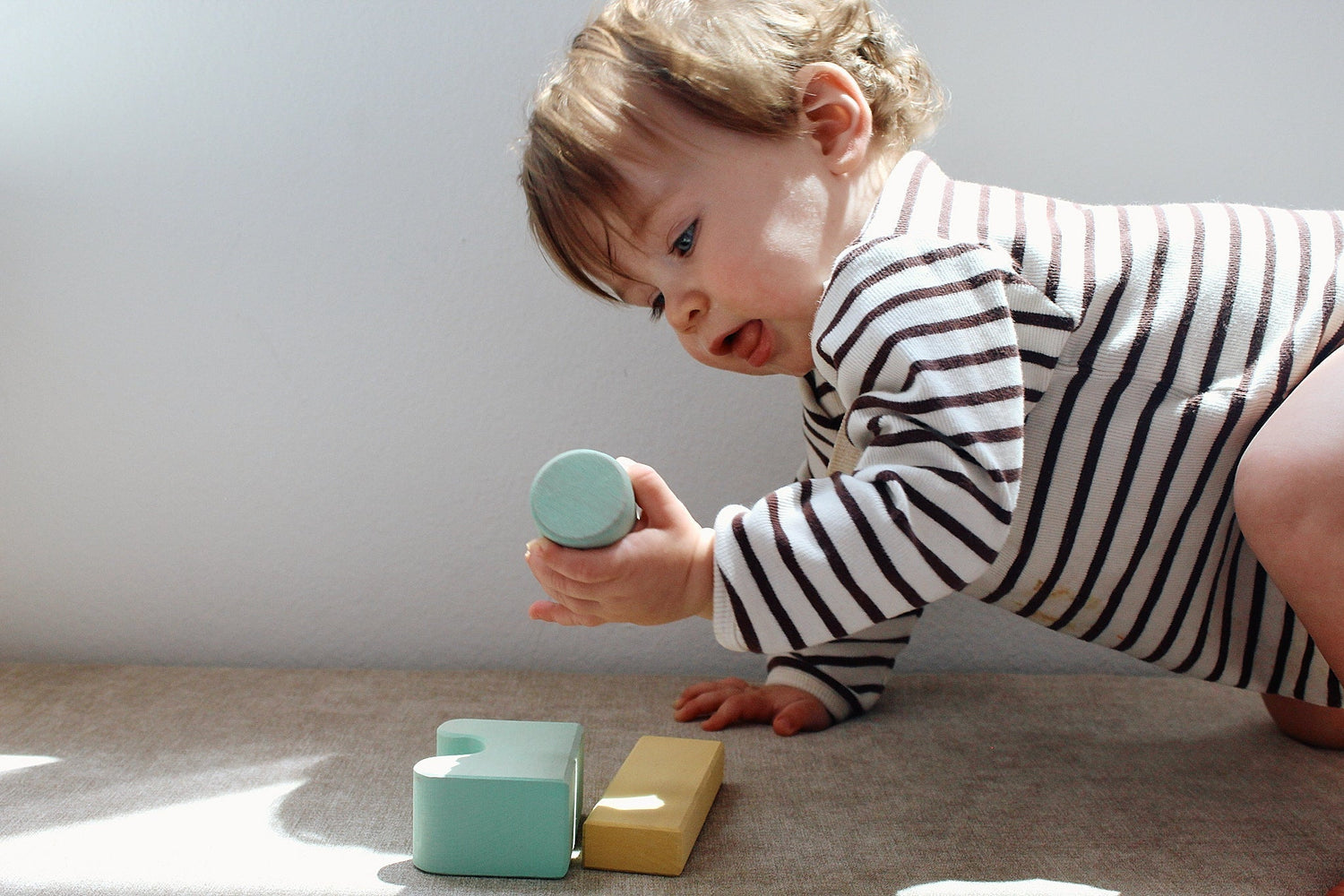
The philosophy is ultimately about the child's internal process, not the toy's aesthetic. A wooden toy is not automatically Montessori simply because it is made of wood. A 2017 University of Toledo study found that toddlers in environments with fewer toys played longer and more creatively than those surrounded by many options, supporting a core Montessori principle: curated, minimal environments invite deeper engagement.
The 'Sad Beige' Problem: When Aesthetics Replace Philosophy
The rise of #montessoritoys on social media has created a powerful visual shorthand: neutral tones, natural wood, linen storage baskets. It looks beautiful. But it has very little to do with developmental philosophy.
We say this as a brand that deeply values beautiful design: aesthetics alone are not enough. Many brands charge a significant premium on the Montessori label with no accountability. A wooden surface does not justify a higher price tag if the toy itself does not support meaningful play.
The research is clear on what does matter. A study published in JAMA Pediatrics by researcher Anna Sosa at Northern Arizona University found that electronic toys produced fewer verbal interactions between parents and children compared to traditional toys like blocks. A 2022 Frontiers in Psychology study confirmed this, showing that electronic toys decrease both the quantity and lexical diversity of spoken language in young children. Simple, well-designed toys win.
Consider the busy board paradox. Overcrowded busy boards packed with locks, latches, zippers, switches, and spinners are among the most-searched "Montessori" products online. Yet cramming a dozen features onto a single board directly contradicts Montessori principles of focused, uncluttered engagement. More is not more.
According to The Toy Association's 2026 survey, 78% of U.S. parents want toys that help their children develop creativity and problem-solving skills. That is a genuine, well-intentioned desire, and brands know it. The Montessori label becomes an easy shortcut to signal those values, whether or not the product actually delivers.
A Simple Framework: 3 Tiers of 'Montessori' Toys
Rather than thinking of Montessori toys as a binary (real or fake), we find it more helpful to think in three tiers.
Tier 1: AMI-Endorsed. These are materials from the three globally endorsed manufacturers (Nienhuis, Gonzagarredi, Matsumoto Kagaku). They represent the highest fidelity to the original method and are typically found in certified Montessori classrooms. They are exceptional, and they are also priced for institutional use.
Tier 2: Montessori-Inspired. These are toys designed with genuine understanding of Montessori principles: natural materials, open-ended or self-correcting play, child-led use, no batteries. They do not carry formal AMI endorsement, but they are created by people who understand the philosophy deeply. This is where most quality independent brands sit, including ours.
Tier 3: Montessori-Labeled. These are toys using the term purely for marketing. They often include electronic or battery operated, or single-purpose play that contradicts the method entirely. The label is the product's only educational claim.
Red Flags vs. Green Flags: A Quick-Scan Checklist
Next time you are evaluating a toy (for your own child or as a gift), run through this quick checklist.
Red flags:
- Battery compartment or electronic sounds and lights
- Only one "correct" way to play with no room for exploration
- Flashing reward feedback built in (beeps, music, celebratory sounds)
- Product description uses "Montessori" as the sole educational claim with no further explanation
Green flags:
- Natural materials (wood, fabric, metal, beeswax)
- Open-ended use with no single correct outcome, or a clear self-correcting mechanism that lets the child discover errors independently
- No batteries required
- Scales with the child's development across multiple ages
- Minimal visual noise and a intentional palette
The self-correcting toy test is one of the most underrated things to look for. In genuine Montessori design, the toy itself tells the child when something is not quite right. Not a parent. Not an electronic beep. The material provides the feedback.
How to Shop Intentionally in a Noisy Market
Here is the reassuring part: you do not need AMI-certified classroom materials to support Montessori principles at home. Intentionality matters more than any label.
Before adding a toy to your cart, ask three questions:
- Does this toy invite the child to lead?
- Does it grow with them?
- Does it work without batteries or adult direction?
Sustainability matters here, too. Look for non-toxic, independently tested materials as a baseline safety signal. At minimum, you want CPSIA and CPC compliance, which covers testing for lead, heavy metals, and phthalates.
Fewer, better toys. The research supports a curated shelf over a toy room overflow. Quality over quantity is both Montessori philosophy and good design. You are not depriving your child by choosing less. You are giving them space to play more deeply.
The Bottom Line: Trust Principles, Not Labels
"Montessori" is a marketing word, not a quality standard. The philosophy behind it, however, is profoundly valuable. When you understand the principles, no label can mislead you.
Keep the three-tier framework in mind the next time you shop. Look for brands that explain their design philosophy, cite educational principles, and are transparent about materials and safety testing. That transparency tells you more than any tag ever could.
If you found this helpful, explore our Play and Parenting Journal for more research-backed guides on purposeful play, toy rotation, and screen-free activities. Or browse our wooden toy collection with your new checklist in hand. Every piece we design starts with the question we believe matters most: what will this invite a child to discover?


0 commentaire