
Why This Summer Is the Perfect Time to Step Away from Screens
If you've ever handed your toddler a phone to get through a grocery run or a long afternoon, you're not alone. About 60% of parents say they feel guilty about their child's screen time. We're not here to add to that guilt. We're here to hand you a practical, beautiful alternative.
The American Academy of Pediatrics recommends no screen time for children under 18 months and a maximum of one hour per day for ages 2 to 5. Yet toddlers ages 2 to 4 average 2 hours and 8 minutes of daily screen use, and 64.4% of children in that age group already exceed the recommended limit.
Summer, with its long, unstructured days, is actually a gift. That stretch of open time your toddler doesn't quite know what to do with? It's where creativity, independence, and problem-solving grow. Boredom is not a problem to fix. It's a starting point.
The best part: you don't need to buy a single new thing. Every activity on this list uses toys already sitting on your shelf. This is about small, intentional moments, not perfect parenting.
What Makes a Toy 'Open-Ended' and Why It Matters This Summer
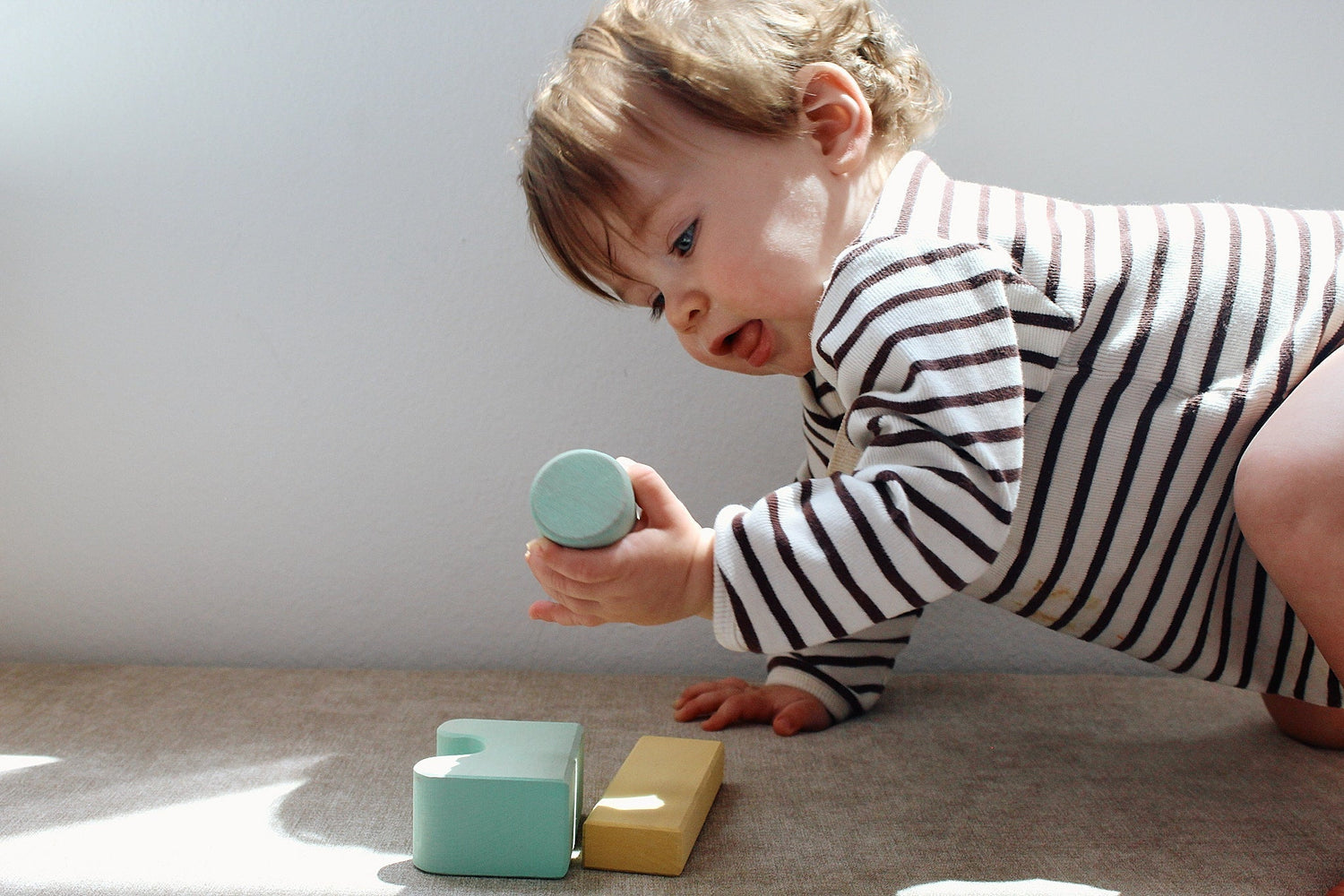
An open-ended toy is simply one with no single "right" way to play. There's no button to push for a predetermined outcome. Instead, the toy grows with your child's imagination and developmental stage. A wooden block can be a car, a sandwich, a tower, or a bridge, depending on the day.
Research backs this up. A study published in Infant Behavior and Development found that toddlers played more creatively and for significantly longer when given just 4 open-ended toys compared to 16 structured ones. Fewer, simpler toys drove deeper engagement. The Center for Early Childhood Education confirmed this in a decade-long study of over 100 toy types: simple, non-realistic toys consistently inspired the highest-quality play, including creative thinking, problem-solving, peer interaction, and language development.
A 2025 systematic review further found that loose parts and open-ended materials contribute to the foundational cognitive processes that drive early learning. The science is clear: less is genuinely more.
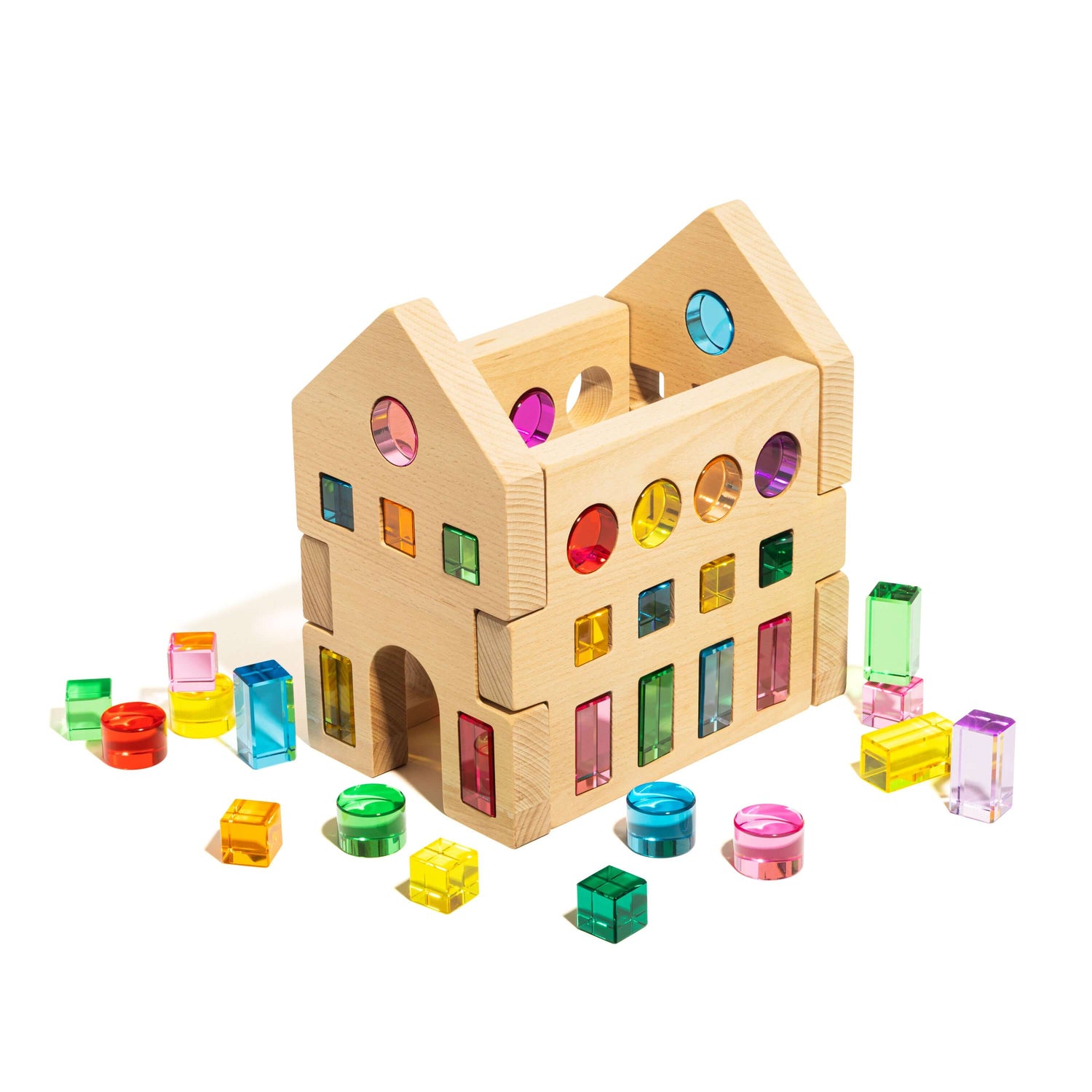
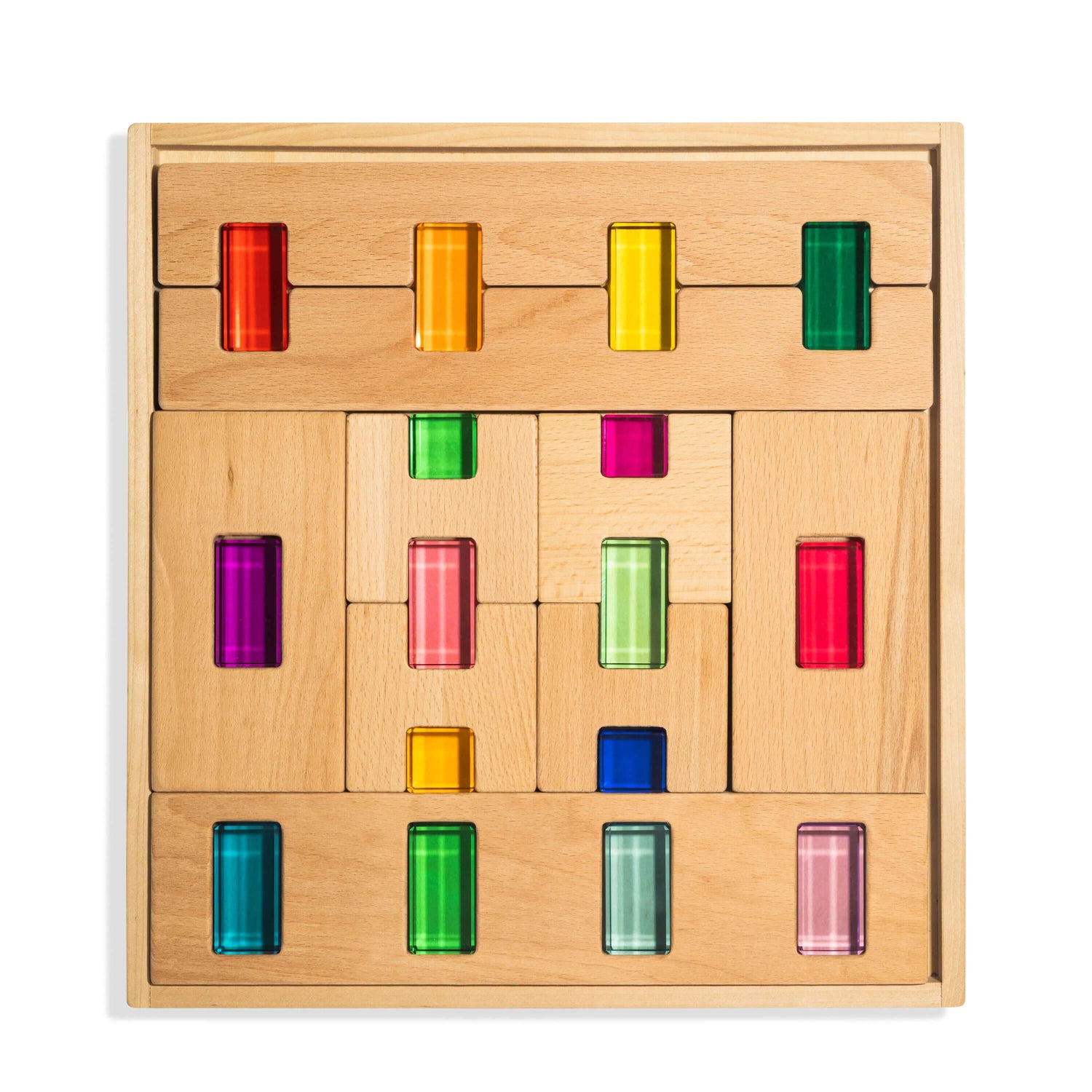
Throughout this article, you'll see two toys anchoring many of the activities: our Maison Rue wooden blocks and wooden rainbow stacker. Both are Montessori-inspired, tested to CPSIA and CPC standards for lead, heavy metals, and phthalates, and designed to support dozens of play possibilities. For the 65% of Montessori toy families who prioritize eco-friendly products, natural wood and non-toxic finishes aren't just nice to have. They're non-negotiable.
The 'Invitation to Play' Setup: 5 Minutes That Buys You an Hour
If you've spent time on Montessori Instagram, you've probably seen the phrase "invitation to play." It sounds precious, but the concept is beautifully simple: arrange a few toys in an intentional, visually appealing way that sparks your toddler's curiosity and invites them into independent play without adult direction.
Why does it work? A thoughtfully arranged setup signals to your child that something interesting is waiting. It reduces the "I'm bored" plea and, with it, the reflexive reach for a screen. Keep it simple: 3 to 5 items on a low tray, a small basket, or a wooden board, placed at your toddler's eye level before they wake up or after nap.
A play setup doesn't have to look chaotic. Natural wood tones, soft colors, and clean arrangements fit right into a design-conscious home. Our rainbow stacker, with its sculptural, Scandinavian-inspired form, doubles as décor on a shelf even when it's not in active use. As a brand founded by an early childhood educator, we designed it that way on purpose.
There is no "wrong" way to set up an invitation. The goal is curiosity, not perfection.
10 Screen-Free Summer Activities Using Toys You Already Own
Each activity below is specific, developmentally grounded, and tied to toys you likely have at home. Two spotlight our Maison Rue open-ended blocks and rainbow stacker. All of them span a range of play types: sensory, imaginative, fine motor, language, spatial reasoning, and independent play.
1. Rainbow Stacker Tunnel & Bridge Build
Toy used: Maison Rue Rainbow Stacker
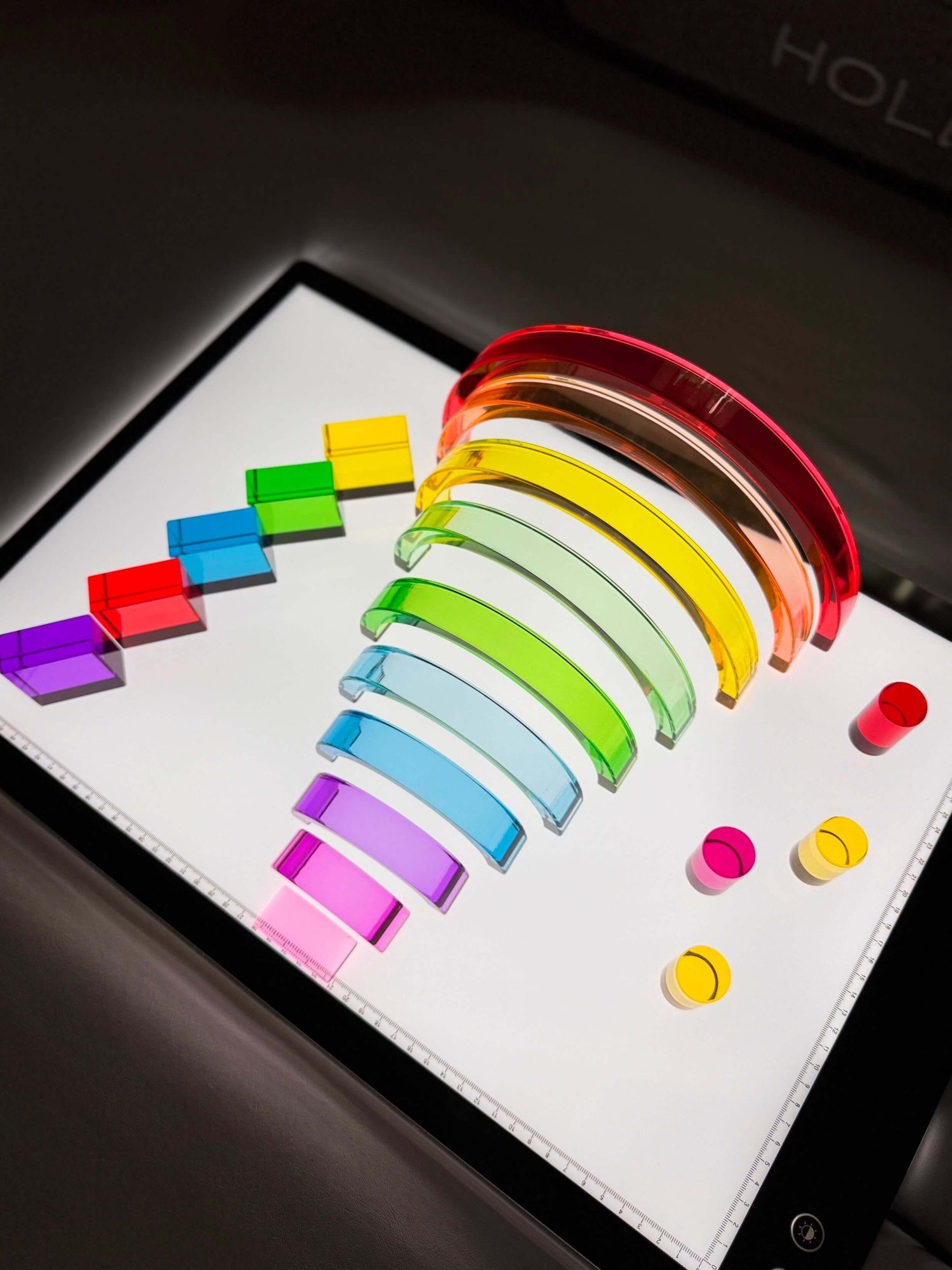
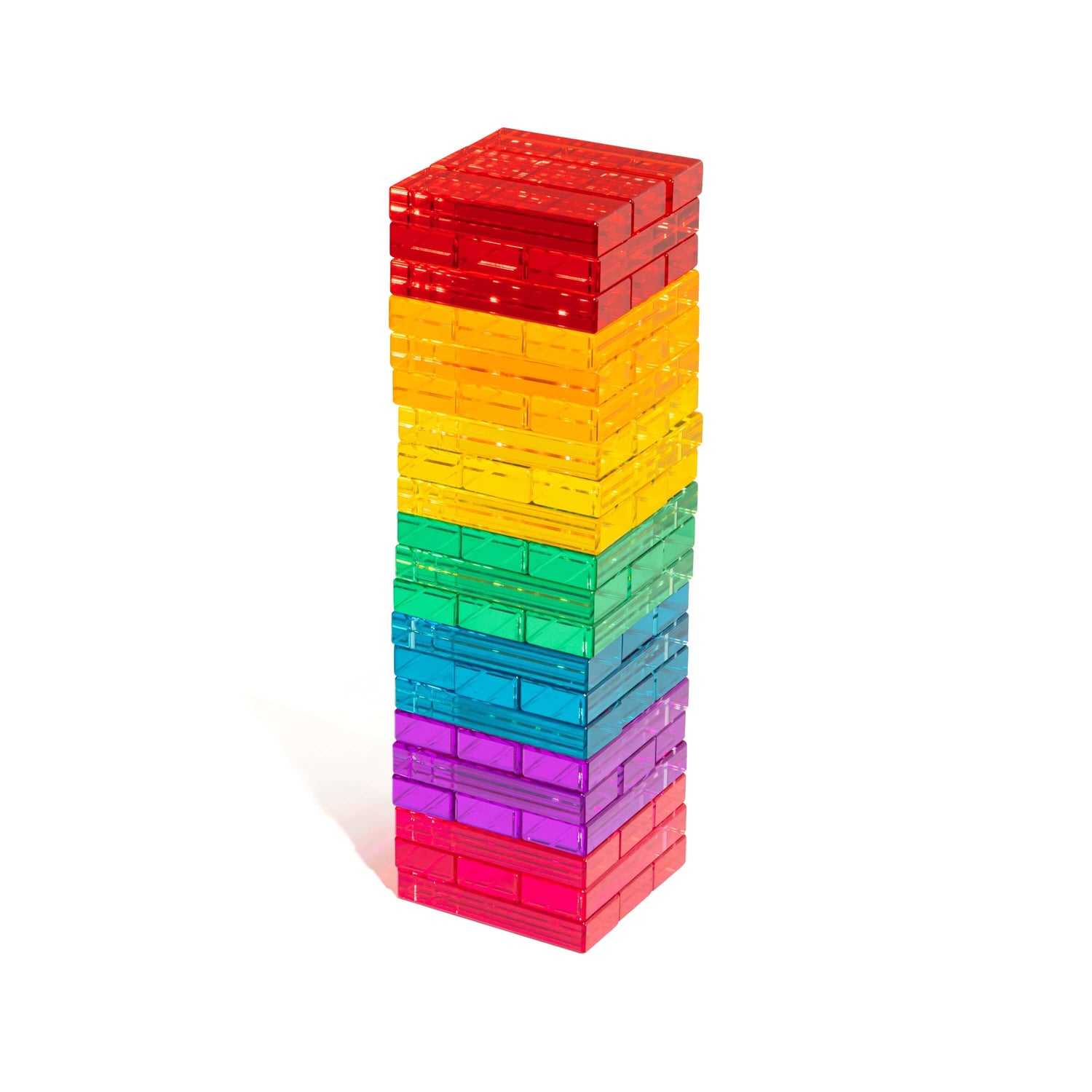
Lay the rainbow arches on their sides to create tunnels and bridges. Add small animals, cars, or wooden figures and let your toddler drive or walk them through. This builds spatial reasoning, imaginative play, and early STEM thinking as they experiment with size, sequence, and cause-and-effect.
Rainbow stackers are one of the most versatile open-ended toys in any home. Beyond stacking, they function as bridges, tunnels, mazes, fences, and marble tracks. Try sitting nearby and narrating: "The bear is going through the tunnel!" You're supporting language development without directing the play.
2. Wooden Block Town: Build a Summer Village
Toy used: Bergen Blocks, Barca Blocks or Riley Blocks
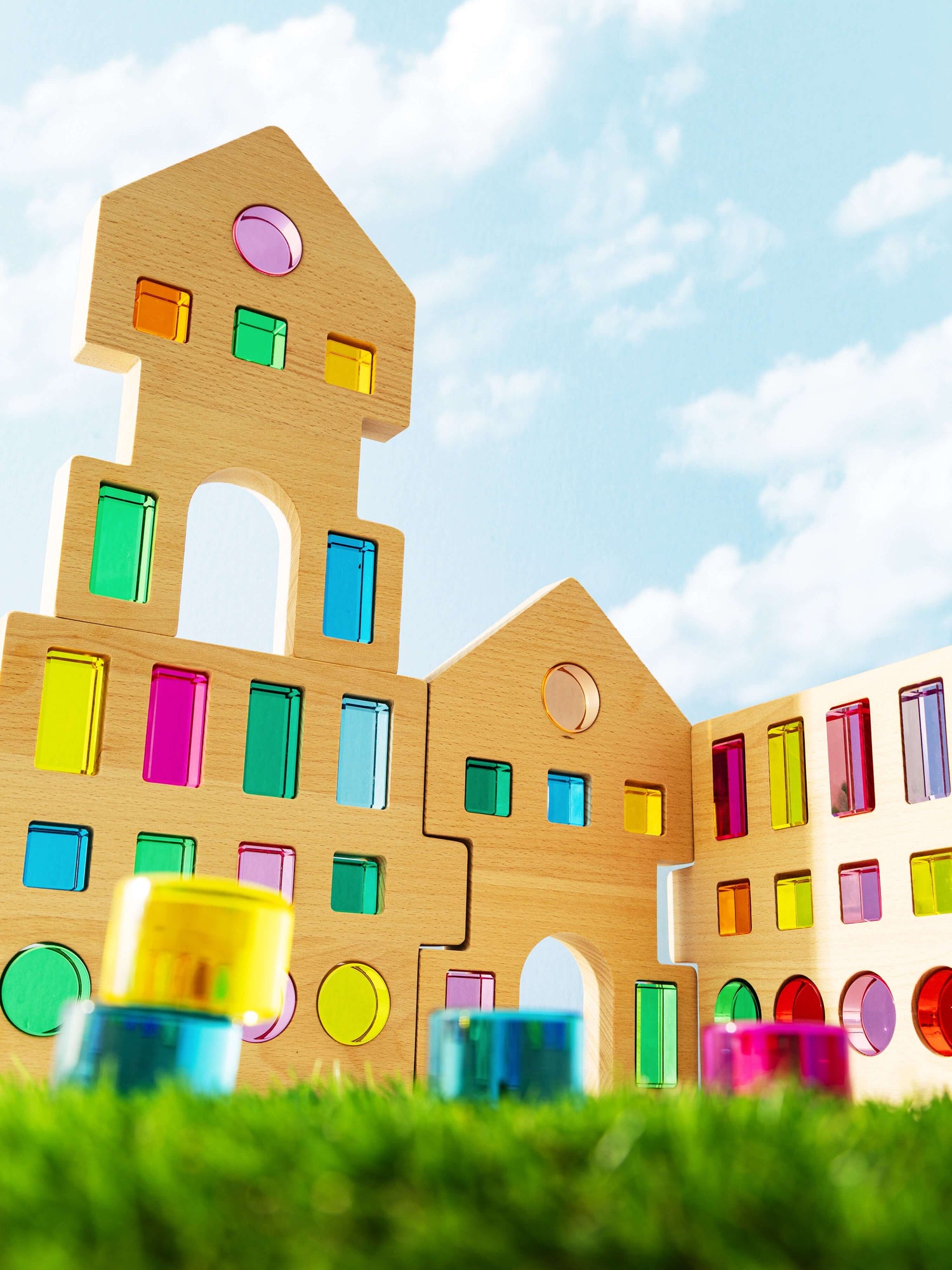
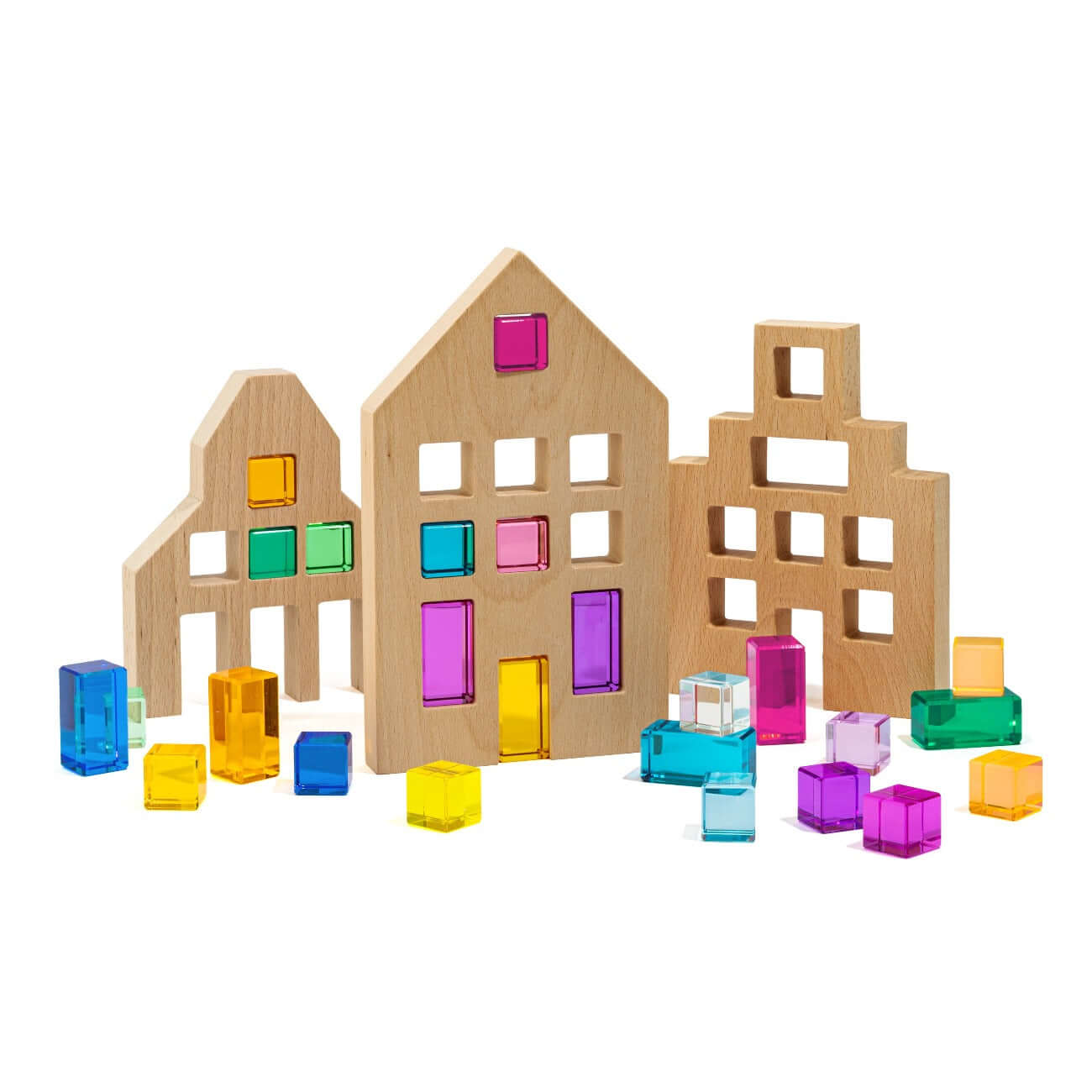
Invite your toddler to build a "summer town" using only a set of wooden blocks: roads, houses, a park. Add small figures or toy animals if you have them. This kind of symbolic play is a key developmental milestone that typically emerges between 18 months and 2 years, when toddlers begin using one object to represent another (a block becomes a car, a house, a piece of cake).
Research by Trawick-Smith et al. found that open-ended play leads to more socially interactive behaviors than structured play. Building a town together with a caregiver or sibling amplifies this benefit. Resist the urge to "fix" the structure. The process is the point.
3. Sensory Sorting Tray
Toy used: Any small wooden toys, acrylic rainbow blocks, or loose parts you already have
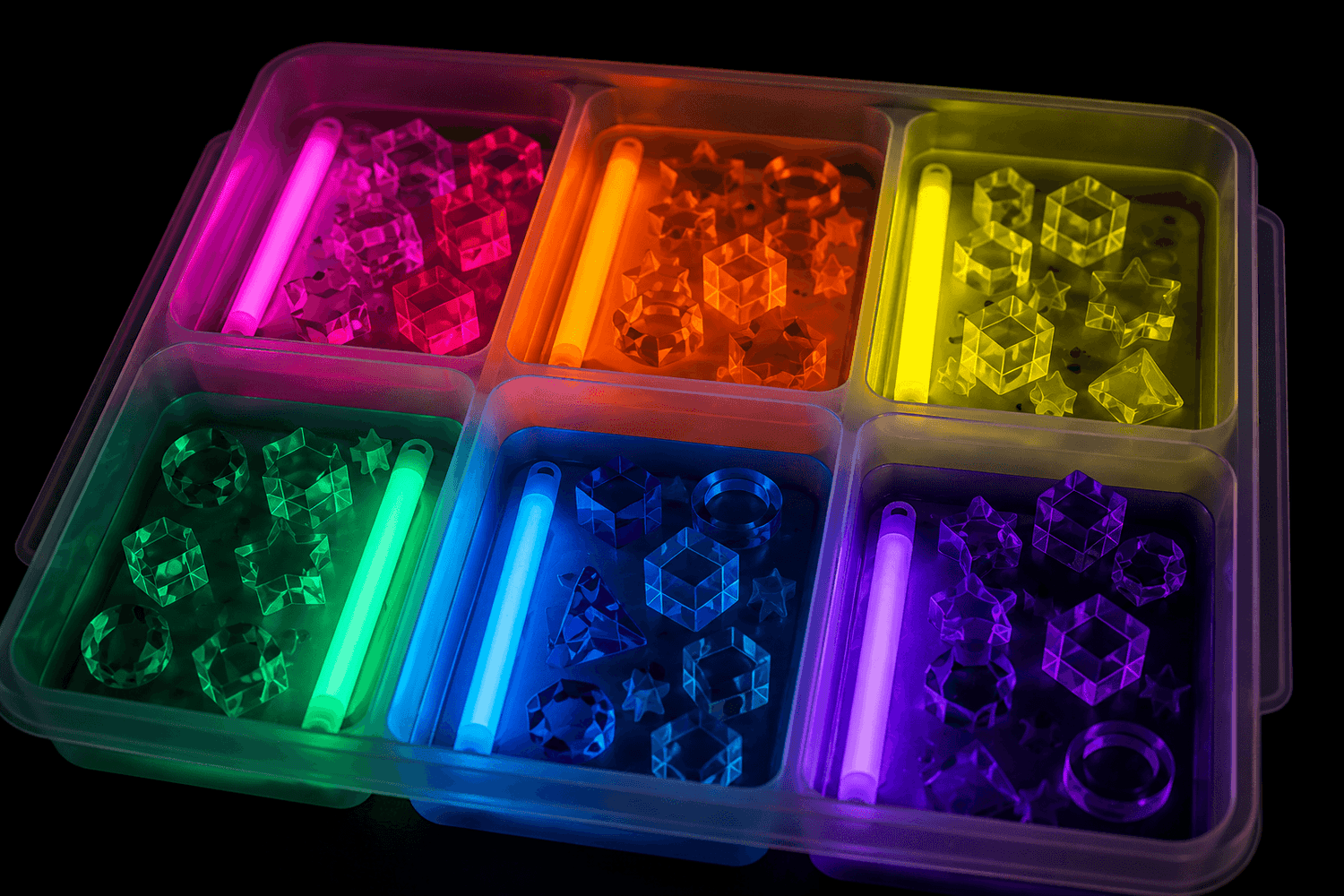
Fill a shallow tray (a rimmed baking sheet works perfectly) with dry rice or oats. Hide 4 to 6 small wooden pieces inside and invite your toddler to find and sort them by color, shape, or size. This supports fine motor development, sensory processing, and early math concepts like sorting and categorizing.
Sensory play is a critical screen replacement. Passive screen time displaces the tactile, hands-on experiences essential for toddler brain development. A tray of rice and a few hidden blocks offers exactly what a screen cannot.
4. Color Mixing with Water & Ice
Toy used: No specific toy required. You'll need food coloring, water, ice cube trays, and small cups.
The night before, freeze colored water into ice cubes. Set out clear cups of water and let your toddler drop in ice cubes, watching the colors mix and melt. This encourages scientific observation, cause-and-effect thinking, and sensory exploration. It's cool and calming on a hot day.
This is a perfect indoor activity for scorching afternoons or nap-schedule days when outdoor play isn't possible. Pair it with wooden spoons or small scoops for stirring.
5. Stacking & Knocking Down (Yes, Really)
Toy used: Wooden blocks or any stackable open-ended toys
Stack blocks into a tower, any set of blocks will work. Our Austin blocks work great for this! Invite your toddler to knock it down. Rebuild together. Repeat. This supports gross motor coordination, cause-and-effect understanding, and emotional regulation. The joy of destruction is developmentally healthy and deeply satisfying for toddlers.
Repetitive play like this is not "just chaos." It's how toddlers test hypotheses and build confidence. And it's one of the easiest invitations to play you can set up: under 60 seconds, no prep required.
6. Rainbow Stacker Color Sorting Game
Toy used: Maison Rue Wooden Rainbow Stacker
Remove the arches and scatter them across the floor. Invite your toddler to sort them by color into small bowls or baskets, or line them up in rainbow order. This builds color recognition, sequencing, and early math foundations. It's a deceptively simple activity with a high cognitive payoff.
Notice that this repurposes the same rainbow stacker from Activity 1 in a completely different way. That's the true value of open-ended design. This also works beautifully as a calm, focused activity after lunch or before nap.
7. Nature Loose Parts Tray
Toy used: Wooden blocks or a simple tray as the base, plus loose parts gathered from outside (pinecones, smooth stones, leaves, sticks)
Before play, take a five-minute walk outside together to collect natural loose parts. Back inside, arrange them on a tray and invite your toddler to sort, stack, or create patterns. This fosters connection to nature, sensory exploration, fine motor skills, and early scientific classification.
Using natural materials reinforces the value of the natural world and pairs naturally with non-toxic, sustainably made toys. Safety note: supervise closely with very young toddlers and choose items too large to be a choking hazard.
8. Pretend Play Picnic
Toy used: Wooden play food, blocks as "food," or any small wooden figures you already own
Spread a small blanket on the floor. Invite your toddler to "pack" a picnic using toy food or blocks as stand-in items. Include stuffed animals as guests. This supports symbolic play, language development, and social-emotional learning as toddlers practice nurturing, turn-taking, and narrative storytelling.
This is the perfect "you already own it" activity: no new purchases needed, just a blanket and imagination. It works equally well indoors on a rainy day as it does outside on the grass.
9. Shadow Tracing with Blocks
Toy used: Wooden or Acrylic blocks
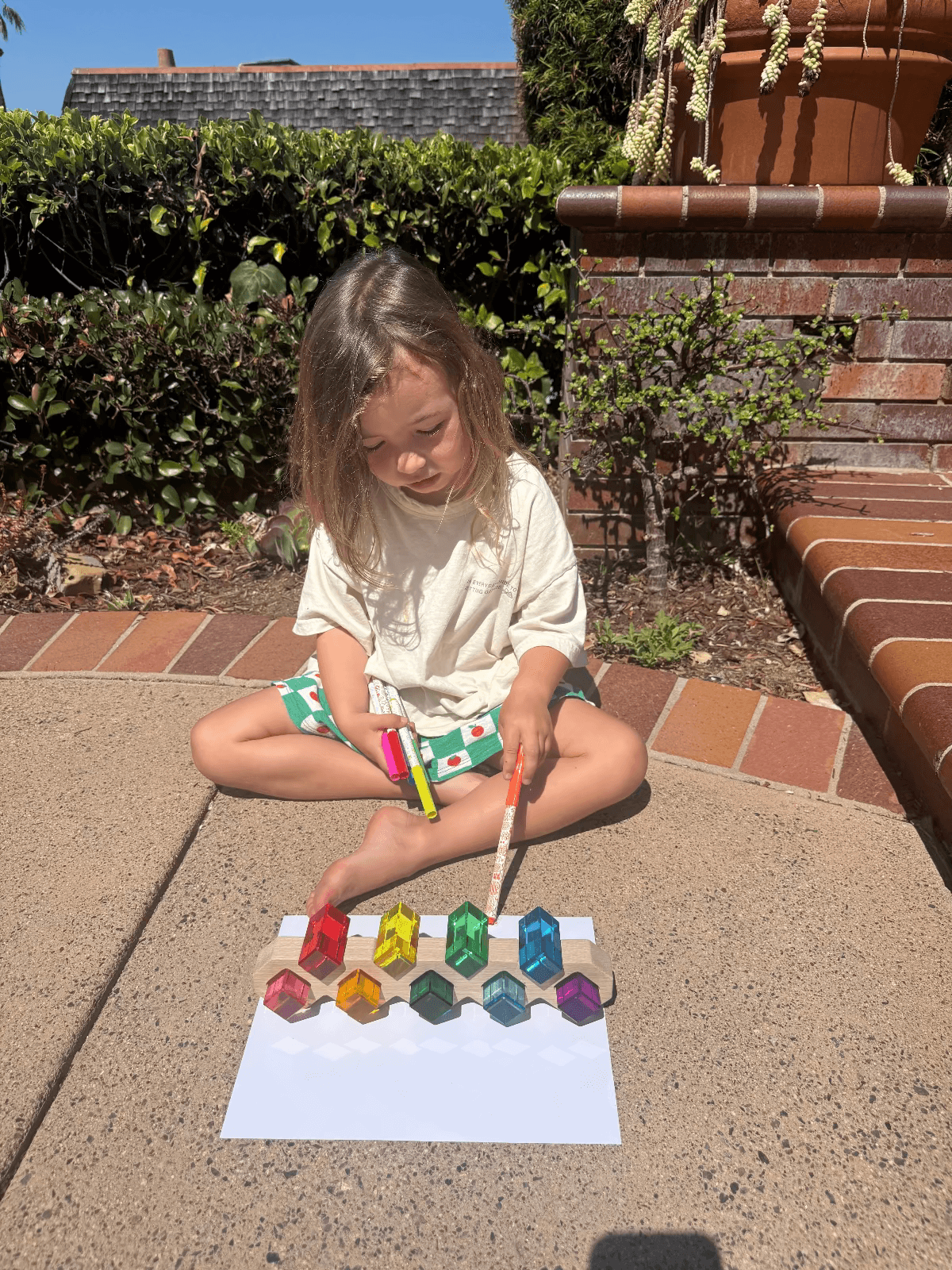
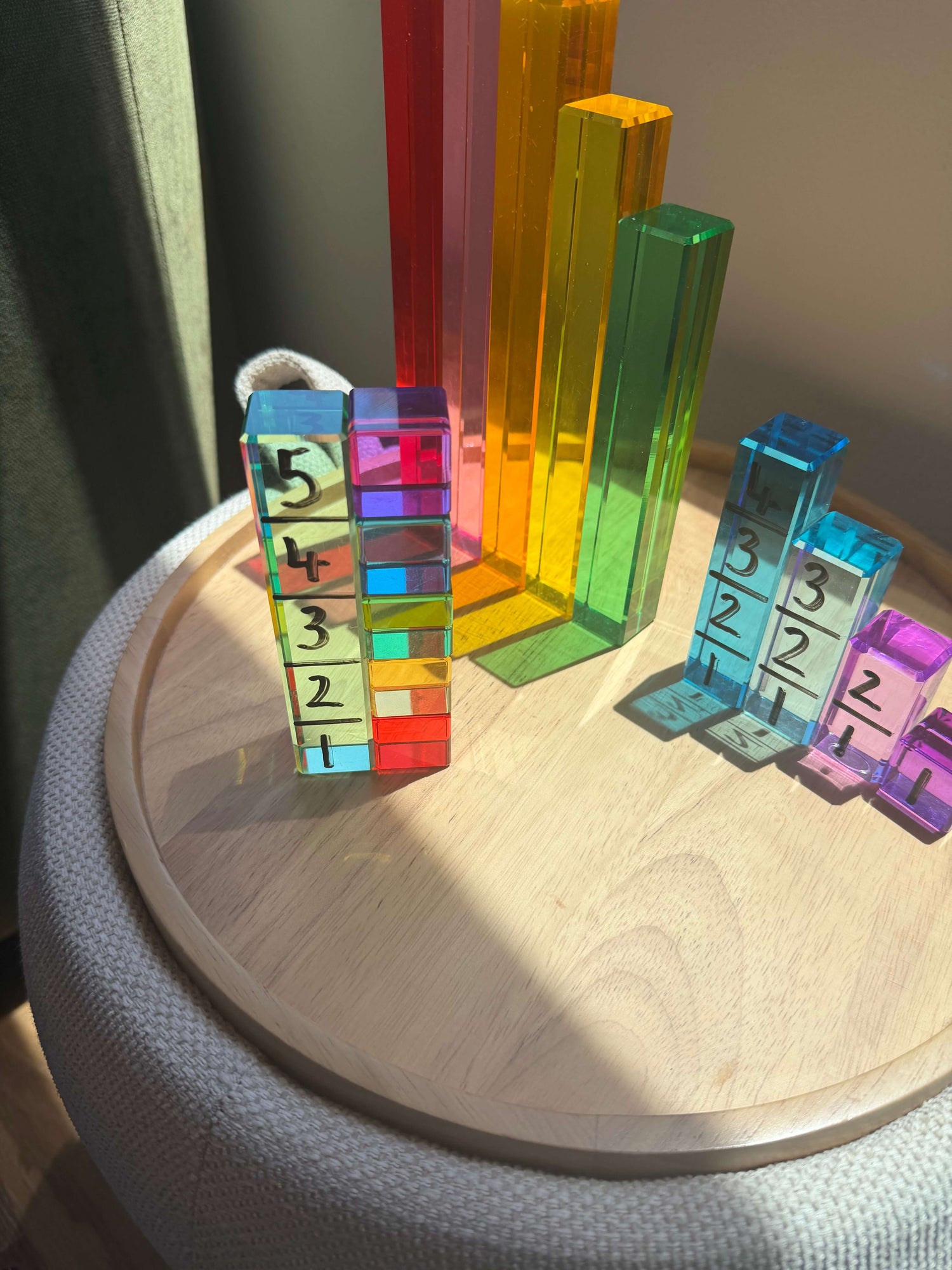
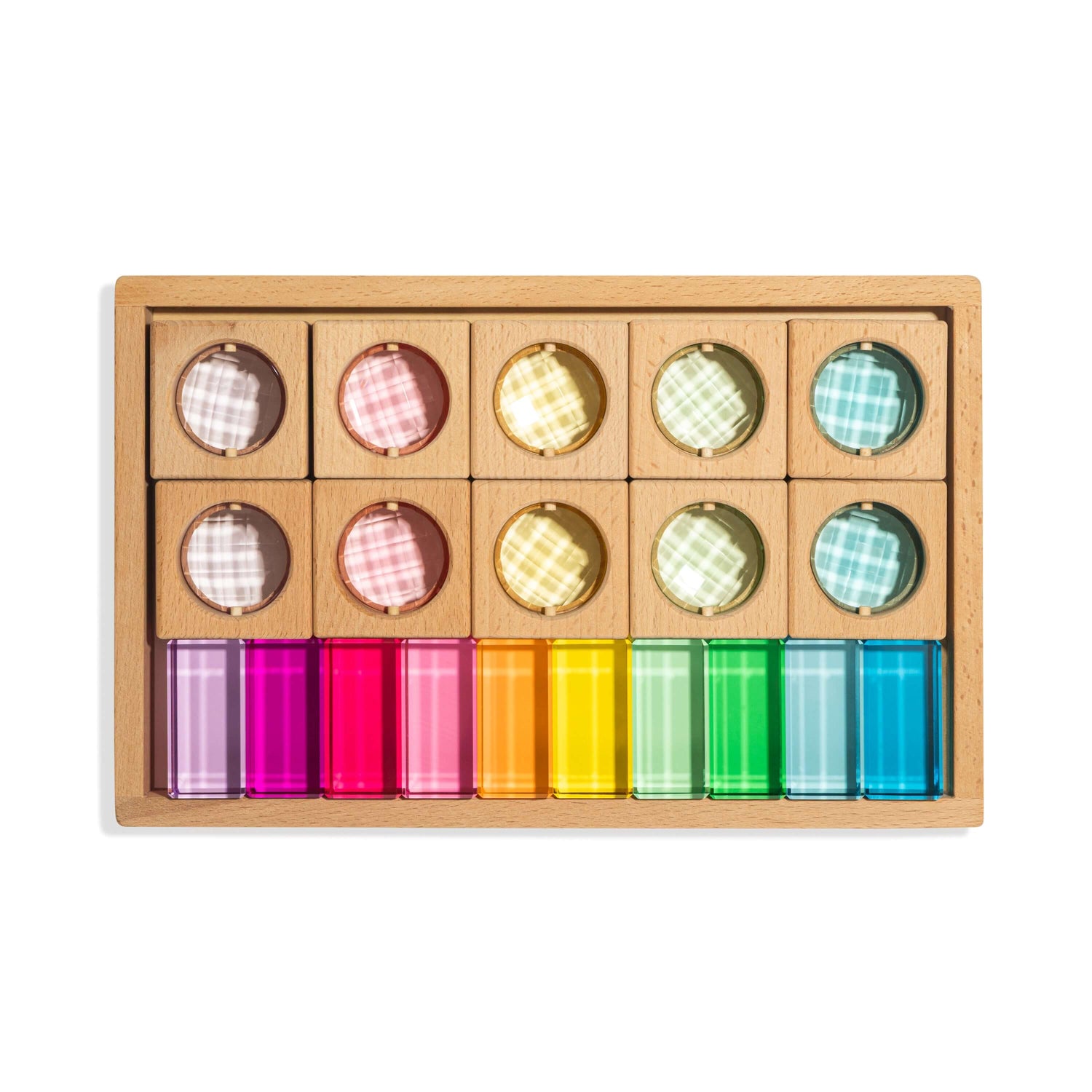
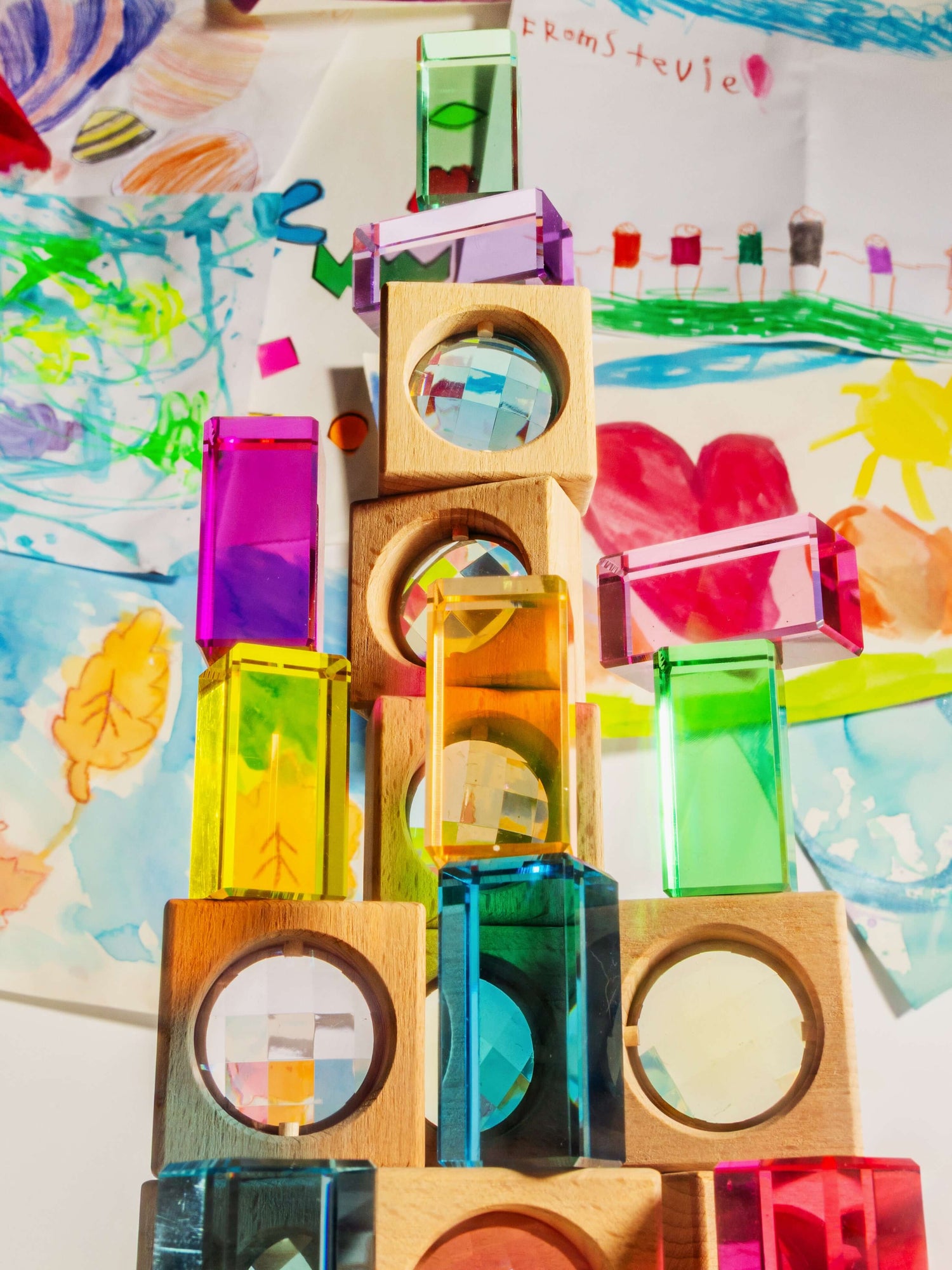
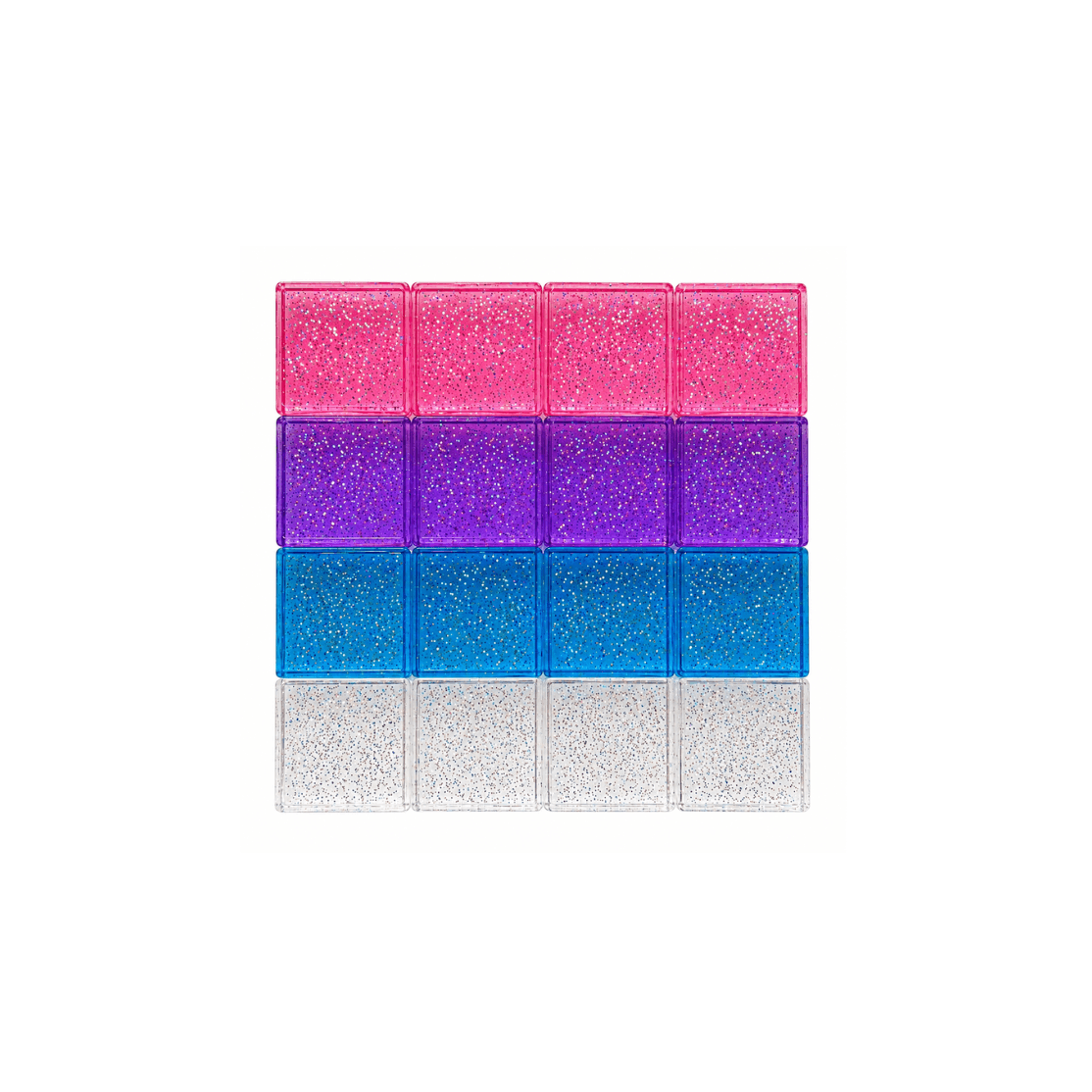
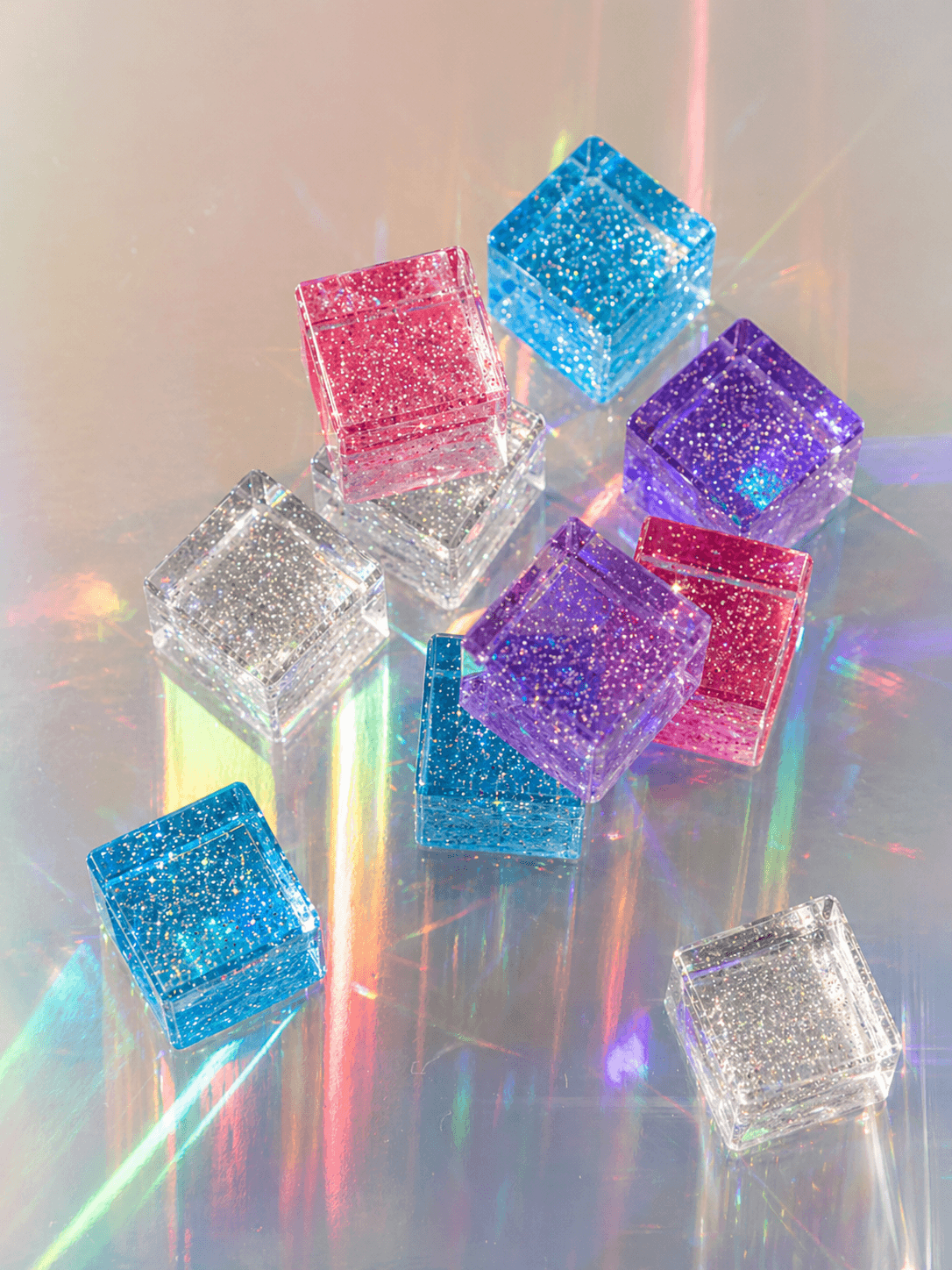
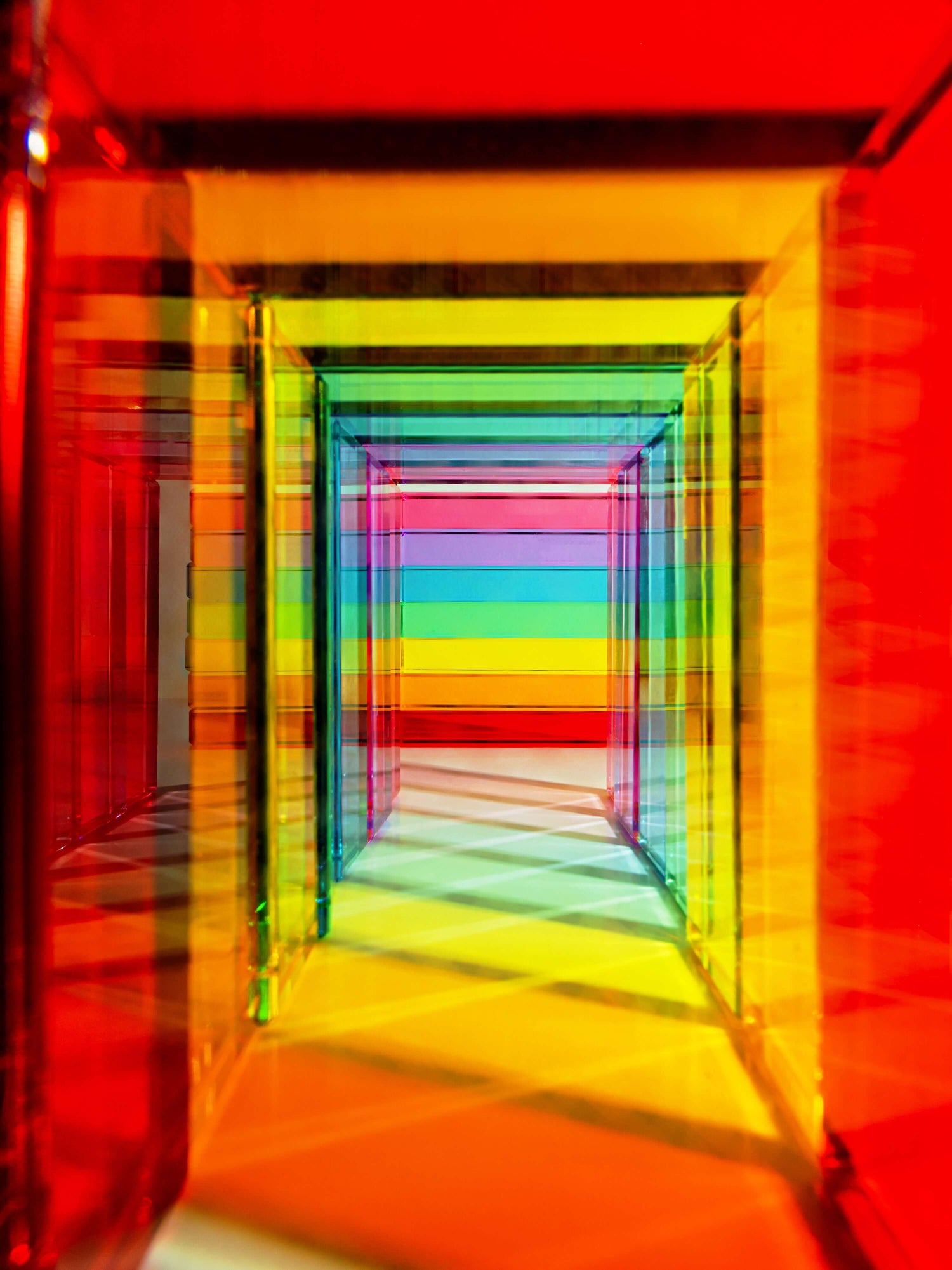
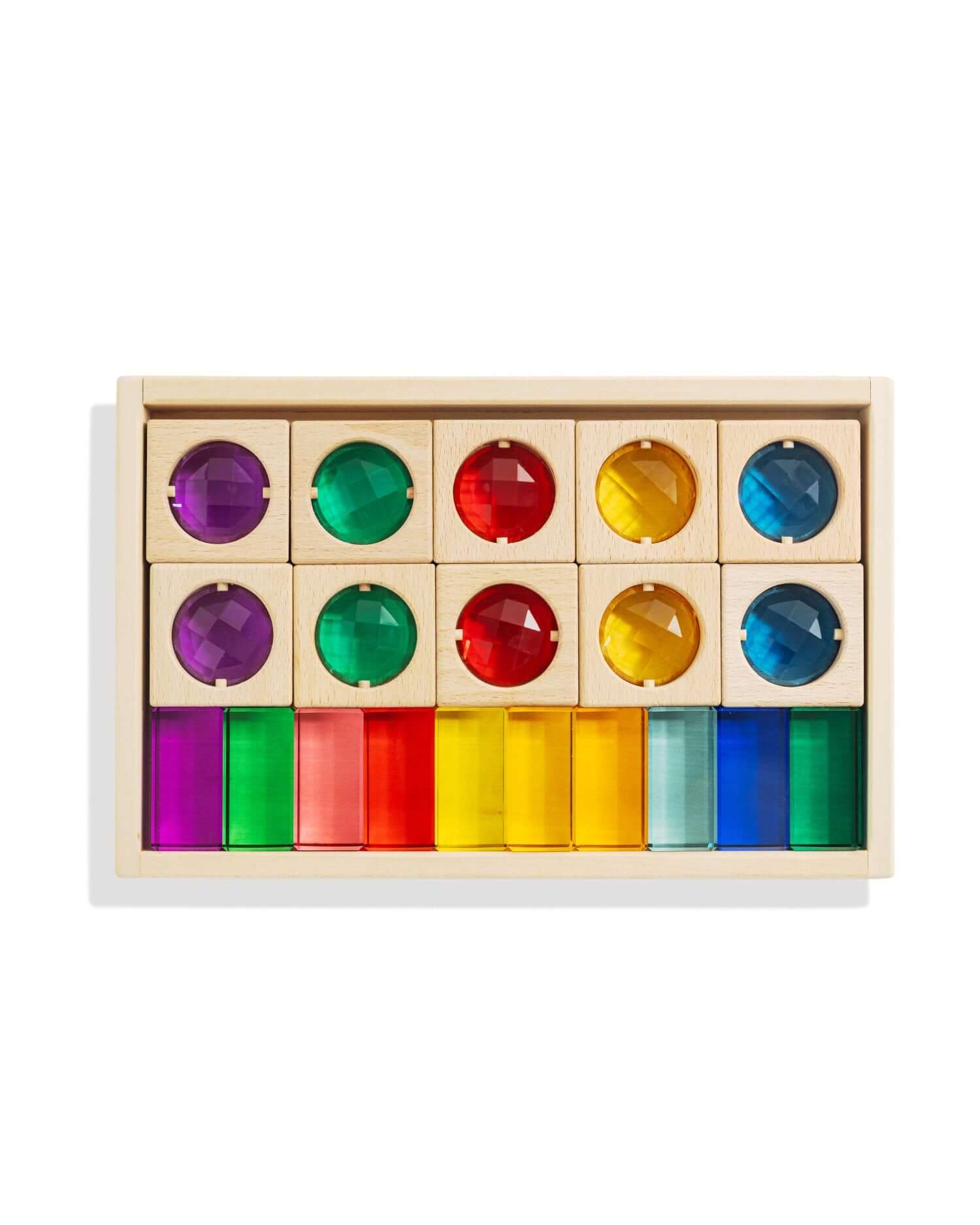
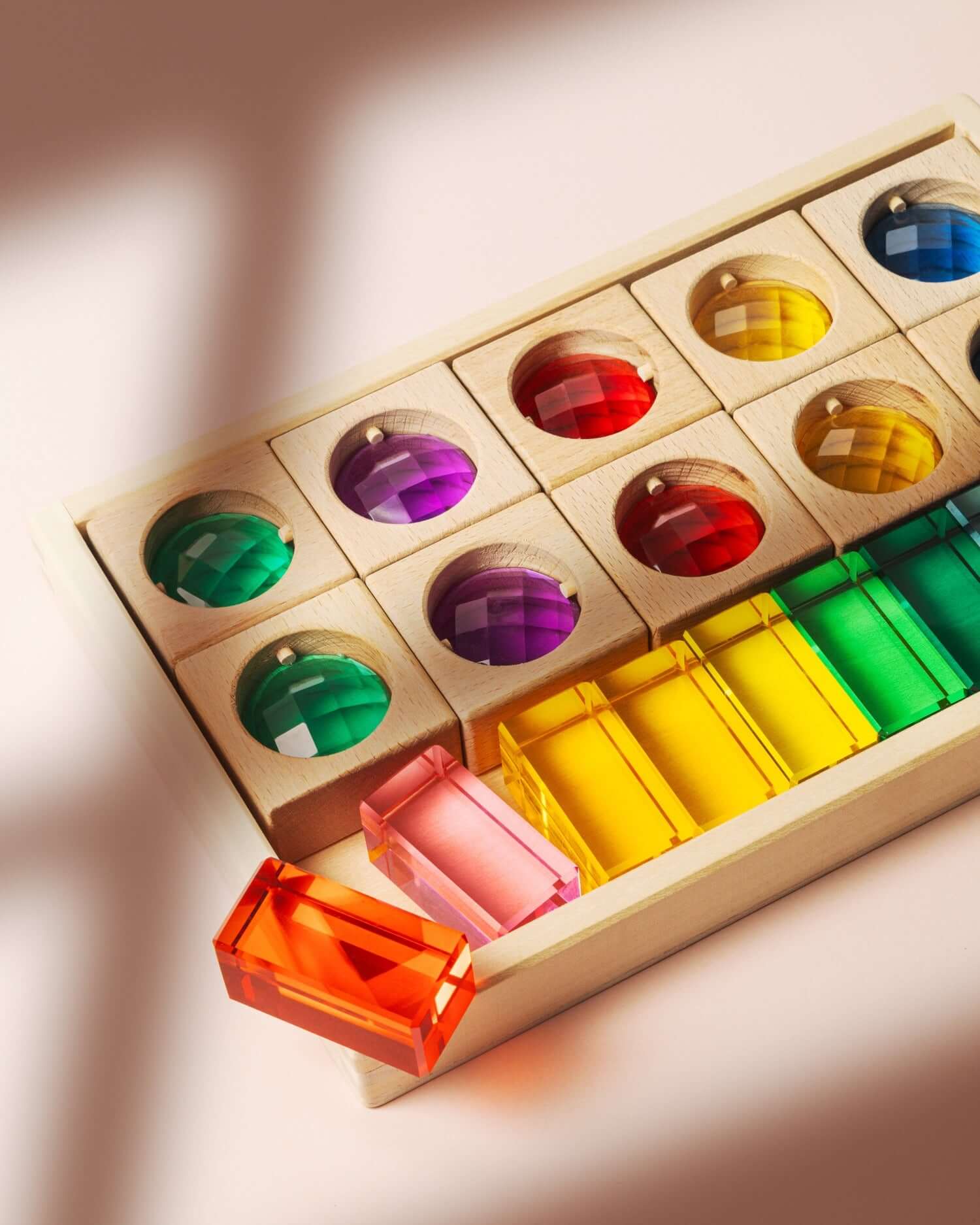
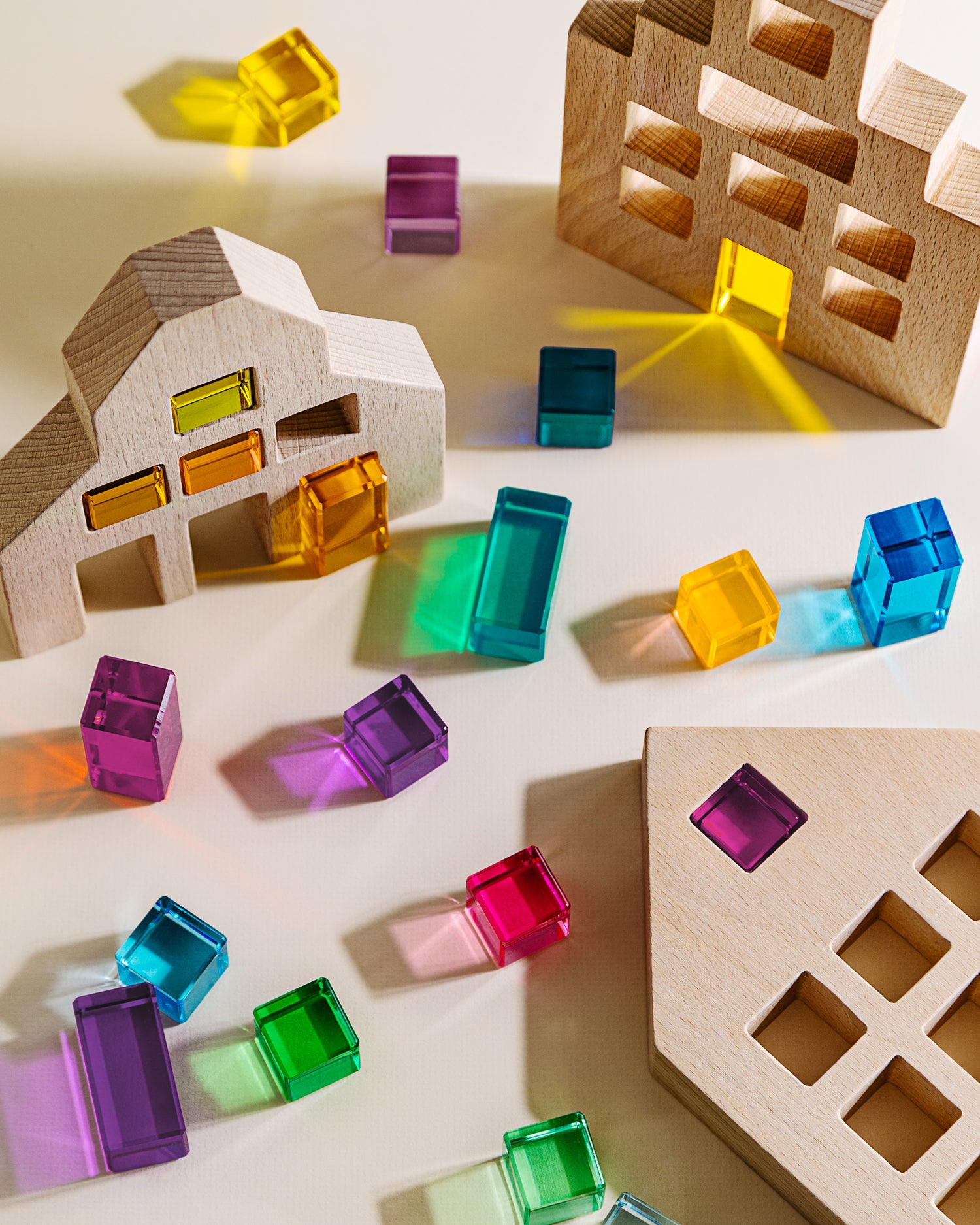
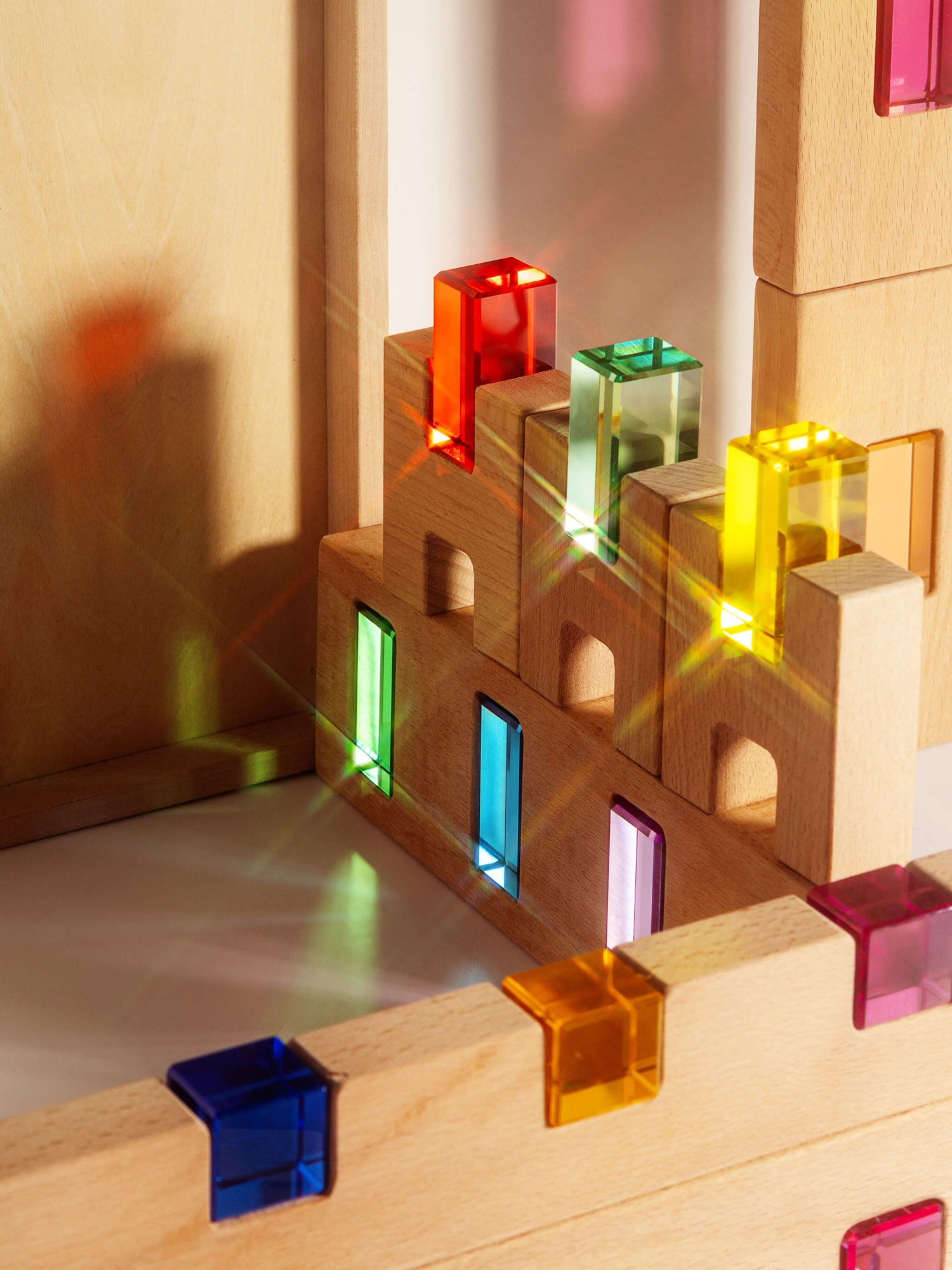
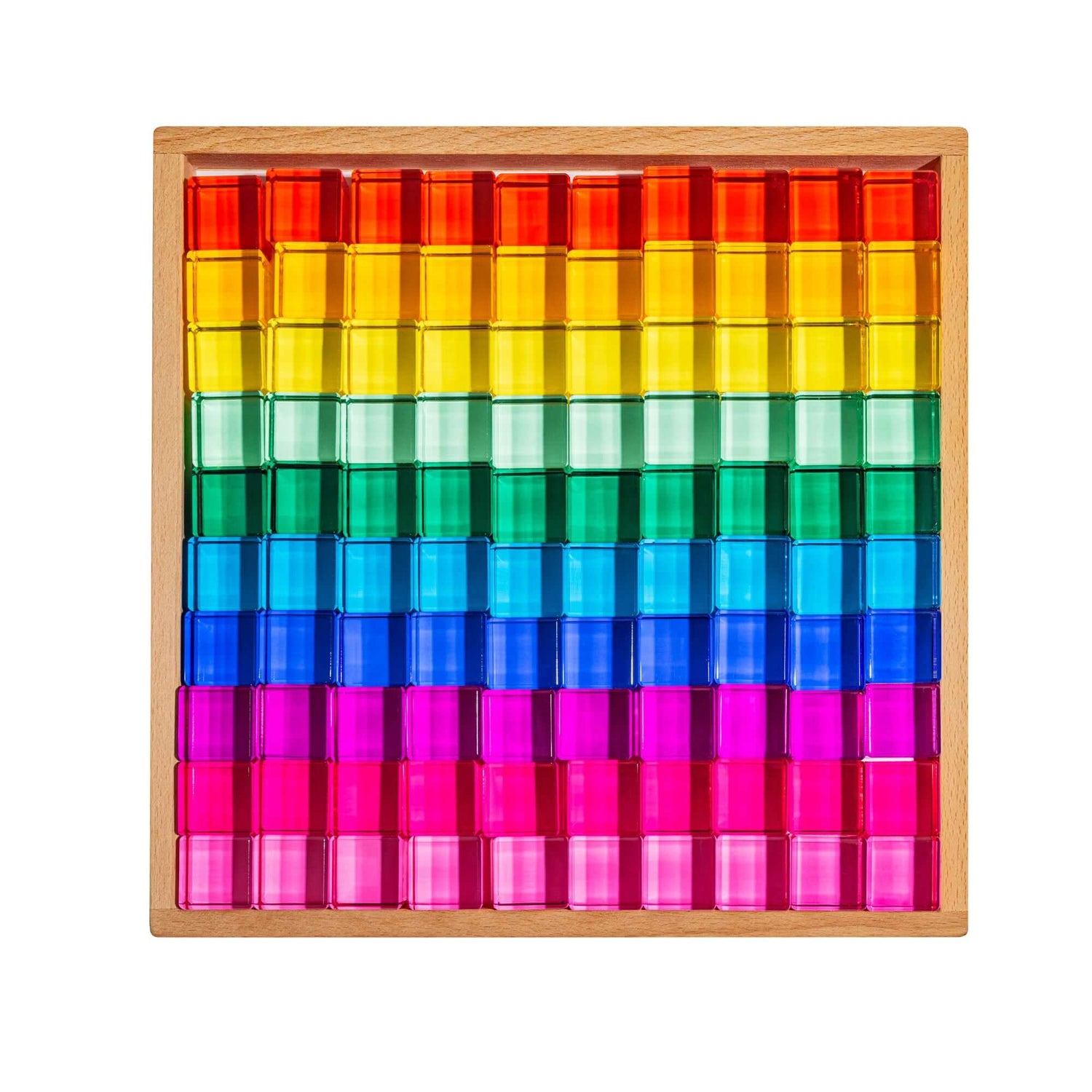
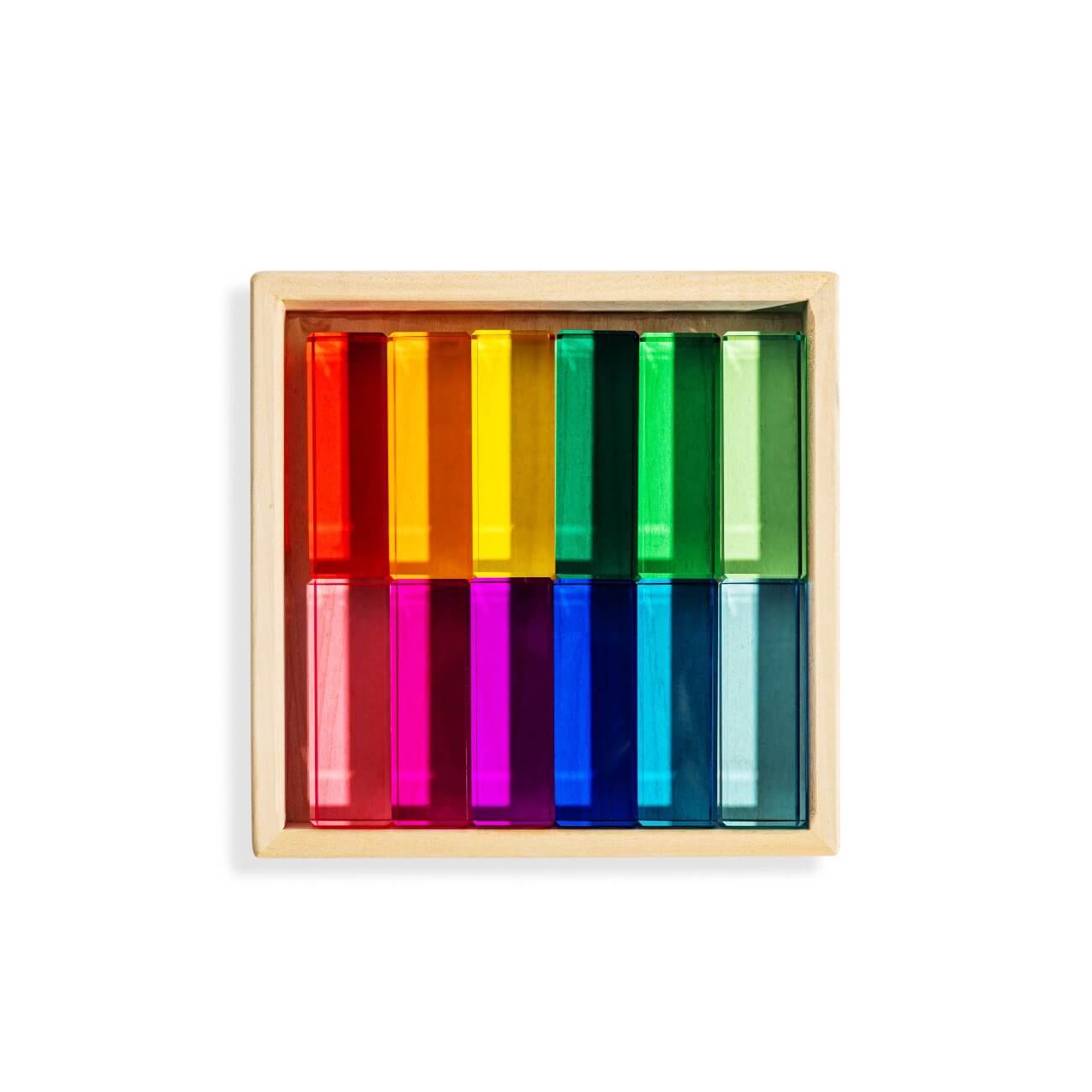
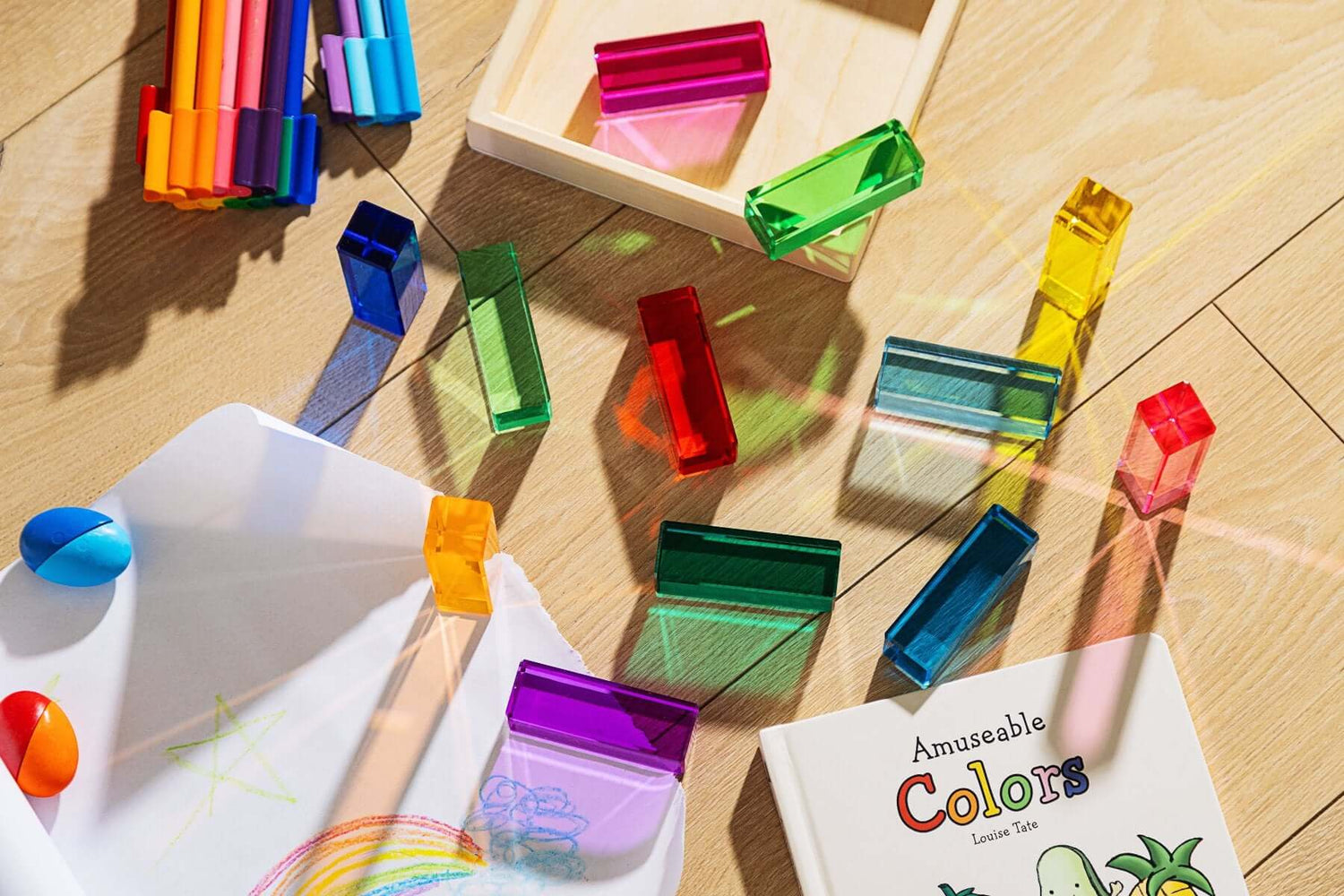
On a sunny morning, place wooden or acrylic blocks near a window where sunlight casts strong shadows or outside on a pavement, patio etc. Give your toddler paper and a chunky crayon or marker to trace the shadow shapes. This is especially fun with our acrylic block sets which create colorful shadows. Children can even match the color of their marker or crayon to the colorful acrylic shadows for an added challenge. This introduces early geometry and spatial awareness, builds fine motor control, and sparks scientific curiosity about light and shadow.
It's a calm, focused activity that works beautifully during the quieter morning hours before the summer heat peaks. It also encourages observation and patience, two skills that screens actively work against.
10. Waterplay Pouring Station
Toy used: Cups, scoops, rainbow acrylic blocks or any waterproof open-ended toys, plus a shallow bin of water
Fill a shallow bin or the kitchen sink with a few inches of water. Add cups, spoons, and small containers of different sizes for pouring and transferring. Water play builds fine motor precision, early math understanding (volume, capacity), sensory regulation, and cause-and-effect thinking. It's one of the most absorbing activities for toddlers.
Perfect for hot summer days, indoors at the sink or outdoors on the patio.
Safety note: always supervise water play. Even shallow water requires an adult present.
A Note on Boredom: Why Doing Less Is Actually More This Summer
Unstructured time helps toddlers reset mental patterns, build creativity, develop problem-solving skills, and grow independence. The June 2025 Raising the Nation Commission Report identified unstructured, child-led play as a top priority for children's wellbeing, calling for more space for free play in children's lives.
It's okay if your toddler seems "bored" at first. That discomfort is the beginning of creative thinking. Give the invitation to play a few minutes to work its magic. Open-ended play (not screens) helps toddlers maintain developmental momentum over the summer months.
How to Make Screen-Free Play a Summer Habit (Not a One-Day Experiment)
One great play session is wonderful. A summer-long rhythm of screen-free play is transformative. Here are three low-pressure strategies to build it into your daily routine:
- Rotate your toys. Put some toys away and rotate them back in every one to two weeks. The novelty effect is real. Research shows toddlers play more creatively and for longer with fewer toys. A "new" set of familiar blocks every couple of weeks keeps engagement high without buying anything new.
- Create a morning play window. Before screens are introduced, carve out even 30 to 45 minutes of open-ended play first thing in the morning. It sets a positive, grounded tone for the rest of the day. Your toddler's brain is fresh and ready to explore.
- Set up the invitation the night before. Spend five minutes after bedtime arranging a simple invitation to play. When your toddler wakes up to something beautiful and engaging already waiting, the morning screen request fades. It becomes a small ritual that pays off every single day.
For more ideas beyond this list, our free Play & Parenting Journal blog and activity library is always here for you. It's full of screen-free play inspiration, developmental guides, and seasonal activity ideas designed by an early childhood educator.
Your Toddler's Best Summer Starts on the Shelf
The best screen-free summer doesn't require a shopping list. It requires a new way of seeing the toys already in your home. A rainbow stacker becomes a tunnel, a bridge, a sorting game. A set of wooden blocks becomes a village, a shadow-tracing tool, a tower waiting to be toppled with glee.
Open-ended play supports language, spatial reasoning, fine motor skills, creativity, and social-emotional development. These are the things screens simply cannot replicate.
If you're building or refreshing your toddler's toy collection, our Montessori-inspired, non-toxic open-ended toys are designed for exactly this kind of play. Featured in Vogue, Babylist, and Milk Magazine, every piece is created by an early childhood educator and tested to the highest safety standards. Explore the full collection and save this article for the next time summer boredom strikes.



0 comments