
Your Toddler Is Already Doing Math (They Just Look Like They're Playing)
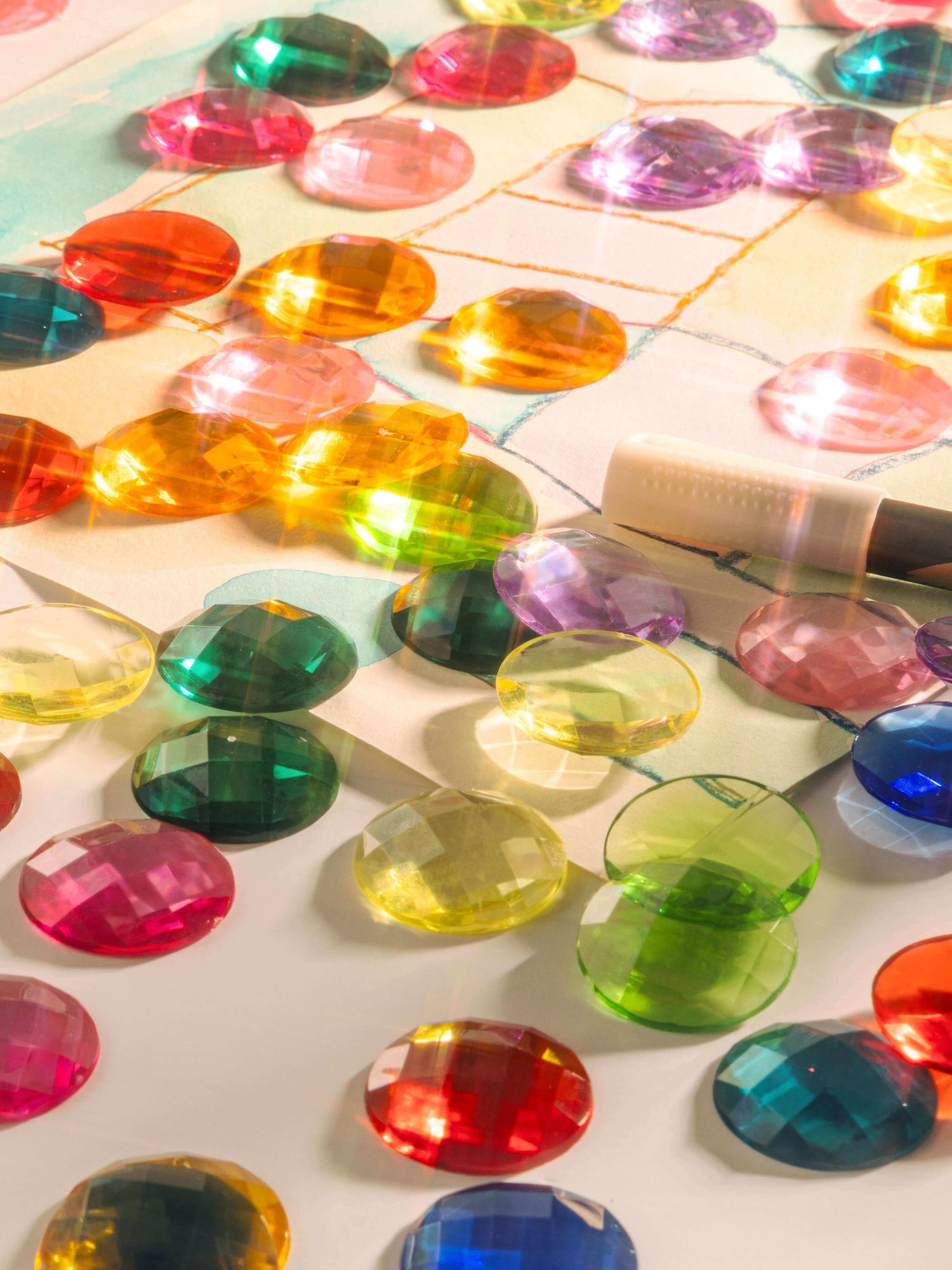
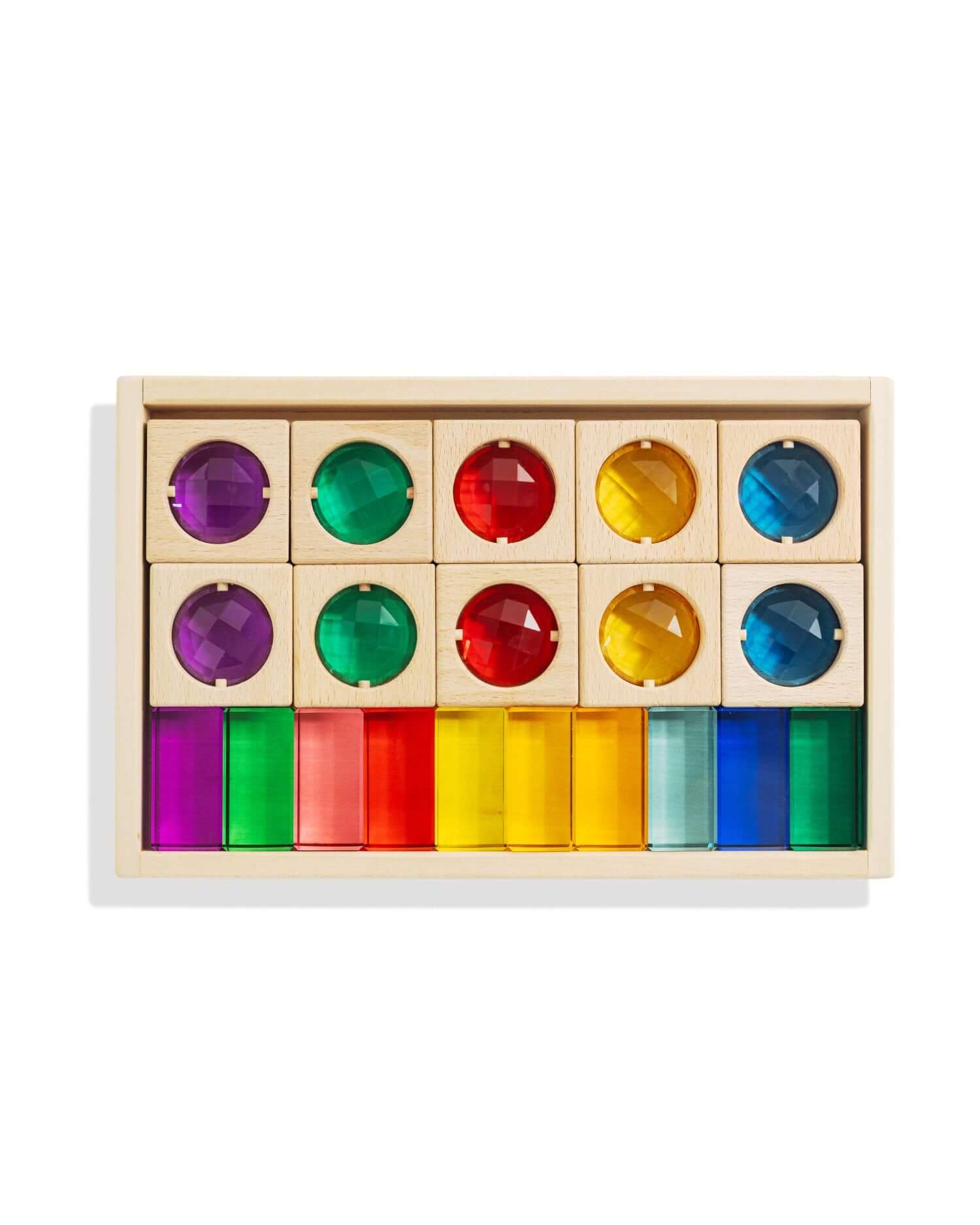
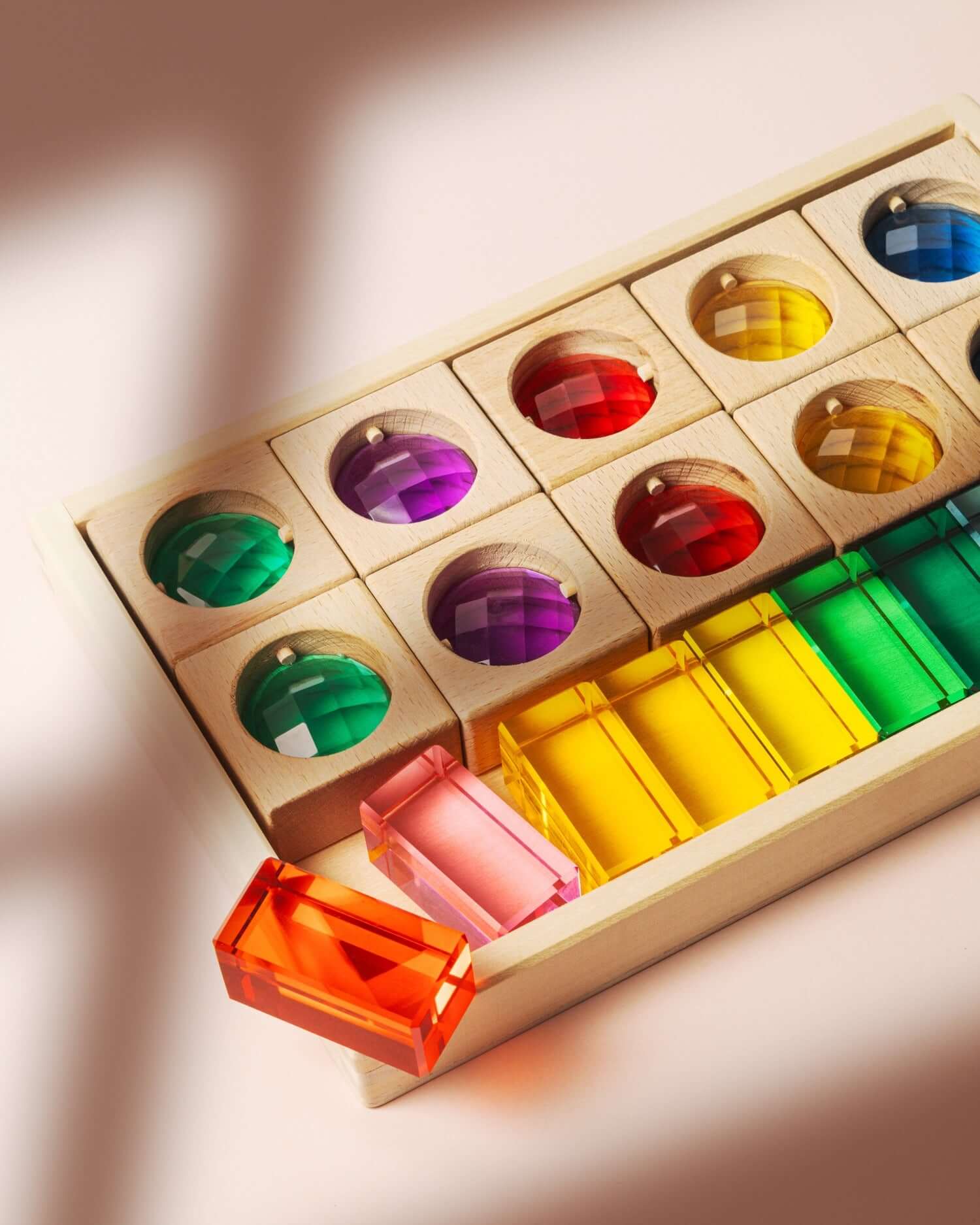
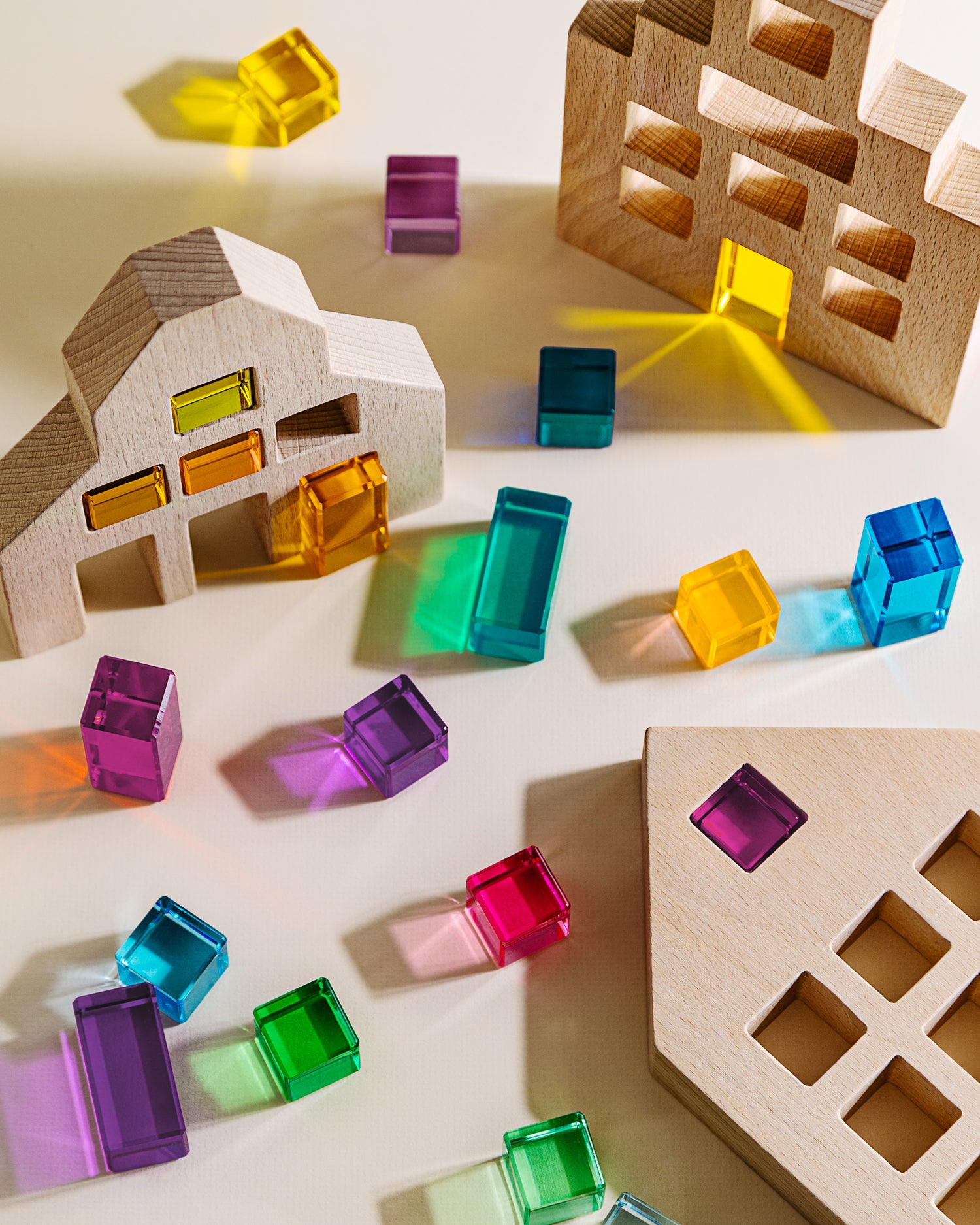
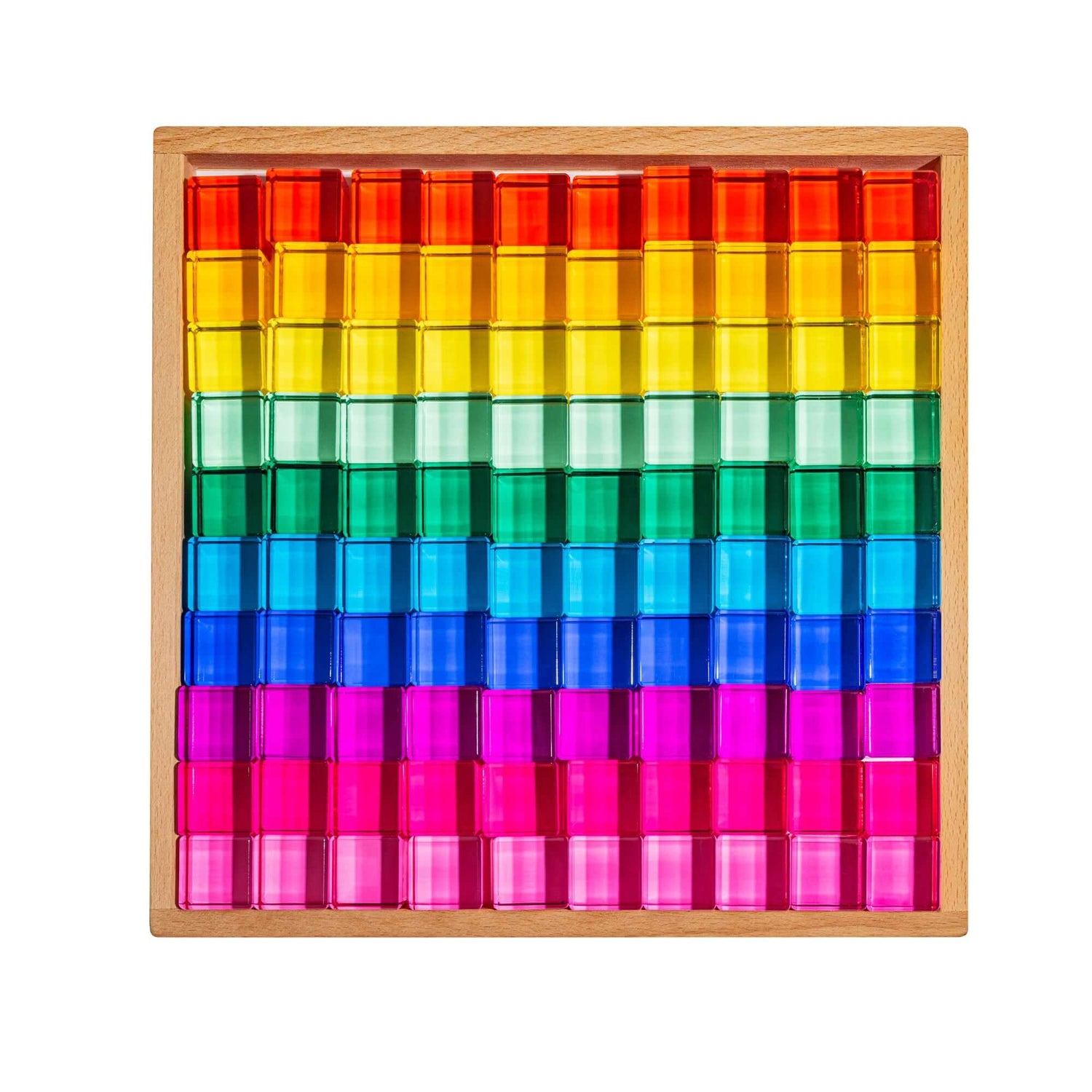
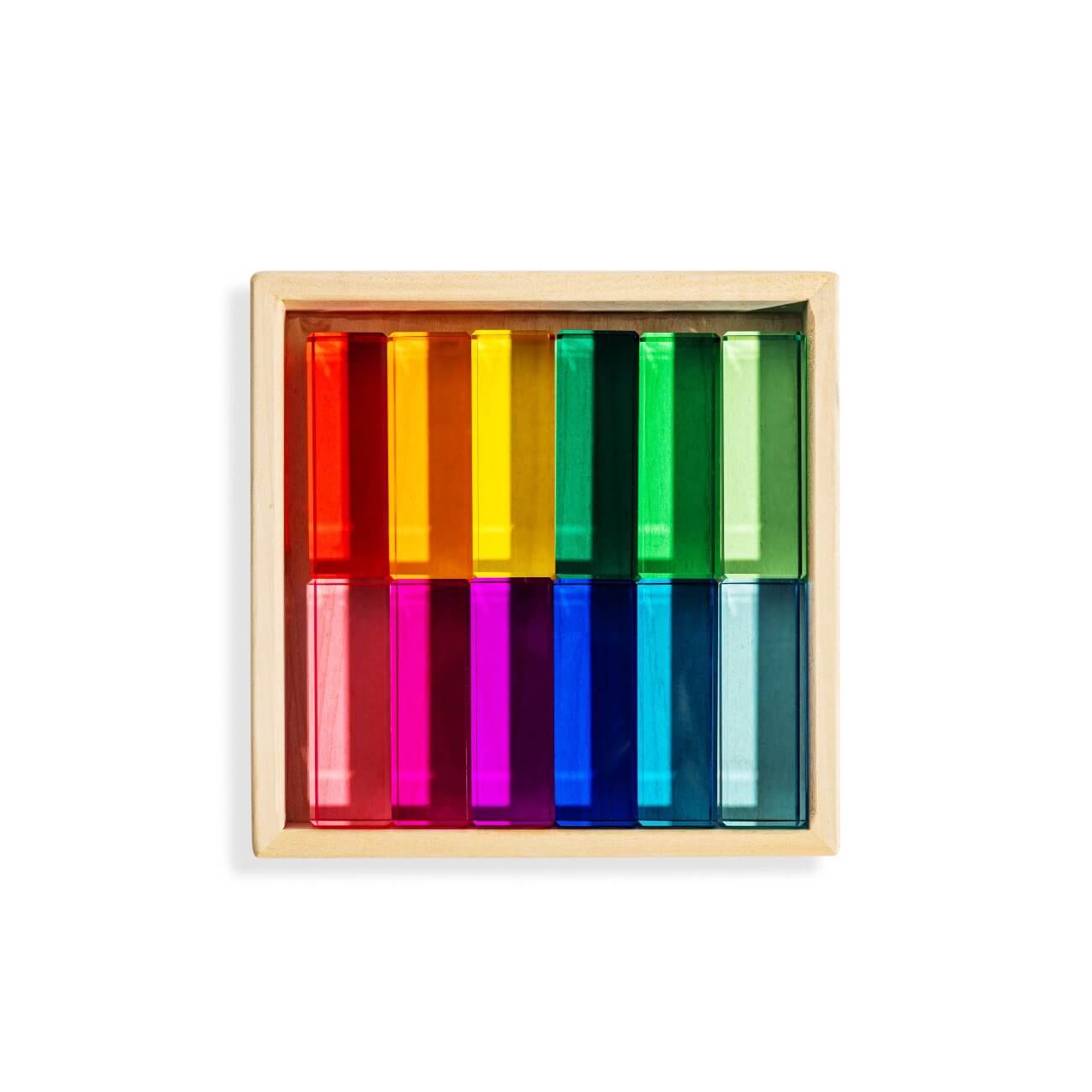
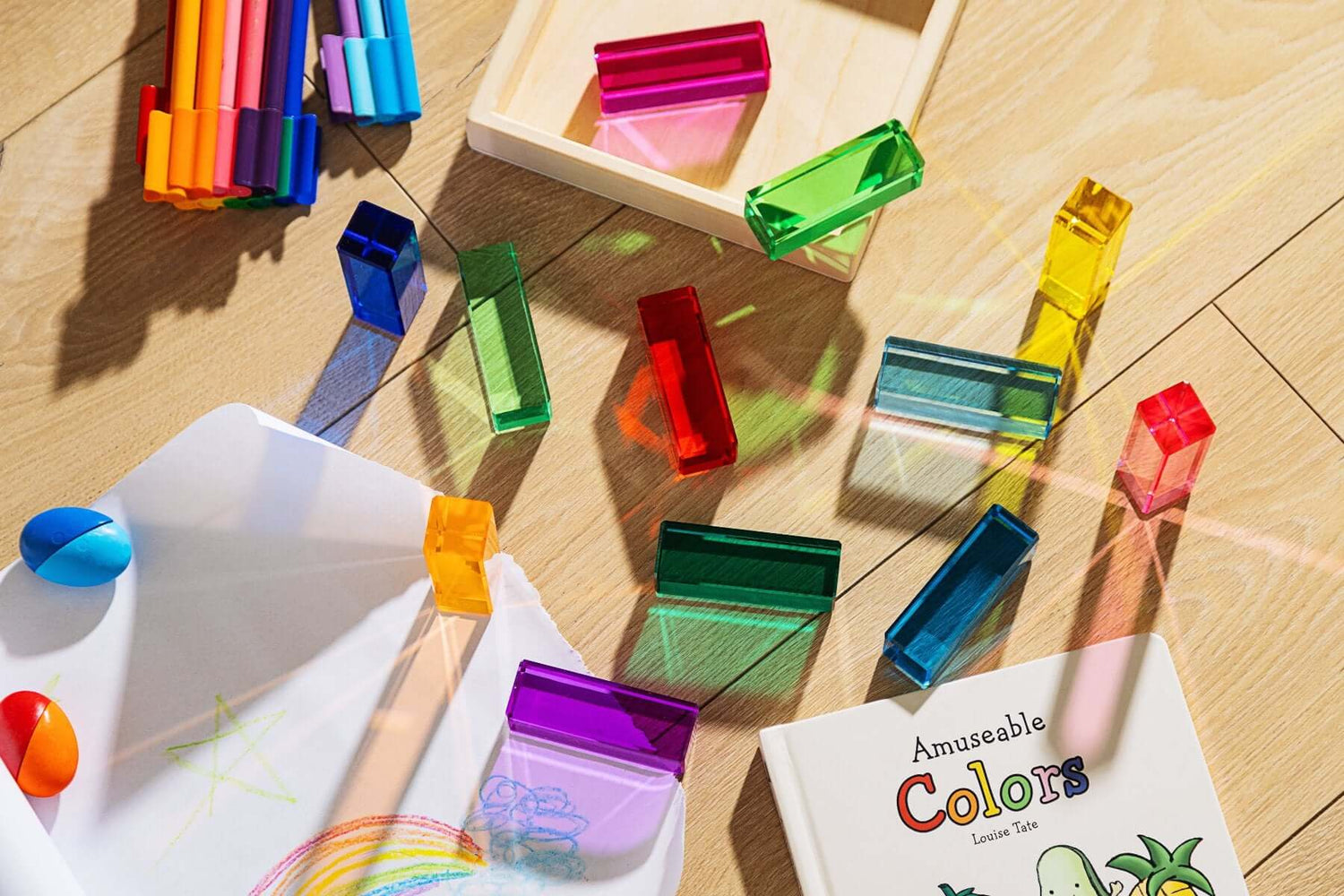
Picture this: your toddler sits at a light table, translucent gems glowing beneath their fingers. They sort the blue ones into a pile, push the pink ones aside, and quietly narrate, "More blue." It looks like play. It is play. But it's also early math and language development happening in real time.
Here's a number worth knowing: children learn new words 18.6 days earlier for every additional sense engaged during play. A single handful of colorful gems activates sight, touch, and proprioception simultaneously, turning a 10-minute activity into a multi-sensory learning session.
This kind of play has a name in research circles: loose parts play. Of 5,721 studies screened in a recent systematic review, only one explicitly used the term "loose parts." That means parents buying sensory gems are already practicing the science; they just haven't been given the language to connect the two. This article walks through exactly how sensory gems build early math and language skills, with age-specific guidance and caregiver prompts you can use today.
What the Research Actually Says About Loose Parts and Cognitive Development
A 2025 systematic review by Cankaya, Martin, and Haugen, published in the Journal of Intelligence, screened 5,721 studies and identified 25 that met rigorous criteria for examining indoor loose parts play and cognitive development in children aged 0 to 6. The majority of those qualifying studies reported positive associations between loose parts-style materials and cognitive growth, including gains in language development and academic skills like reading and math.
A separate 2025 study published in Communications Psychology (part of the Nature journal portfolio) used a within-subjects experimental design to observe children playing independently with loose parts. The findings were clear: loose parts play offers strong potential for spontaneous STEM exploration, including early mathematics behaviors that emerge naturally without adult direction.
These aren't fringe findings. The research base is broad and growing.
So what does this mean for you? If you've ever handed your child a set of sensory gems and watched them sort, stack, or line them up, you've already been facilitating research-backed learning. The terminology gap just kept that connection hidden. (Maison Rue was founded by an early childhood educator with a Montessori-informed background, so bridging this kind of gap between research and real life is something we care deeply about.)
How Sensory Gems Build Early Math Skills
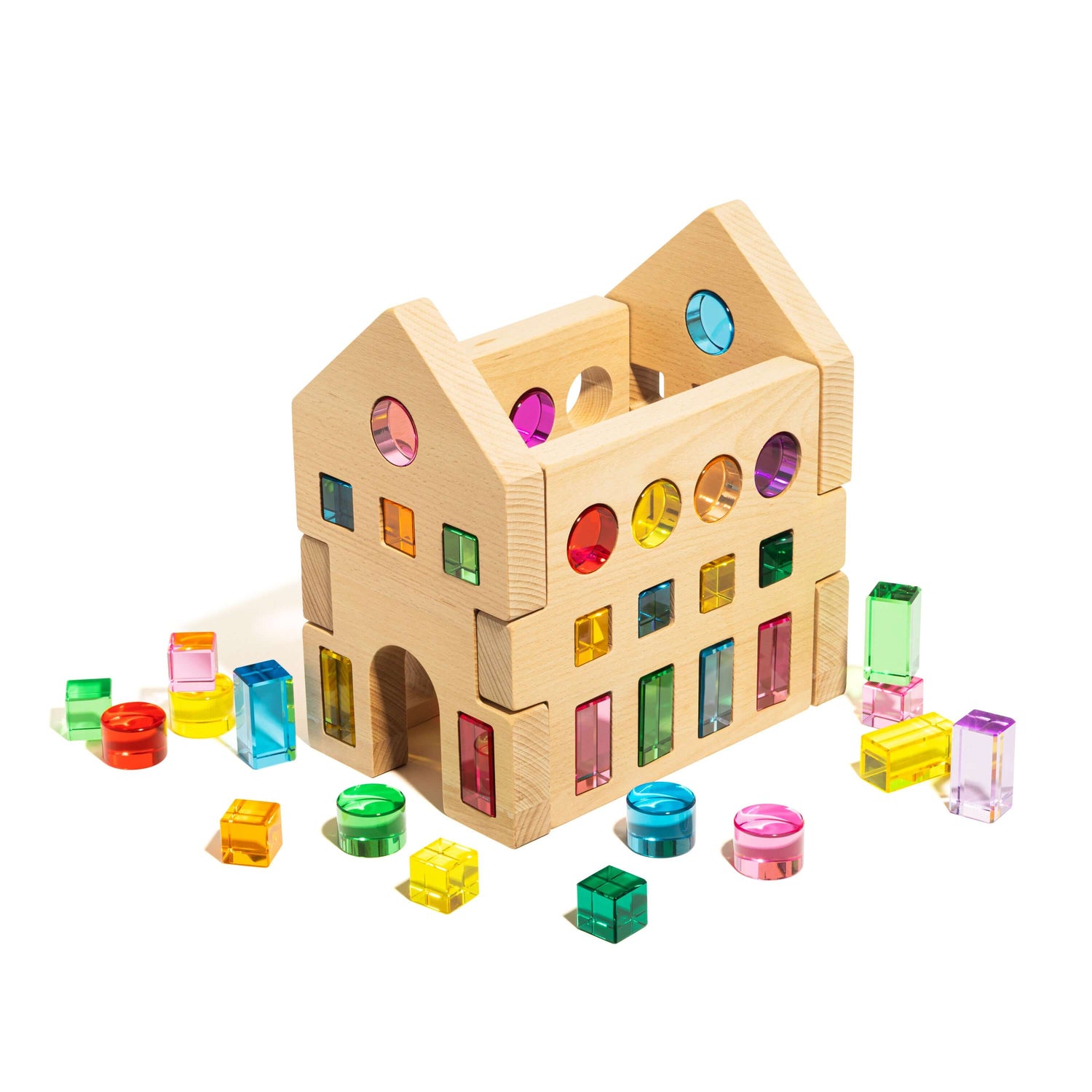
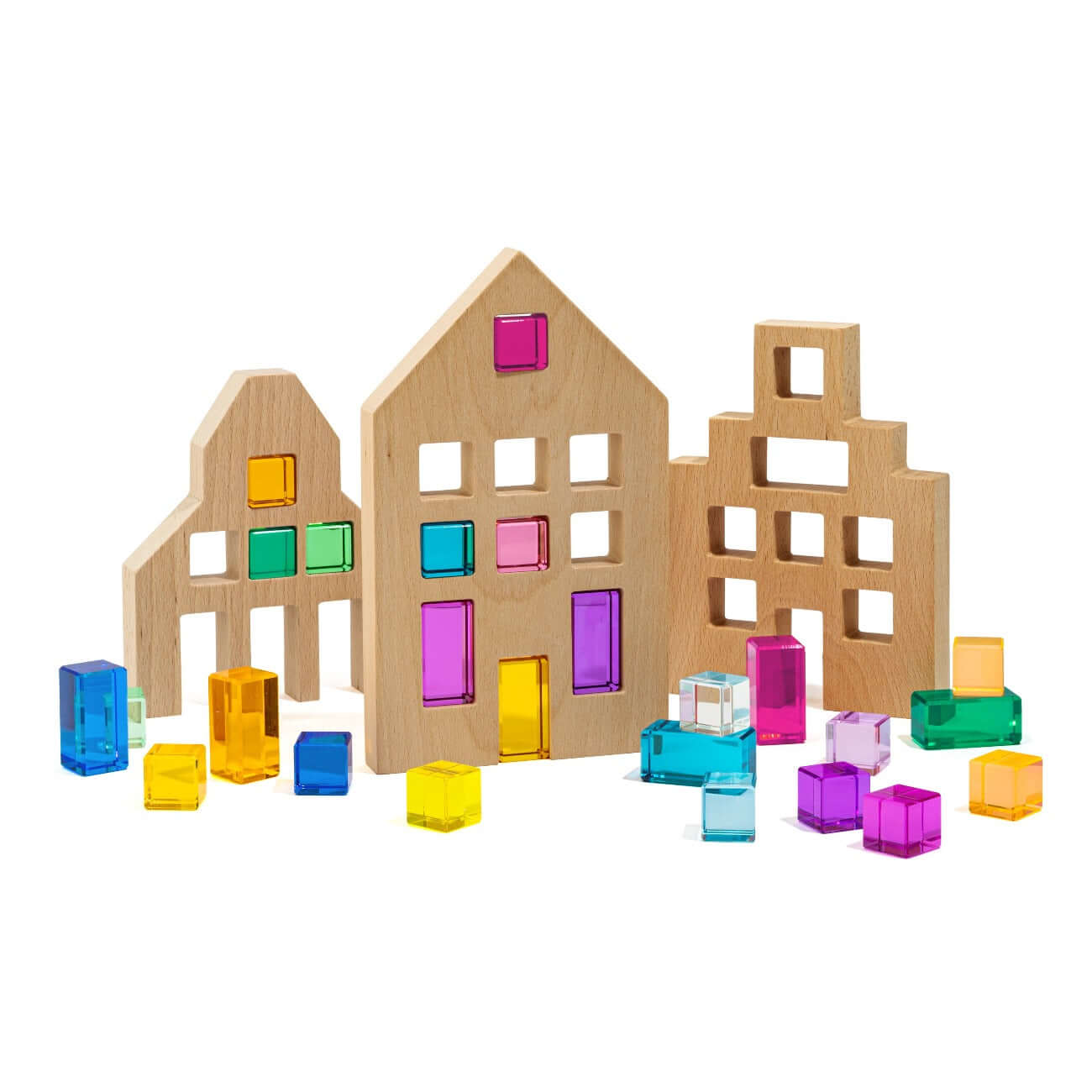
Research consistently shows that blocks and construction materials increase mathematical knowledge, including spatial reasoning, counting, and pattern recognition. Sensory gems function in a similar way as loose parts: they're open-ended objects that children can manipulate, organize, and explore without a single "right" way to play.
The core early math concepts gems activate are surprisingly rich:
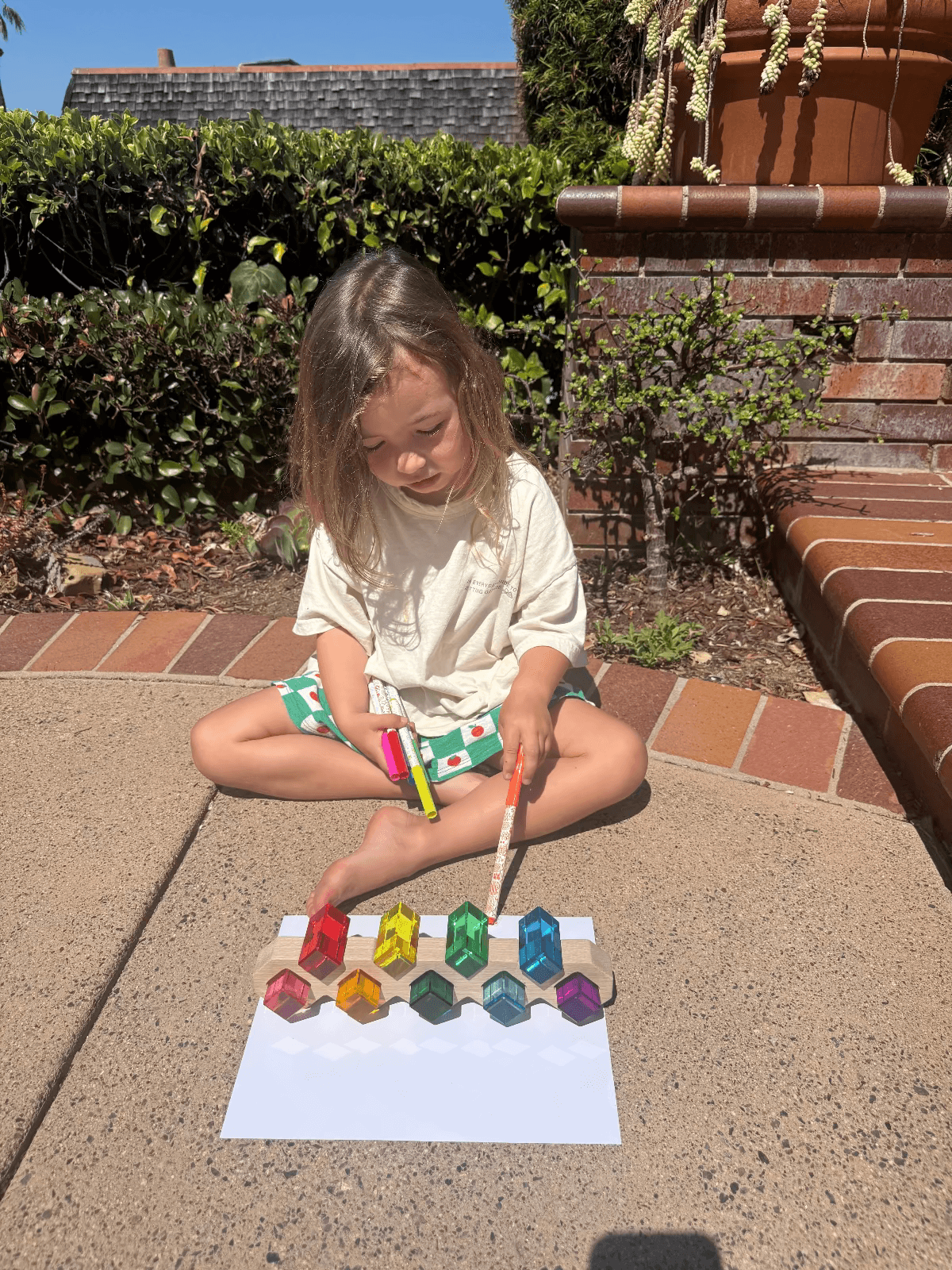
- Sorting and classification: Grouping gems by color, size, or shape is foundational categorization work.
- One-to-one correspondence: Placing one gem per cup, one gem per square, one gem per finger. This is the precursor to counting with meaning.
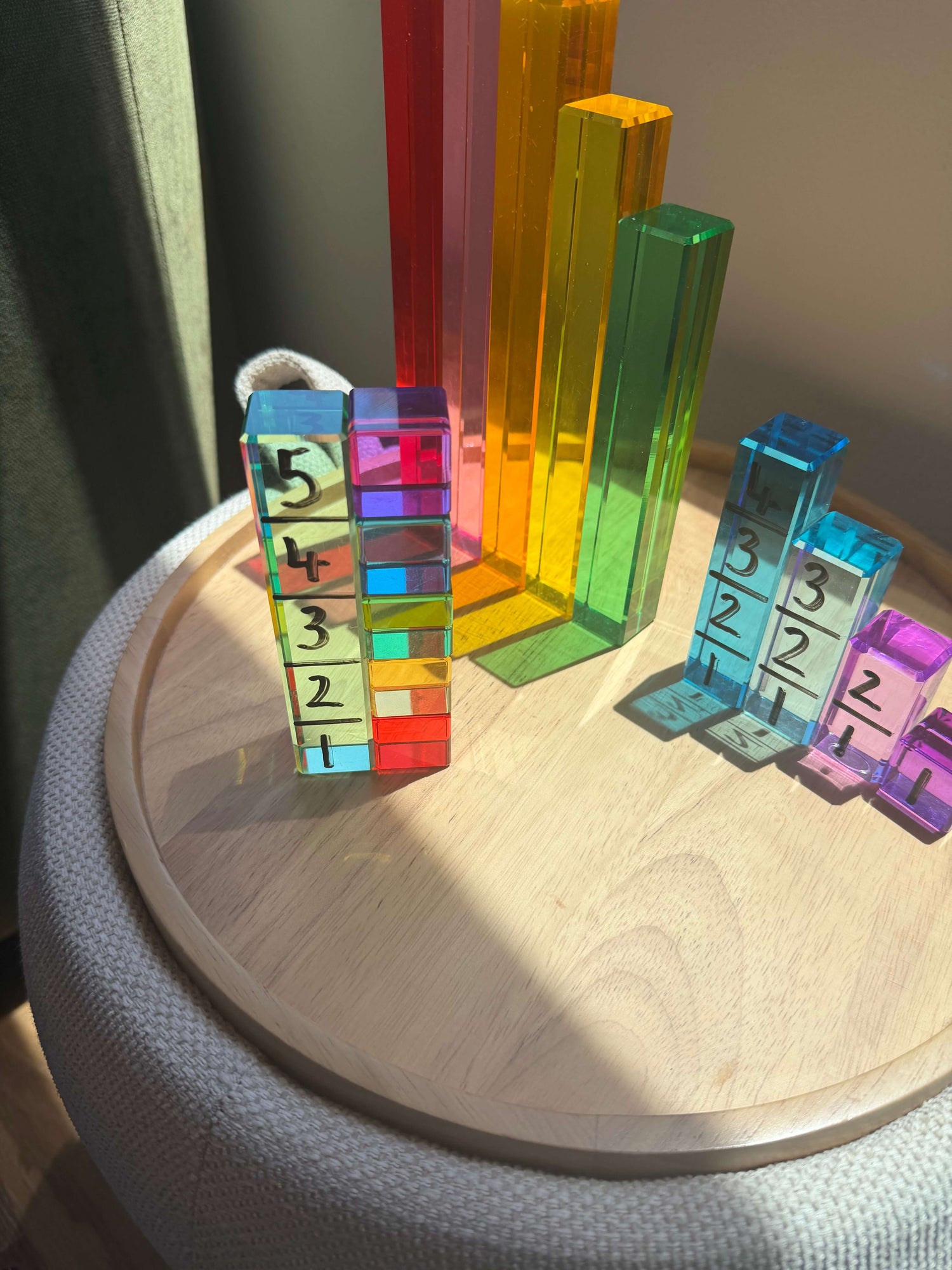
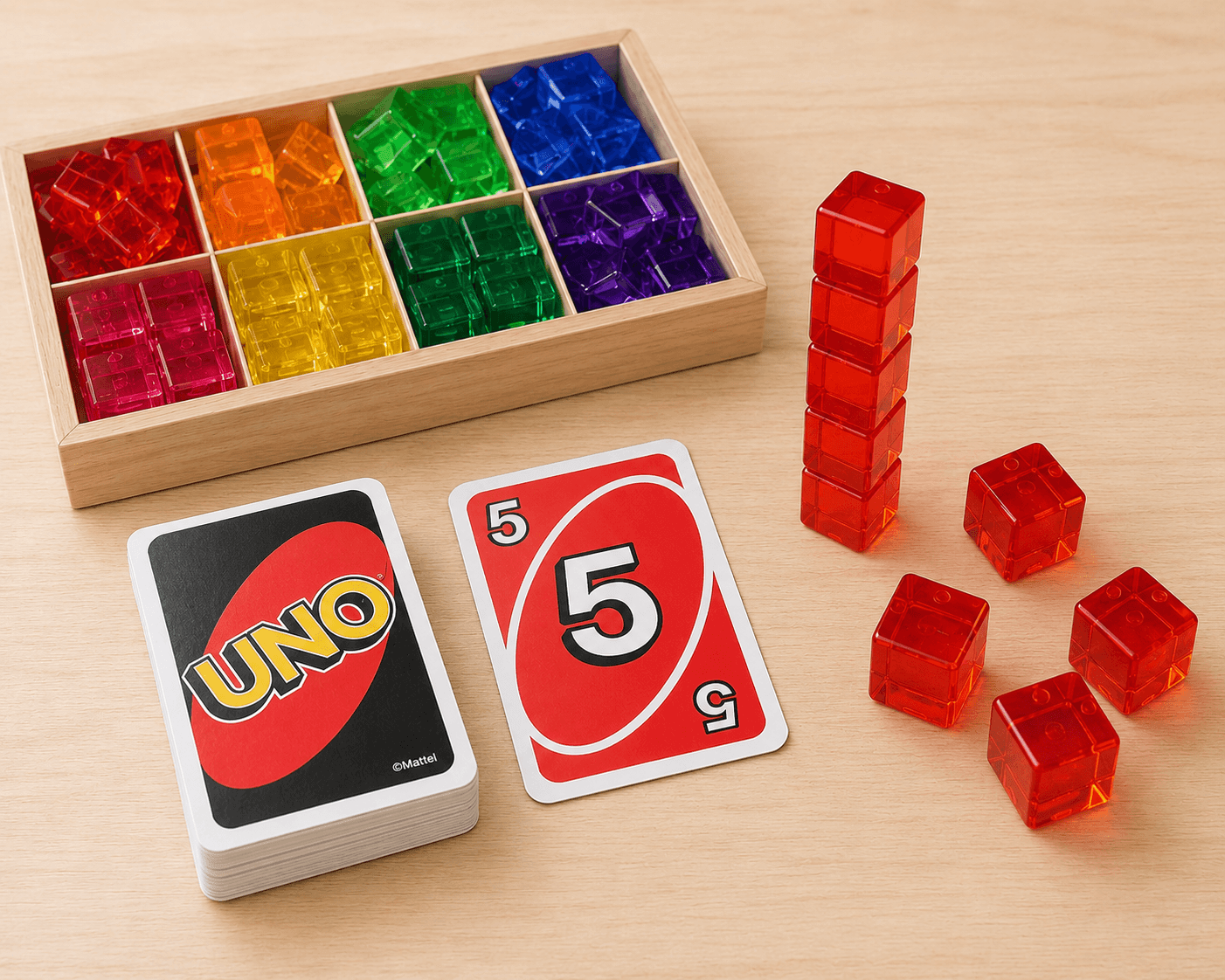
- Counting: Touching each gem while saying a number builds the connection between quantity and numeral.
- Patterning: Arranging gems in repeating sequences (red, blue, red, blue) introduces algebraic thinking at its most basic level.
When children discover differences in size, weight, and texture, they're doing the foundational classification work that formal math will later build on.
A 2024 study found that children used more spatial than quantitative math language during hands-on play with manipulatives, and both types contributed meaningfully to math learning. The same study showed that caregiver and teacher use of spatial and math language during play was positively associated with children's knowledge outcomes.
If you're reading this and thinking, "I already bought educational toys for exactly this reason," you're in good company. Around 60% of parents are investing in educational toys specifically for cognitive and motor skill development. Your instinct is backed by data.
Age-Specific Math Concepts to Explore with Gems
One of the things we love most about sensory gems is that the same set grows with your child. Here's how the math evolves at each stage:
- 12–18 months: Supervised exploration of size and weight differences. Filling and emptying containers builds early quantity sense and supports object permanence. (Always ensure gems are mouthing-safe and play is supervised at this age.)
- 18–24 months: Simple sorting by one attribute, like color. Early counting with caregiver narration: "One gem, two gems, three gems!"
- 2–3 years: Sorting by two attributes at once (color and size). Simple AB patterning (blue, pink, blue, pink). One-to-one correspondence using muffin tins or ice cube trays.
- 3–5 years: Complex ABC patterning. Counting sets and comparing quantities ("Which group has more? Which has fewer?"). Early addition by combining two small groups of gems.
This is the heirloom play value we design for at Maison Rue: one purchase, years of developmental milestones.
How Sensory Gems Accelerate Language and Vocabulary Development
Sensory play engages multiple senses at the same time, and that simultaneous activation creates rich opportunities for language development. As children describe what they see, feel, and observe, they naturally expand their descriptive vocabulary and communication skills.
Remember that statistic: children learn words 18.6 days earlier for each additional sense engaged. Sensory gems are a multi-sensory vocabulary accelerator. A child holding a cool, smooth, translucent gem up to the light isn't just playing; they're encountering a dozen potential new words in a single moment.
Research on word learning during play has shown that children learn more words when those words refer to objects they're actively handling. The learning isn't abstract; it's literal, tactile, and immediate.
Speech-language pathologists identify sensory play as one of the most effective contexts for building vocabulary in toddlers. Translucent gems on a light table offer a particularly rich language environment, prompting color vocabulary ("amber," "rose," "clear"), light and shadow language ("glowing," "bright," "dark"), and spatial prepositions ("on top of," "next to," "behind," "underneath").
The tactile variation matters, too. Smooth surfaces, faceted edges, heavier and lighter pieces: each difference introduces texture and sensation vocabulary (rough, smooth, cool, shiny, heavy, light) that children will carry into reading, writing, and everyday conversation.
A 2024 multi-country study following 2,400 children across 12 countries found that children experiencing multi-sensory learning demonstrate 34% better engagement and retention compared to single-sense approaches. Gems aren't just beautiful. They're doing real linguistic work.
The Caregiver Scaffolding Advantage: Words That Multiply the Learning
Here's the most empowering finding in all of this research: you are the most powerful variable in the equation. Studies show that caregiver use of spatial and math language during play dramatically improves a child's learning outcomes. The gems provide the context; your words provide the catalyst.
You don't need a script or a lesson plan. Try these natural prompts during gem play:
- "Which pile has more?"
- "Can you find one that's bigger?"
- "What does that one feel like? Is it smooth or bumpy?"
- "Where did you put the blue one? Is it beside the red one?"
- "Let's count how many are in your hand."
- "What happens when you hold it up to the light?"
- "Can you make a pattern? Pink, clear, pink, clear..."
- "Are these two the same size, or is one smaller?"
- "Tell me about what you're building."
These aren't quiz questions. They're conversation starters. Keep them playful, follow your child's lead, and let curiosity do the heavy lifting. You're co-playing, not teaching a lesson. That's the Montessori-inspired approach at the heart of everything we create at Maison Rue.
For more guided play prompts like these, our Activities and Lessons blog (developed by our founder, an early childhood educator) includes gem-specific activities organized by age and developmental stage.
Why Translucent Gems and Light Tables Are a Category of Their Own
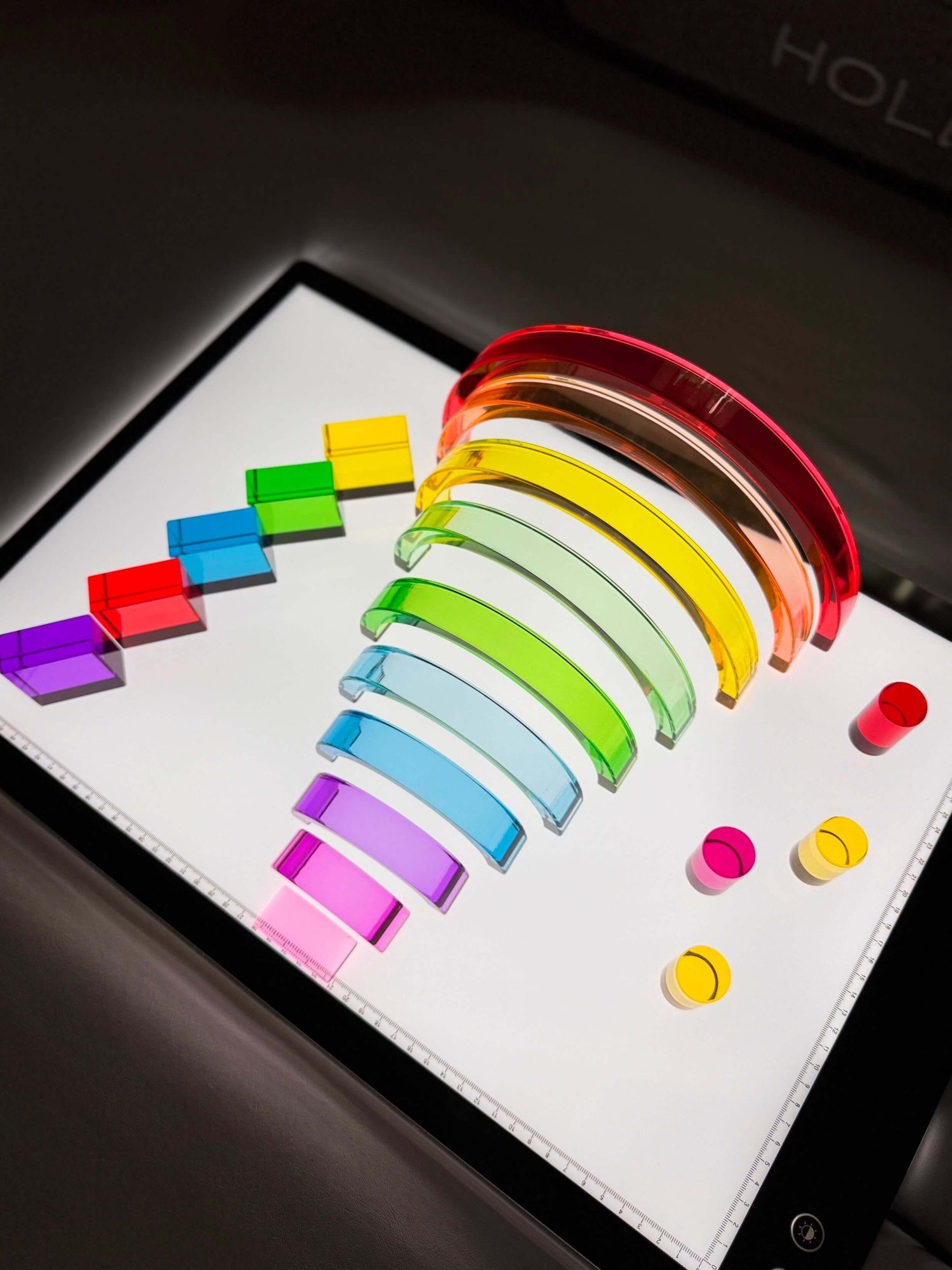
Translucent acrylic gems paired with a light table occupy a unique space in the world of sensory loose parts. The light source transforms the play experience, creating specific learning opportunities you won't find with opaque materials.
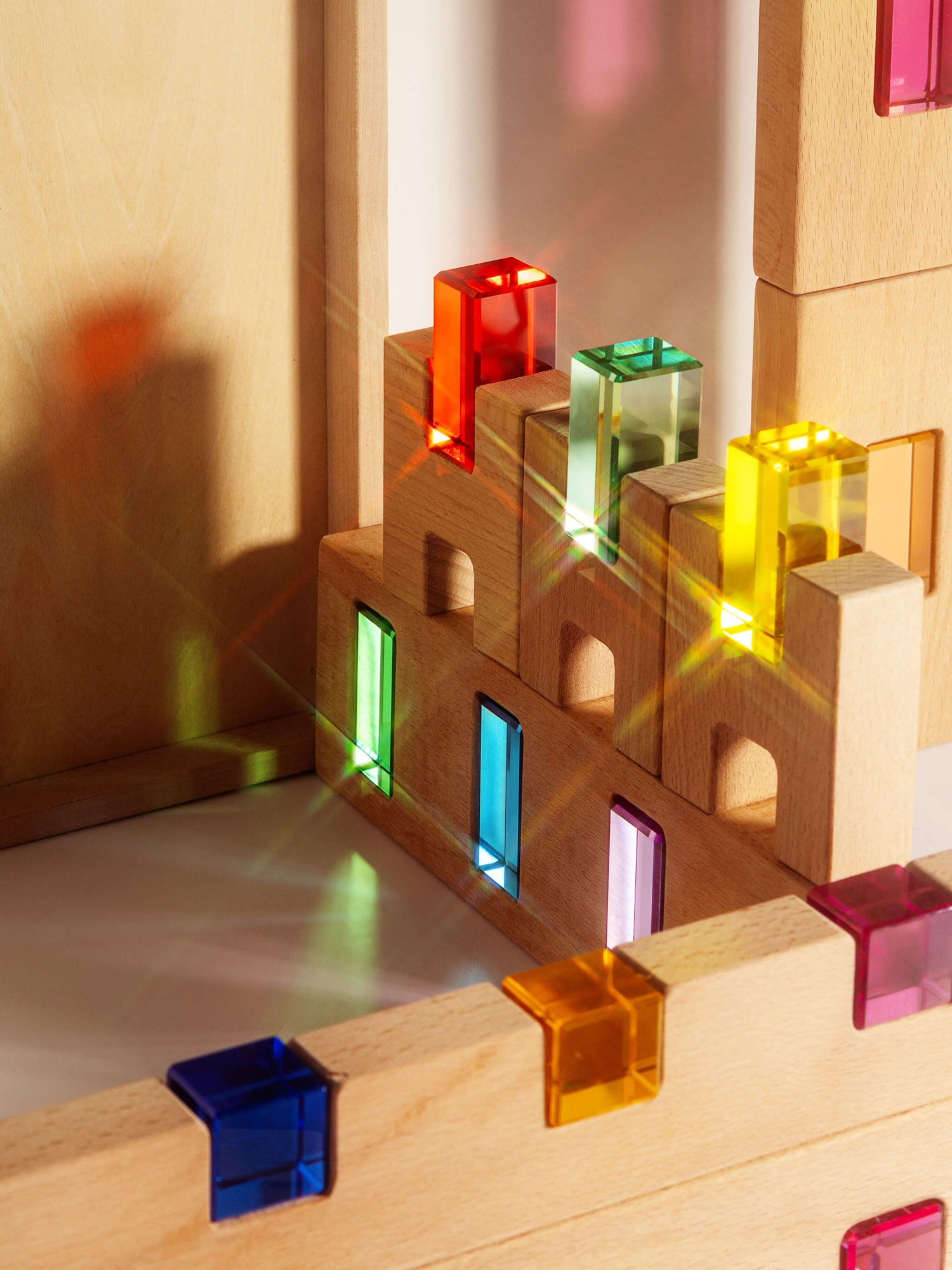
Color mixing and color vocabulary come alive when gems overlap on a glowing surface. Children observe light passing through, notice shadows, and begin distinguishing between transparent and opaque objects. This is early science happening organically.
There's a practical advantage, too. Gem play is mess-free sensory play. You get all the developmental benefits of sensory exploration without sand on the floor, water on the table, or slime in the carpet. For families who want rich sensory experiences in a home-friendly format, this matters.
For design-conscious families, translucent gems are beautiful objects that fit naturally into your living space. Our Nordic-inspired aesthetic means these aren't toys you need to hide in a bin; they're pieces that sit comfortably on a shelf or light table as part of your home. Keeping play materials visible and accessible is a core Montessori principle, and it's easier when those materials are genuinely lovely to look at.
Safety is non-negotiable for any material your toddler will handle extensively. Maison Rue's gems are CPC and CPSIA certified, tested for lead, heavy metals, and phthalates. Non-toxic isn't a marketing phrase for us; it's a third-party verified standard.
A 2025 early childhood education study found that multisensory teaching enhances participation, cognitive growth, and knowledge retention, especially for learners with diverse needs. Light table play with translucent gems is one of the most accessible ways to bring that multisensory approach into your home.
Bringing It All Together: One Handful of Gems, a World of Learning
Back to that toddler at the light table. The gems glow. Small fingers sort and stack. A quiet voice says, "More blue." Now you know what's really happening. The sorting is math. The describing is language. The exploring is STEM. All from a handful of gems and a present caregiver.
Sensory gems simultaneously build early numeracy (sorting, counting, patterning, spatial reasoning) and language (adjective vocabulary, spatial prepositions, color words). They don't need batteries, screens, or instructions. They need a curious child and you.
We invite you to explore Maison Rue's sensory gem collection and browse our Play & Parenting Journal and our activity and lesson guides for gem-specific activity prompts organized by age. As a women-owned small business founded by an early childhood educator (and featured in Vogue, Babylist, and Milk Magazine), we design every product to be safe, beautiful, and developmentally meaningful.
You already knew these gems were special. Now you know exactly why.



0 commentaire