
Introduction
Small world play ideas invite children to build miniature environments where they can create stories, explore imagination, and experiment with different scenarios. Using small figures, animals, vehicles, or natural materials, children can design tiny worlds that reflect both real-life experiences and fantasy adventures.
Small world play is a form of imaginative play where children use small toys or props to create detailed miniature scenes and stories.
These playful setups help children explore storytelling, social interaction, and problem-solving while strengthening creativity and language development.
Because the play environment is small and manageable, children often feel more in control of their ideas and can experiment freely with characters and narratives.
This open-ended activity encourages storytelling, problem-solving, and emotional expression — all through playful exploration.
What Is Small World Play?
Small world play involves using miniature objects and settings to represent larger environments — like cities, oceans, jungles, or polar landscapes.
By arranging blocks, houses, and small figures into scenes, children create stories and scenarios that reflect their understanding of the world.
Age Range
3–8 years (adapt complexity based on developmental stage)
Skills Developed
Creativity and self-expression
Language development
Social skills and collaboration
Fine motor coordination
Problem solving and critical thinking
Emotional processing
Materials You Can Use
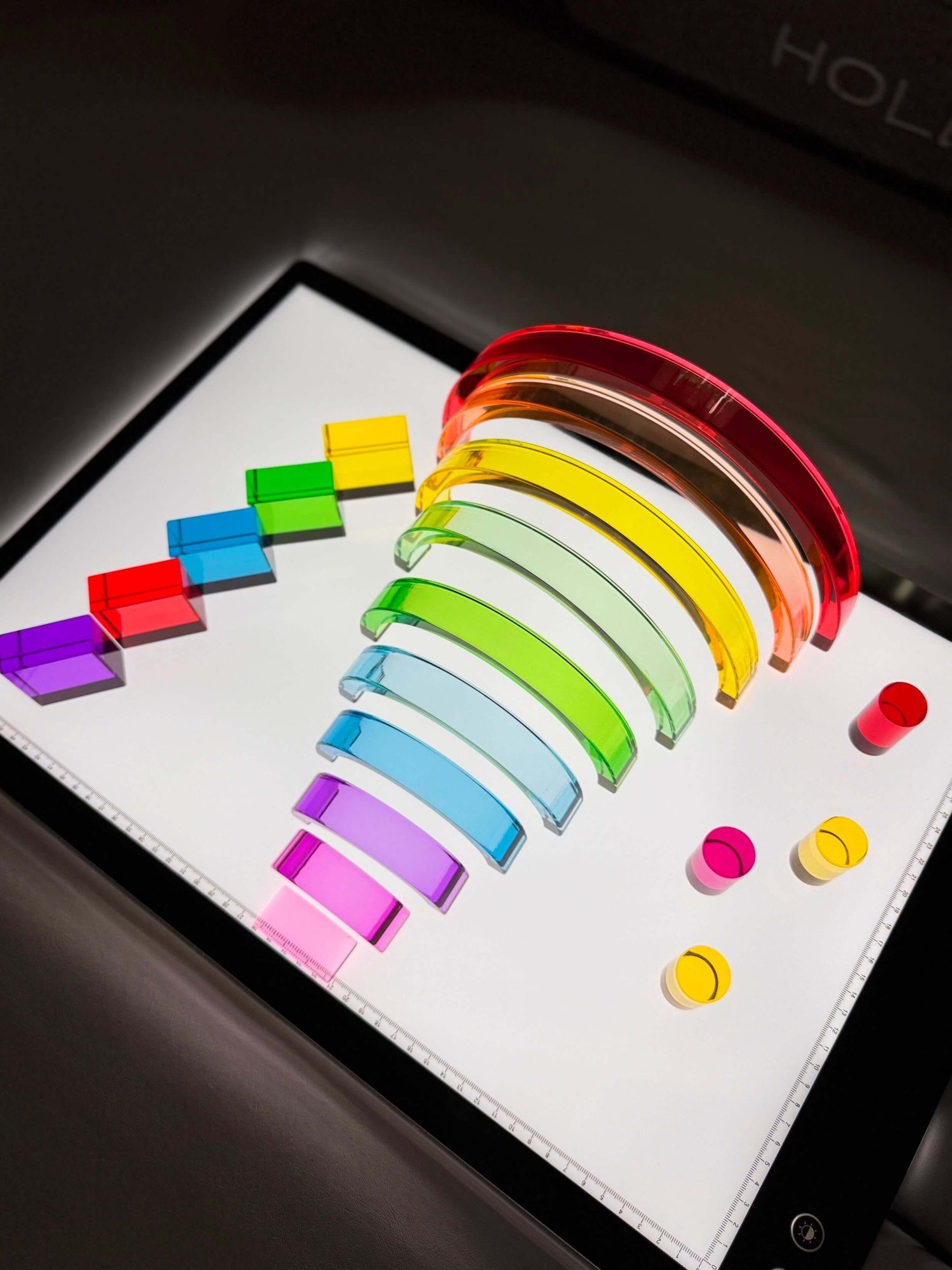
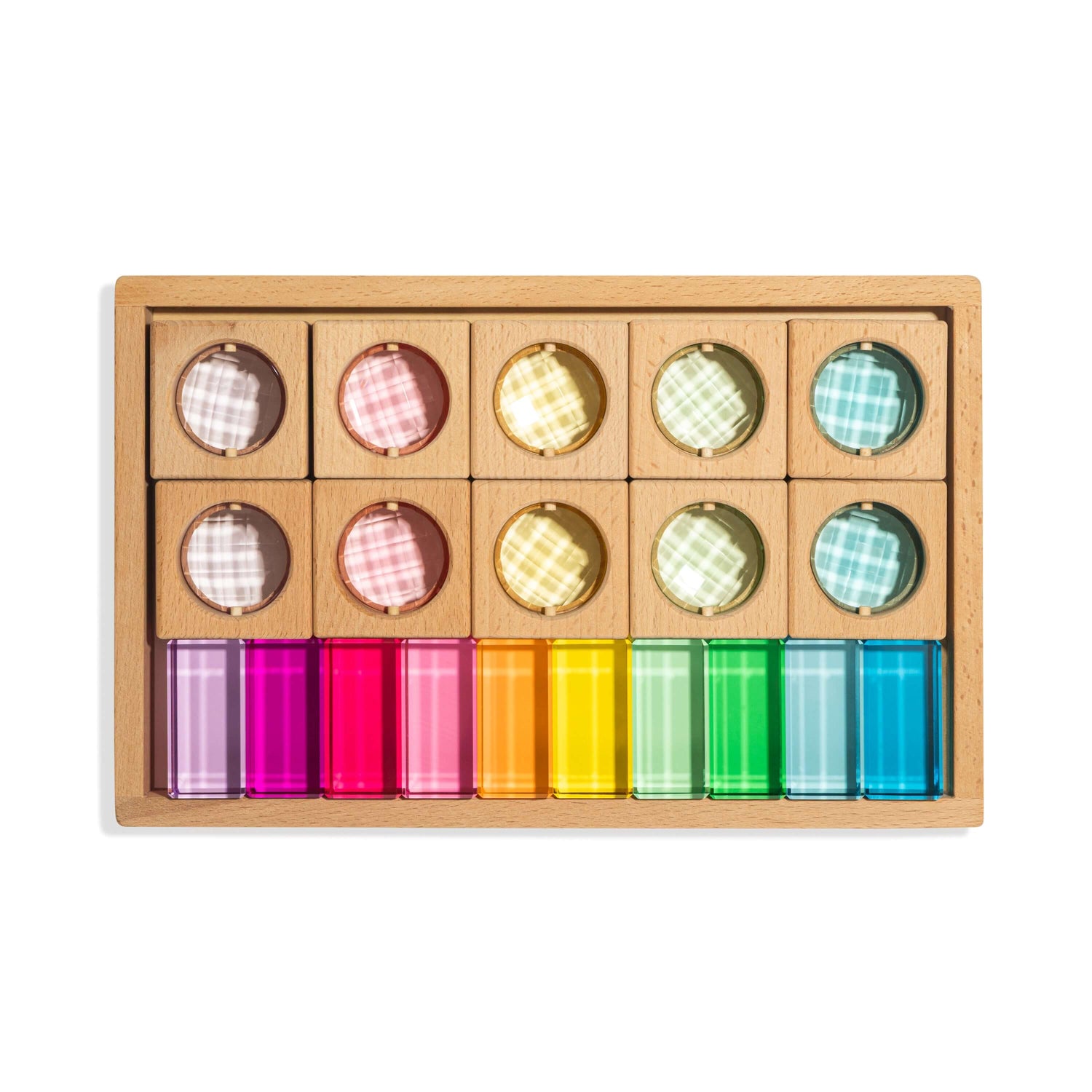
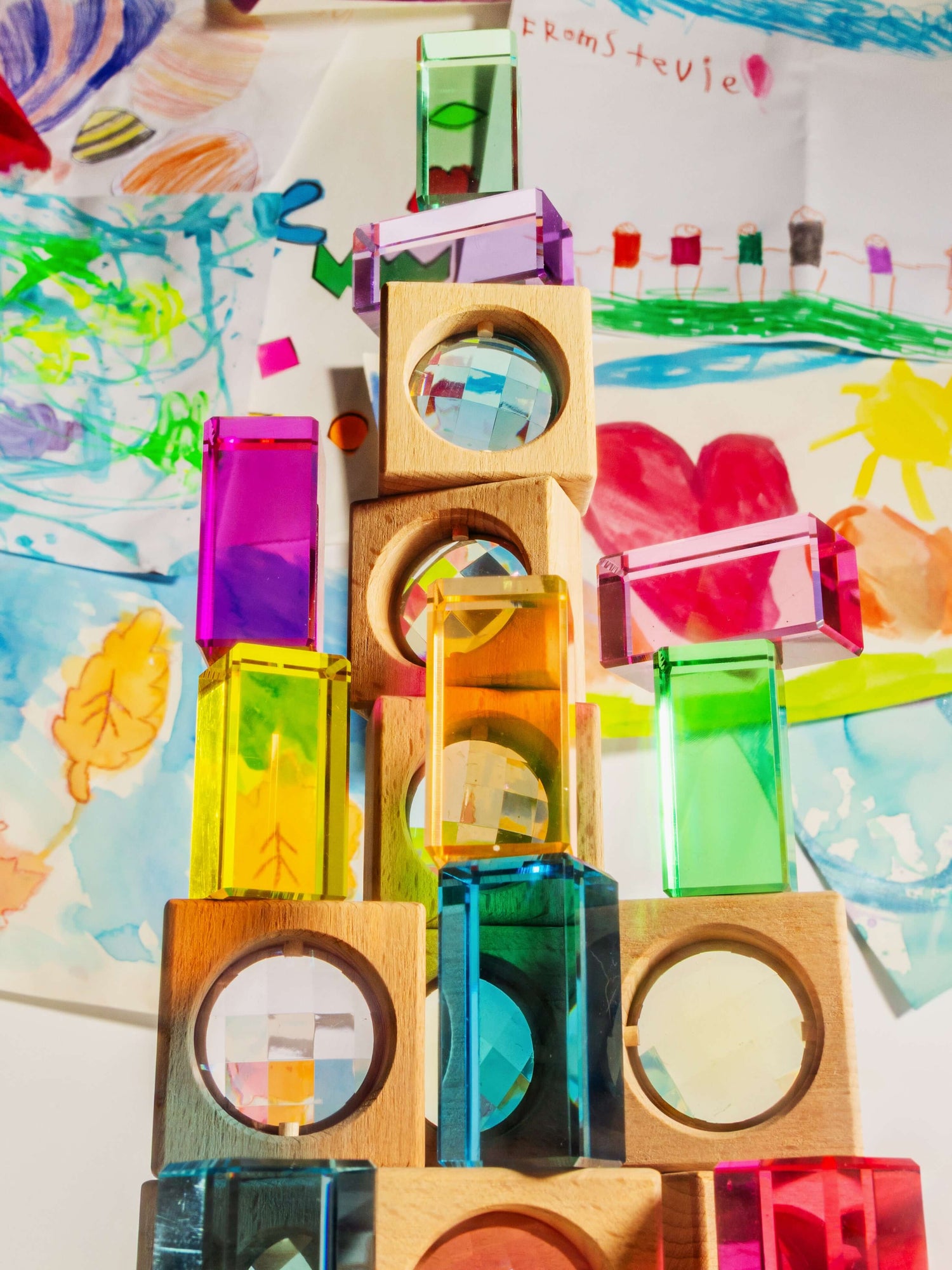
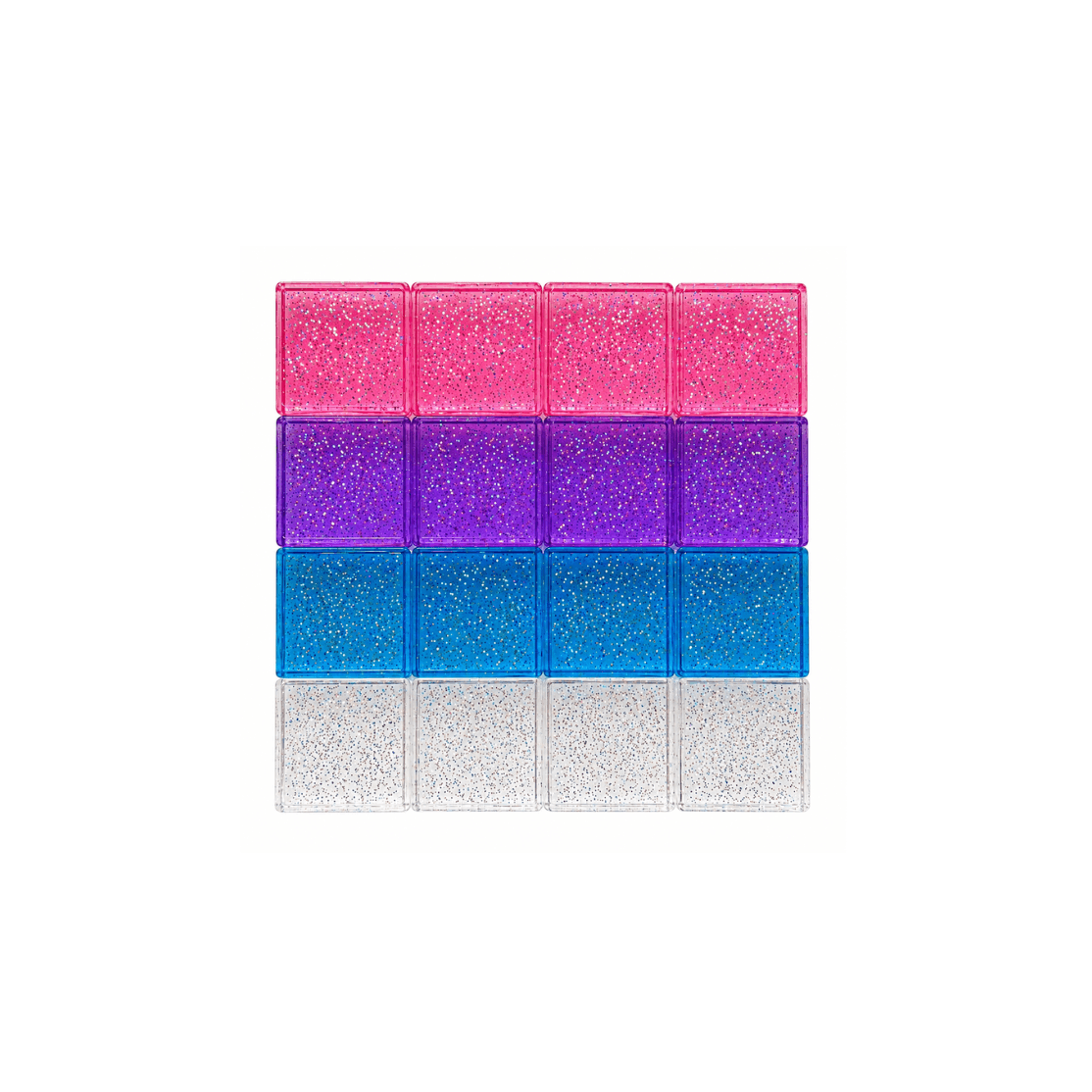
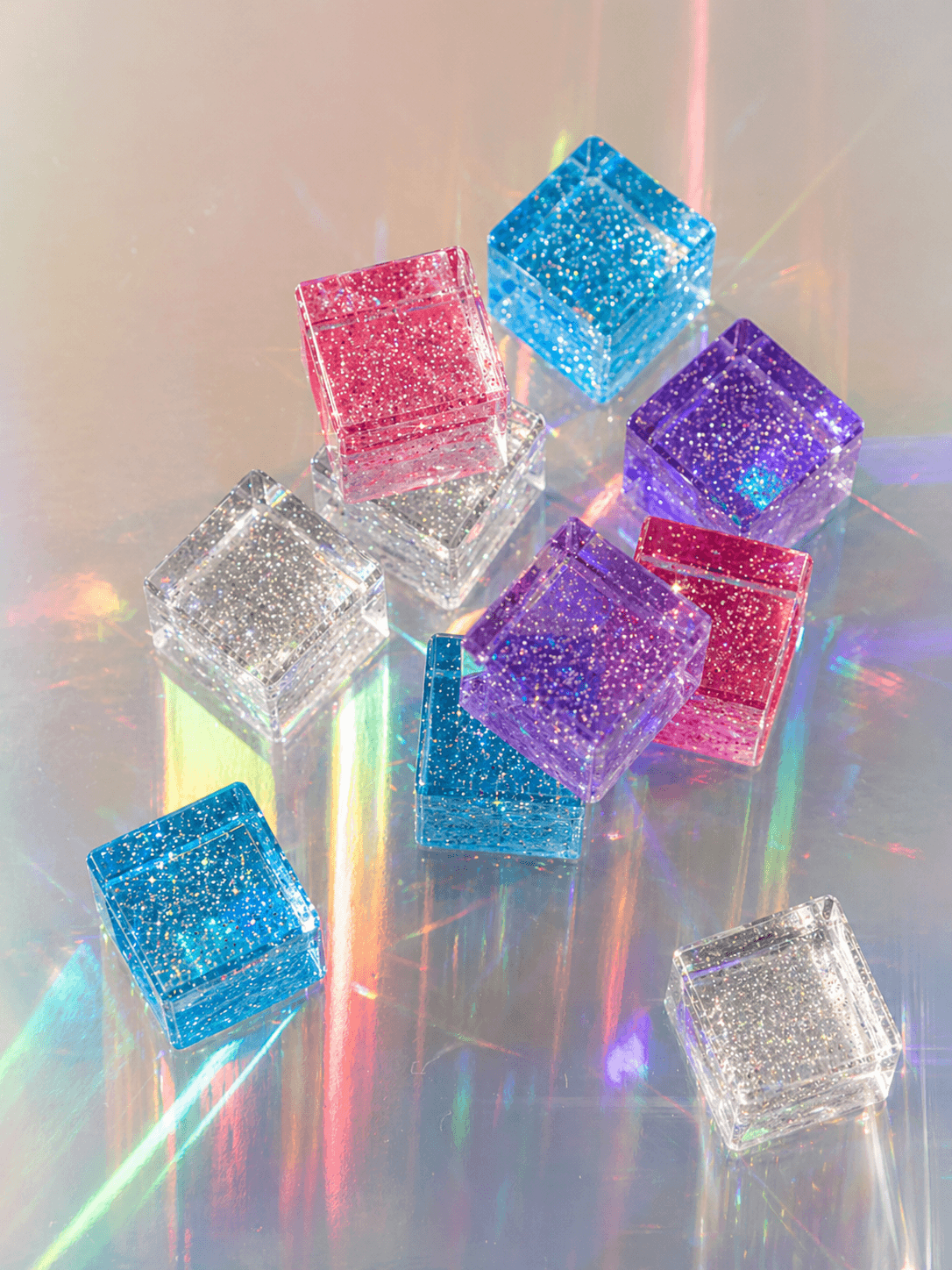
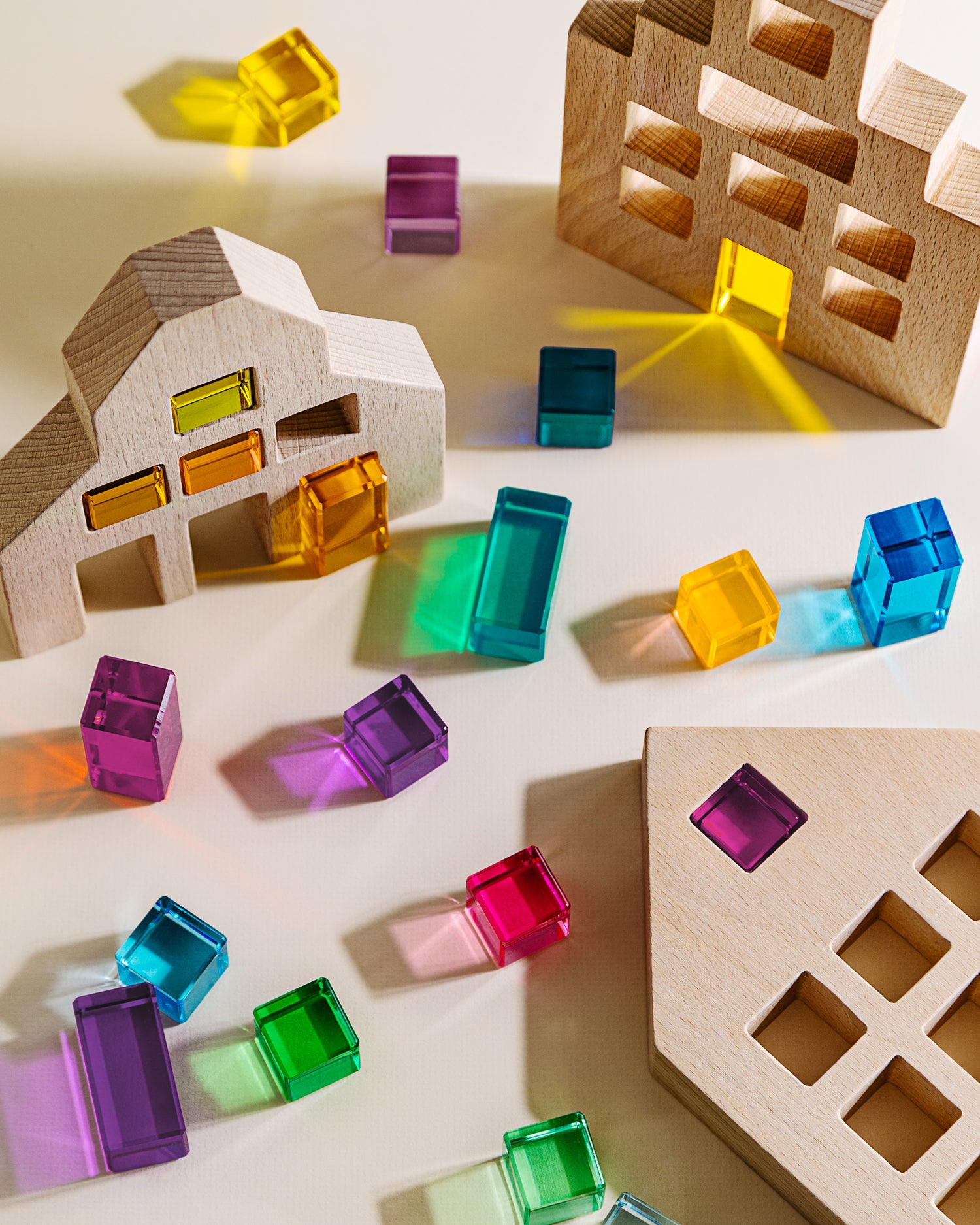
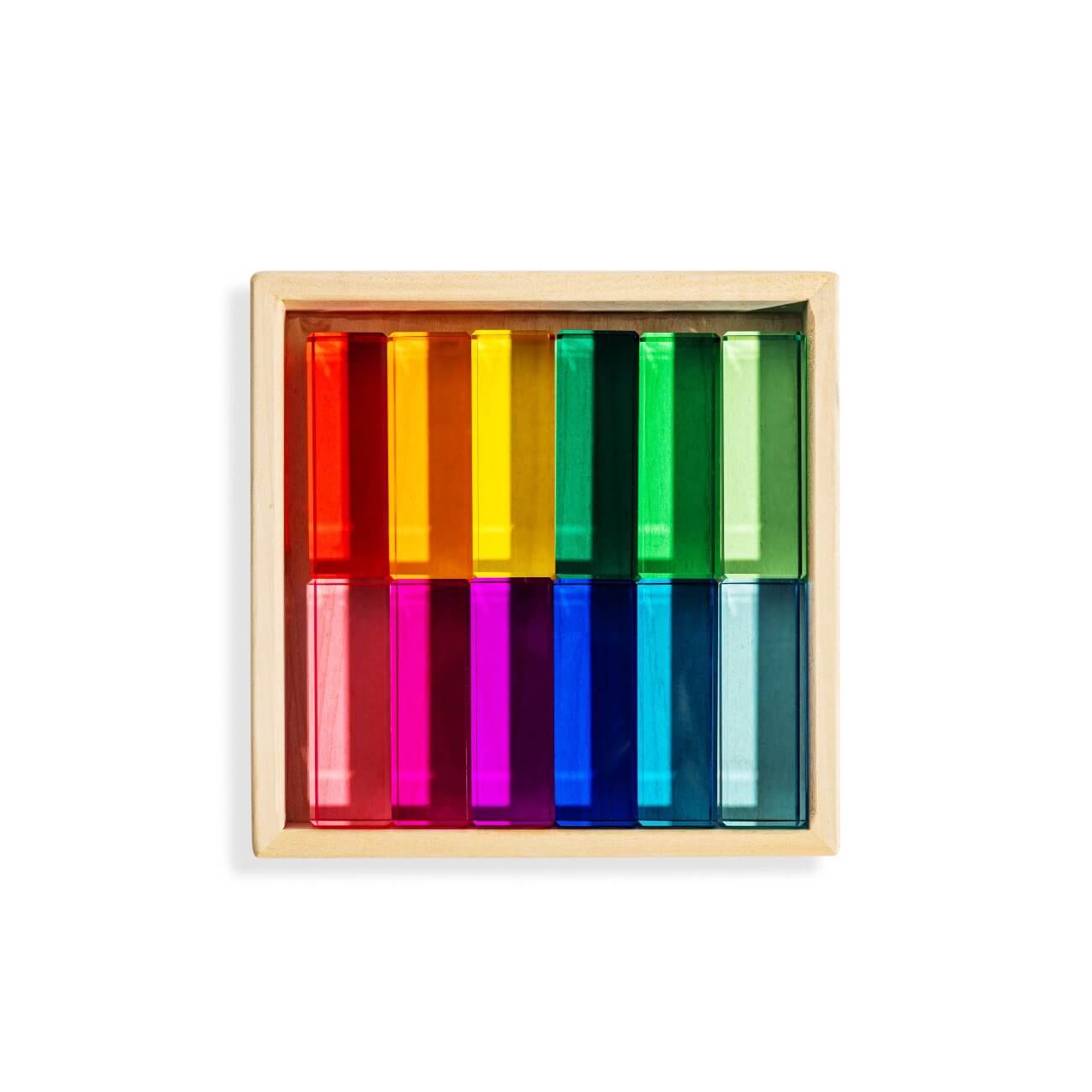
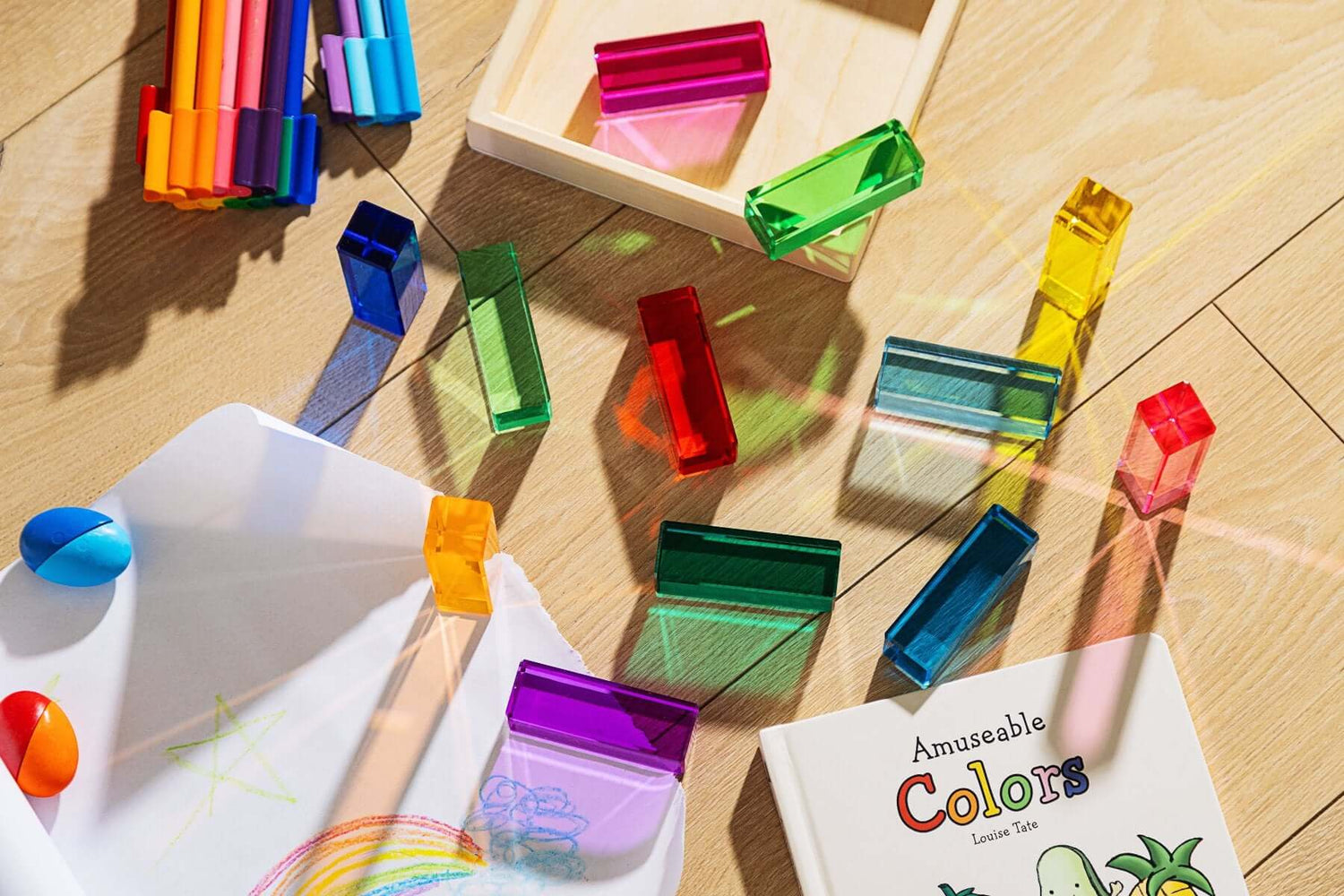
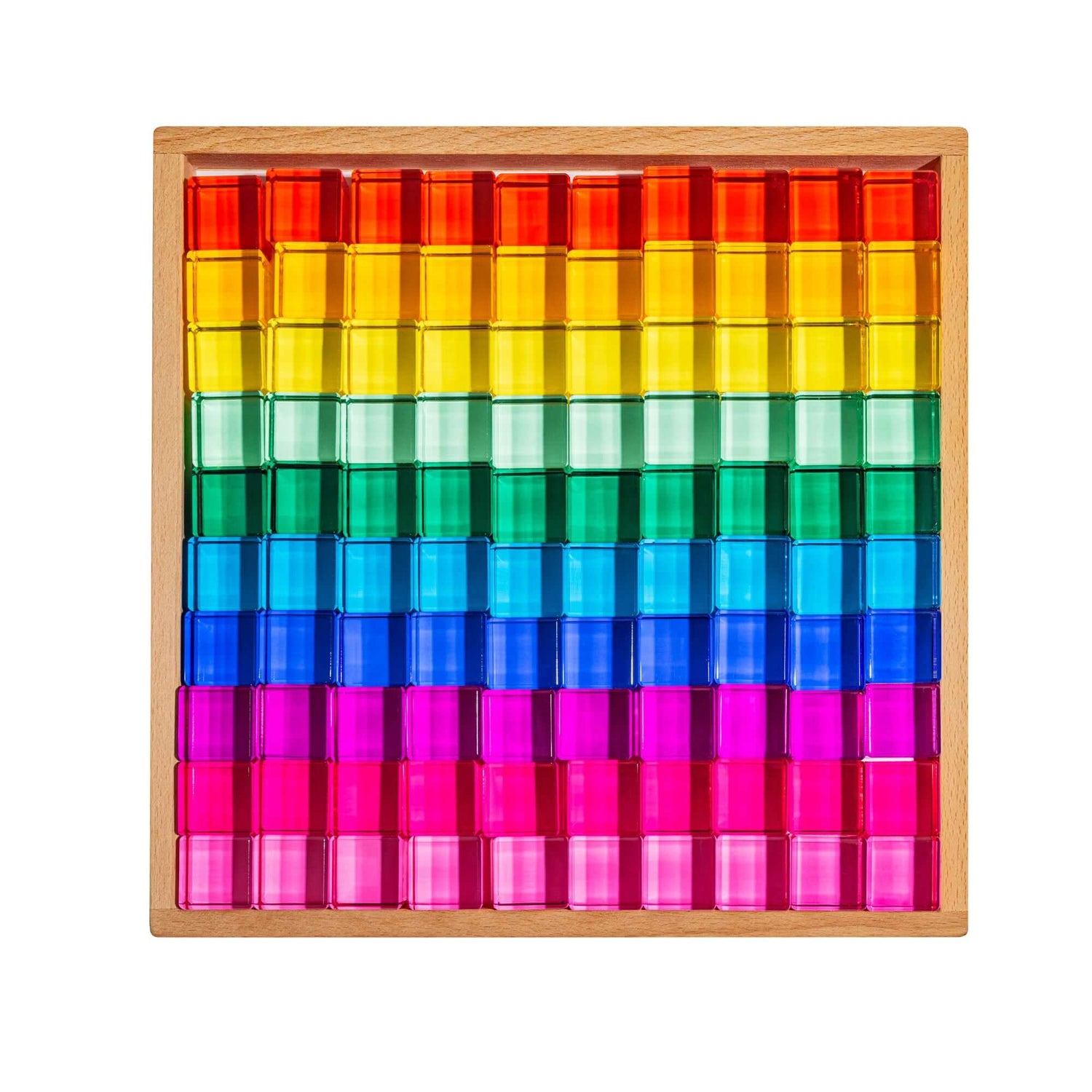
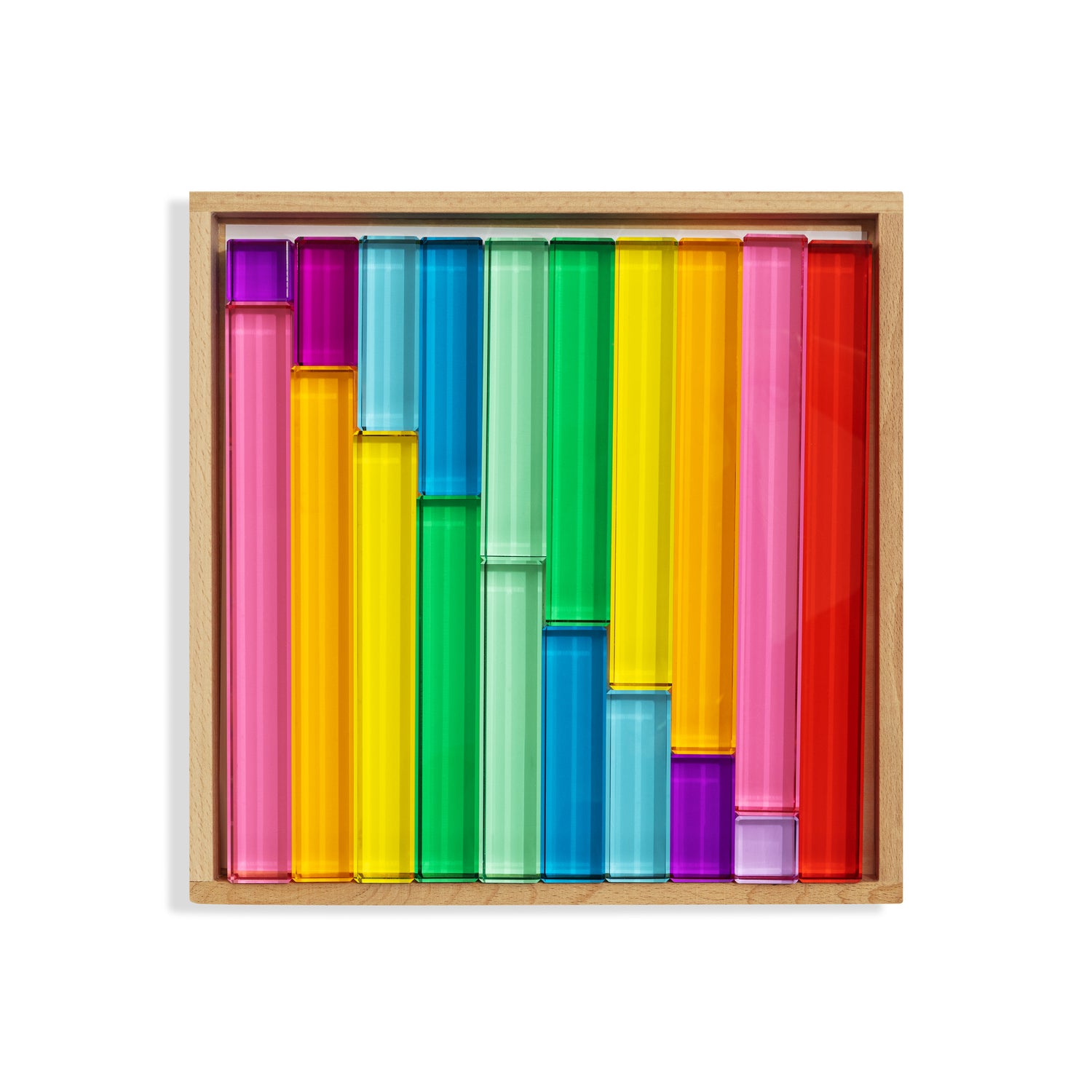
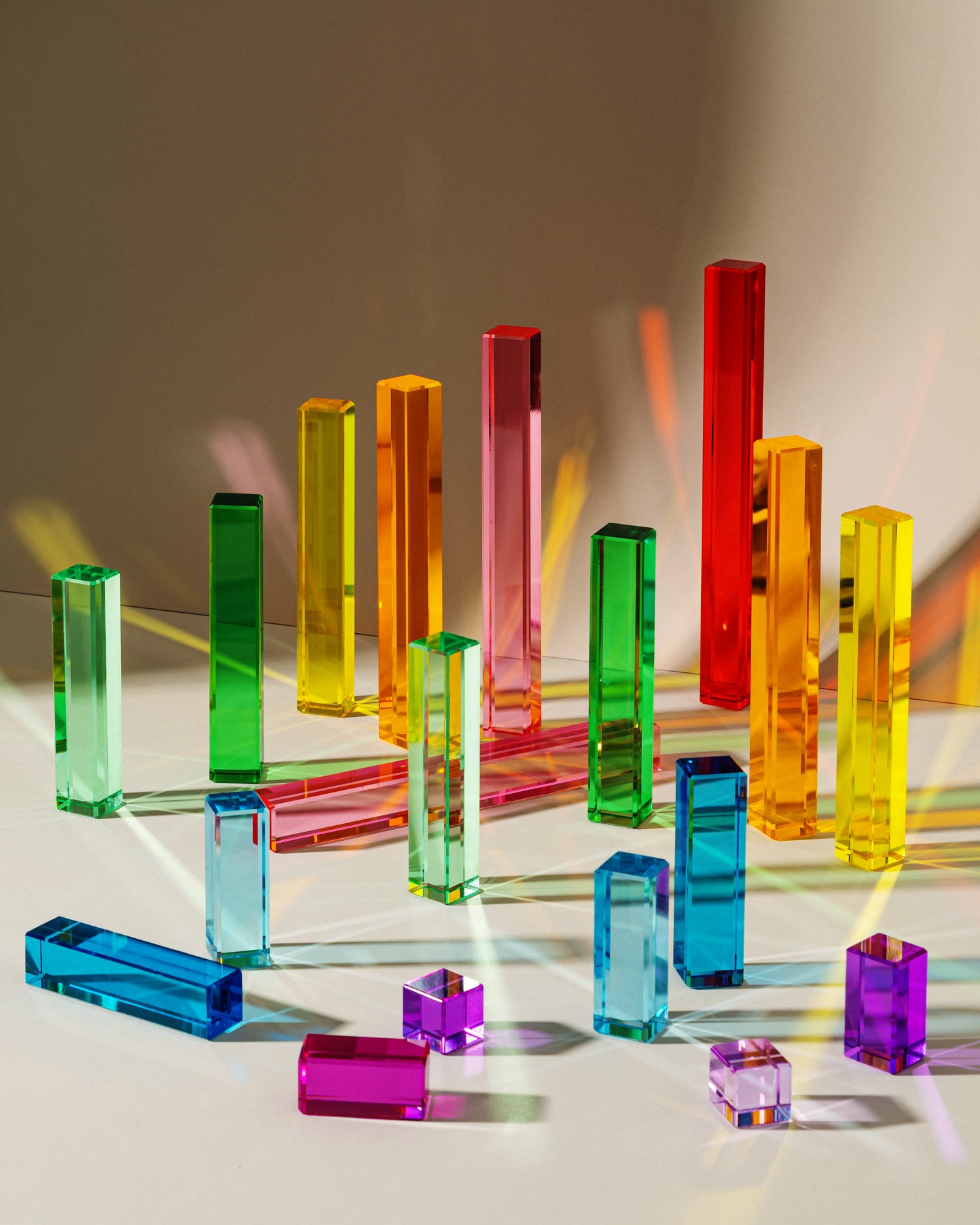
Lucite Cubes
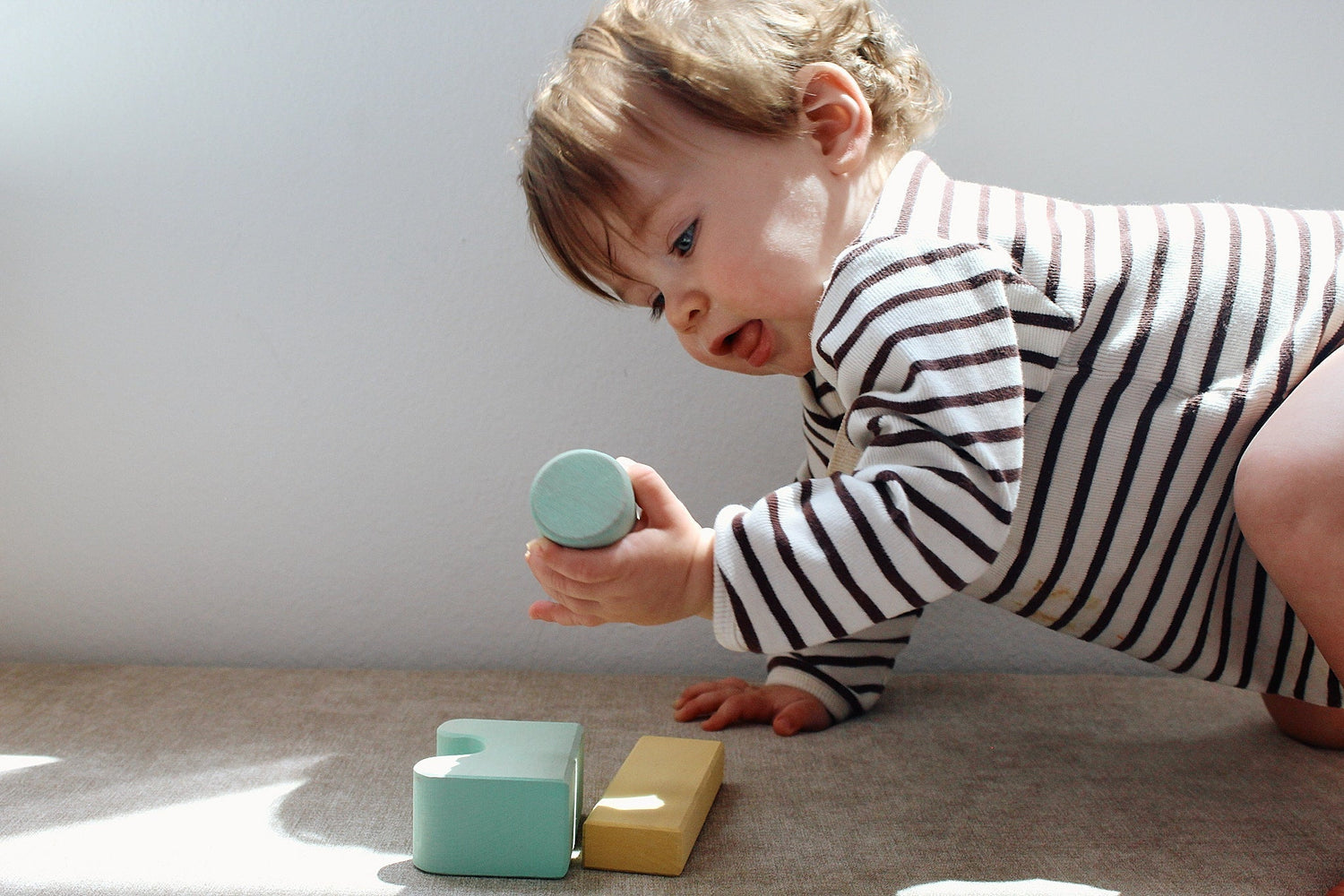
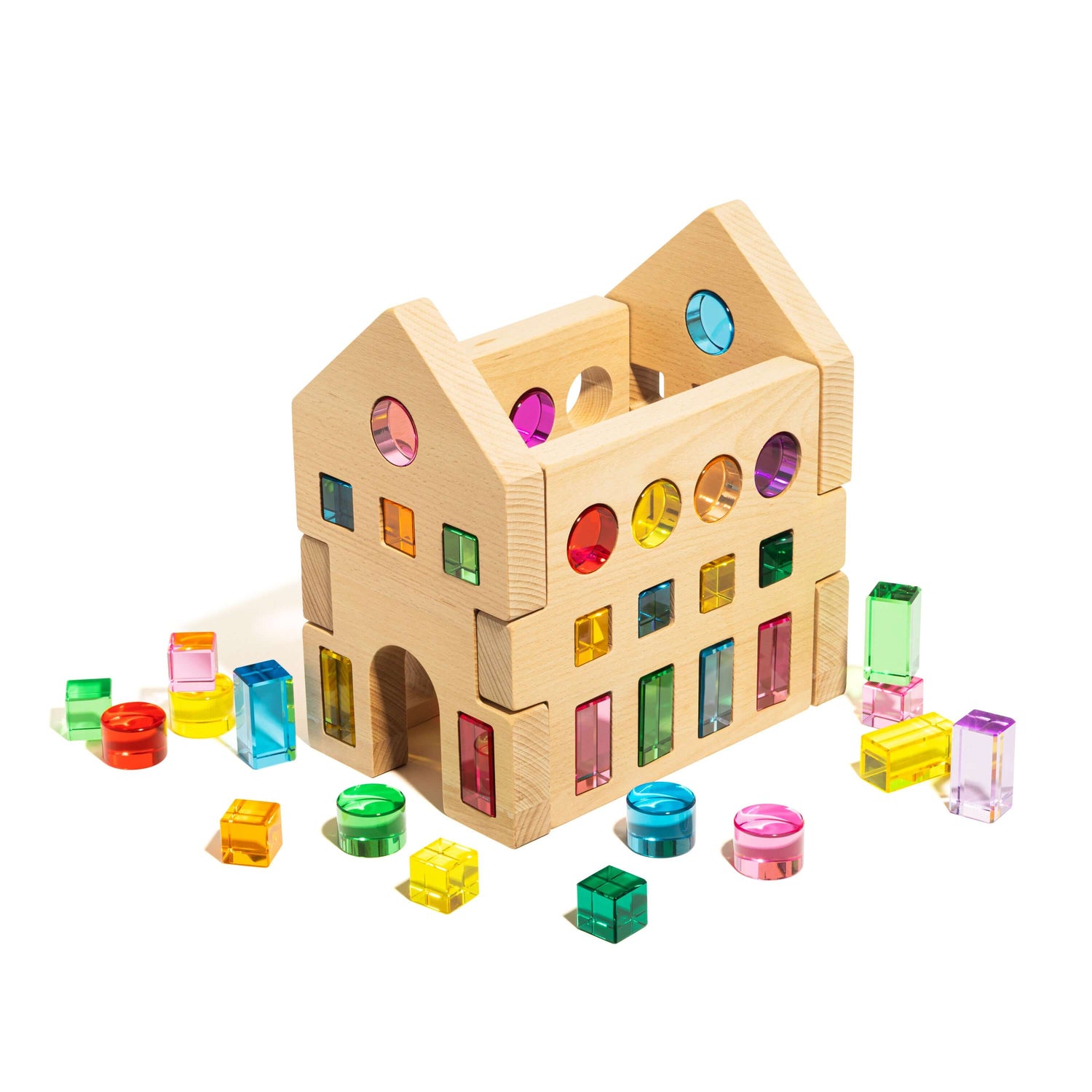
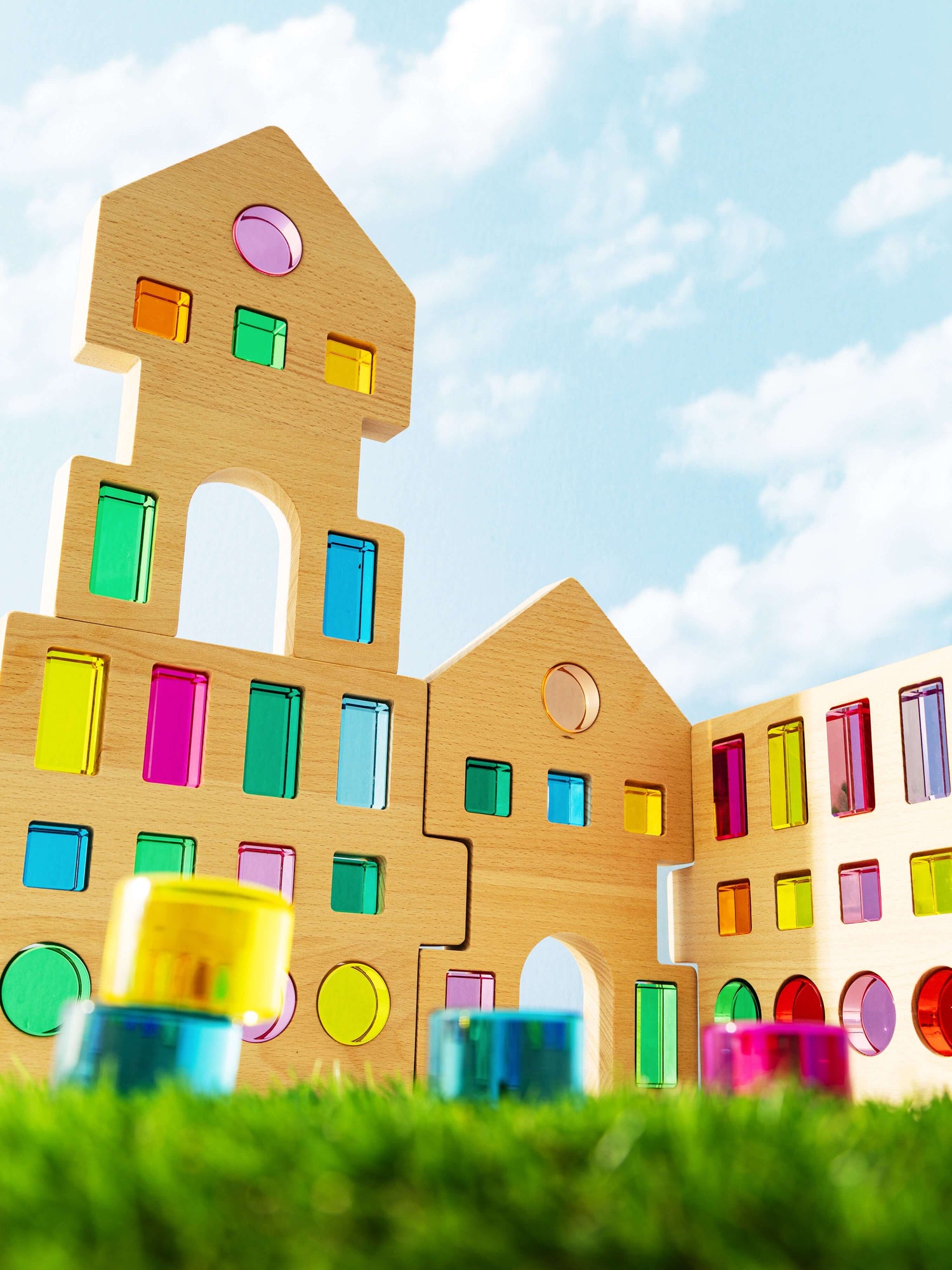
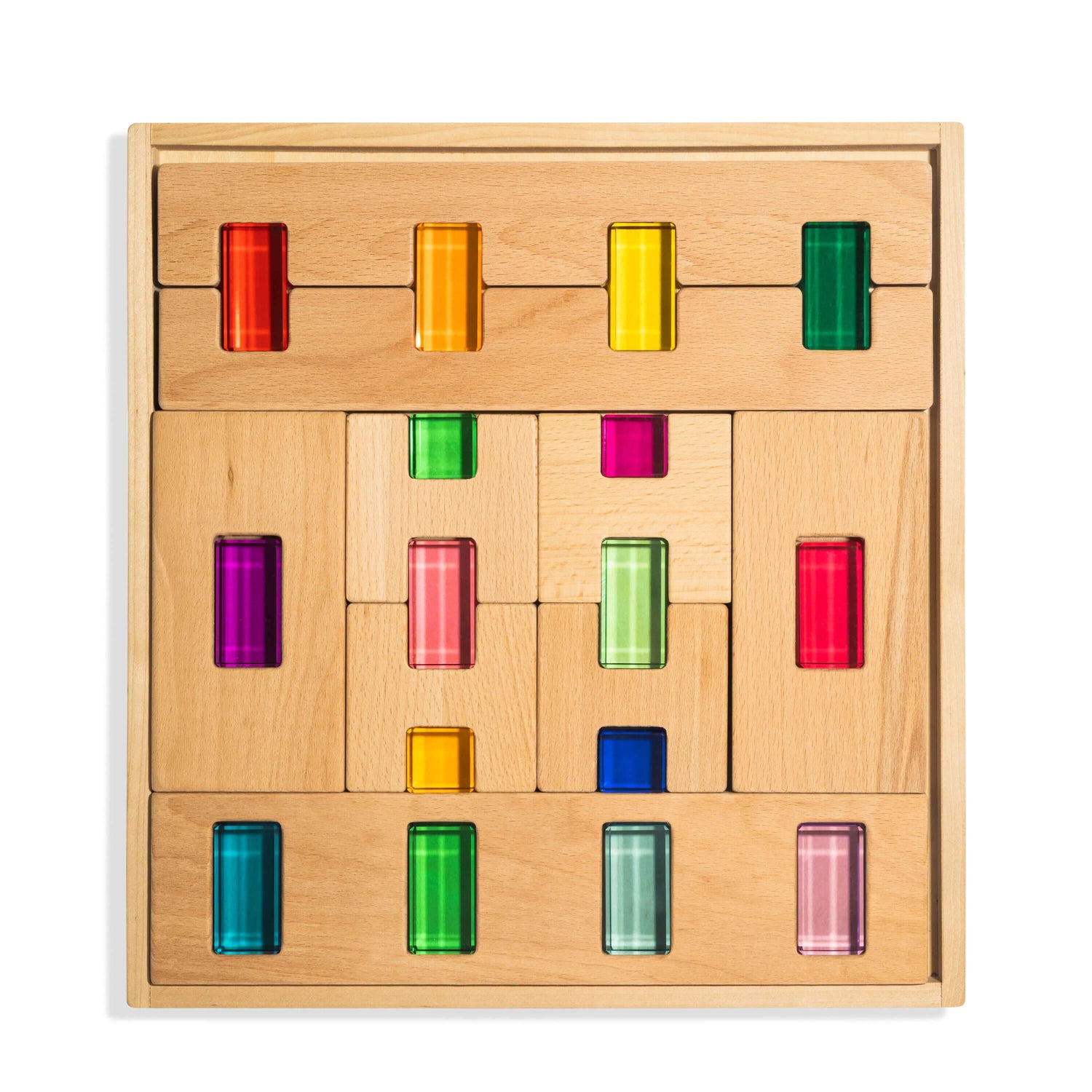
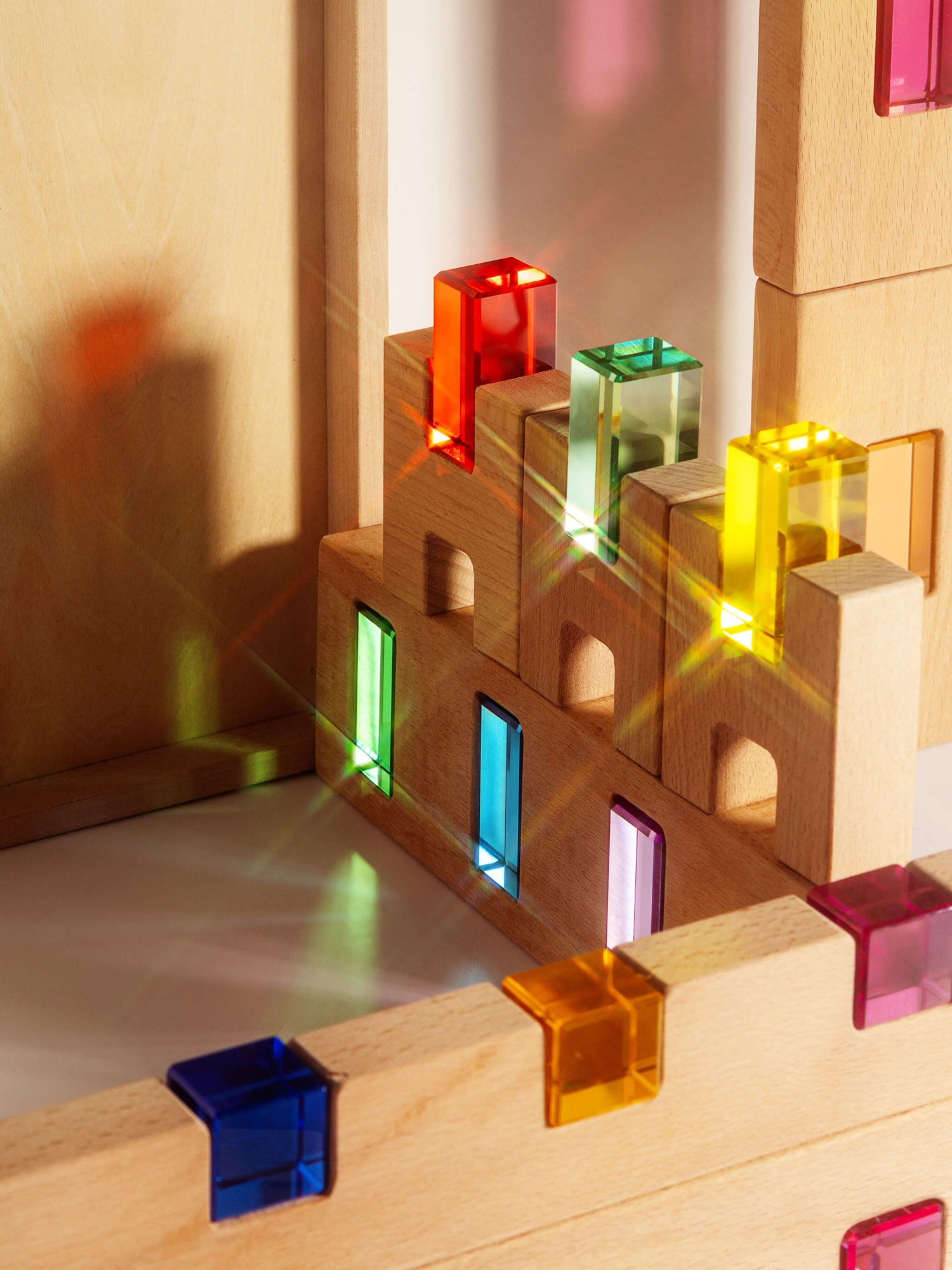
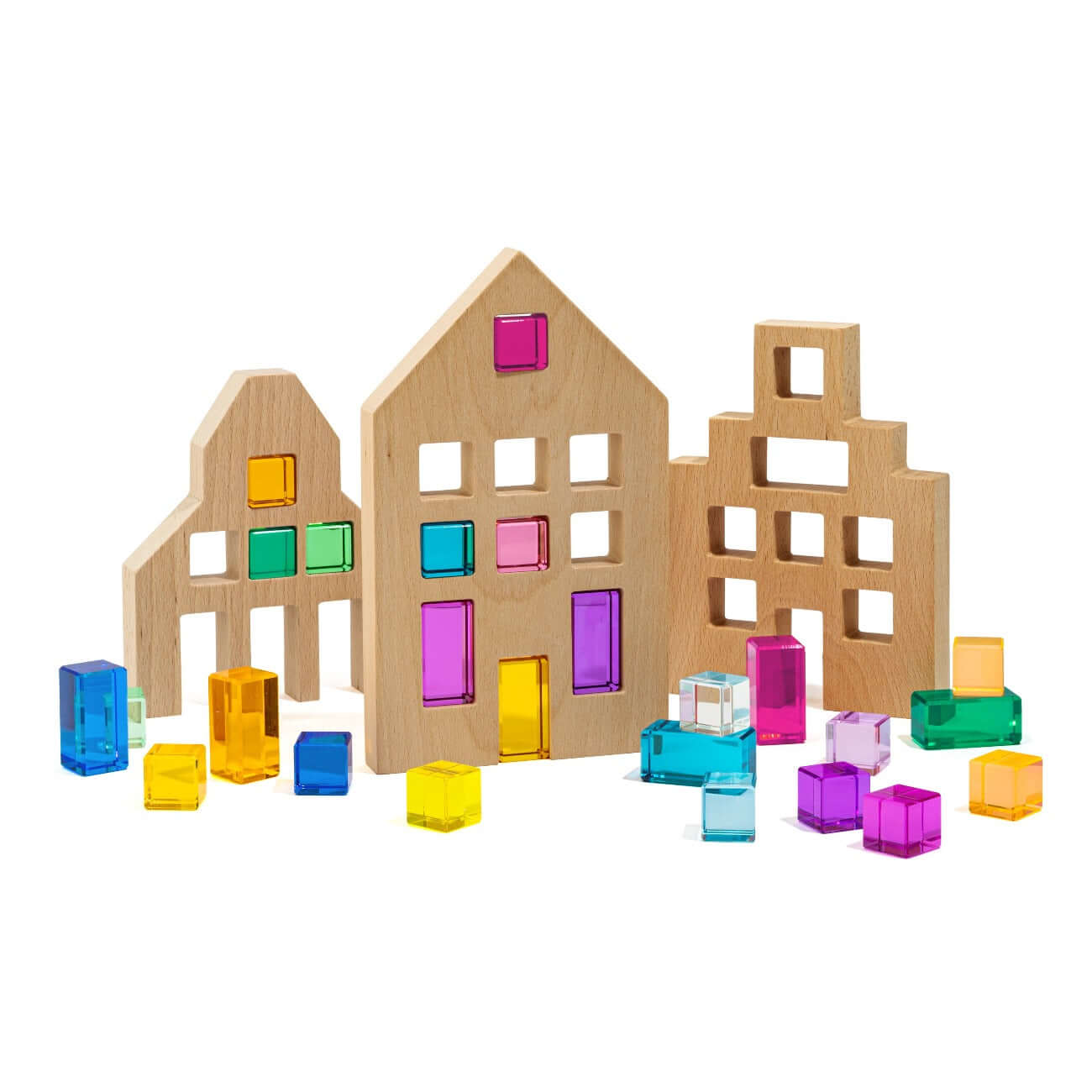
Riley Blocks orBarca Blocks, (for buildings and structures)
Bergen Blocks (small people, trees, houses)
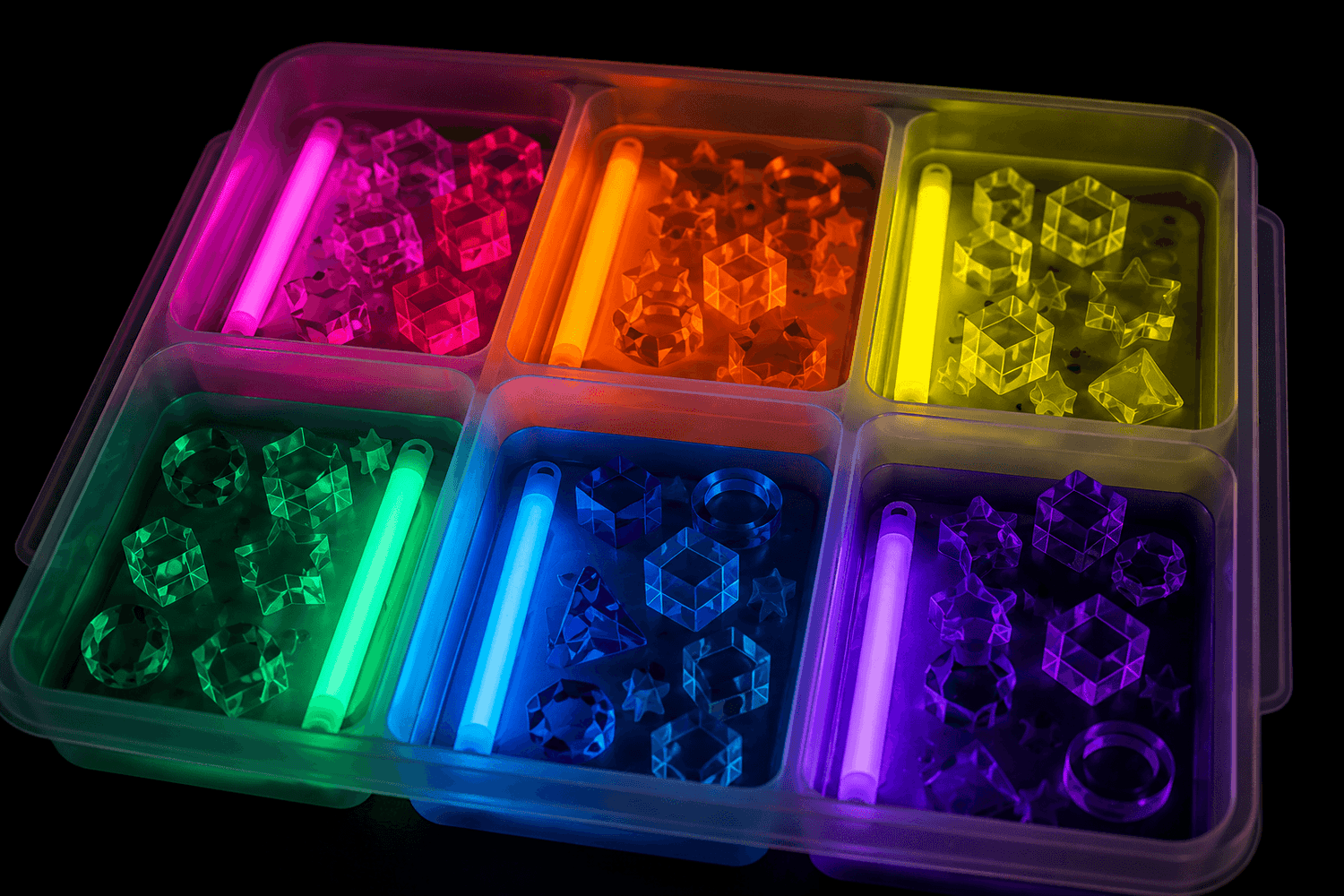
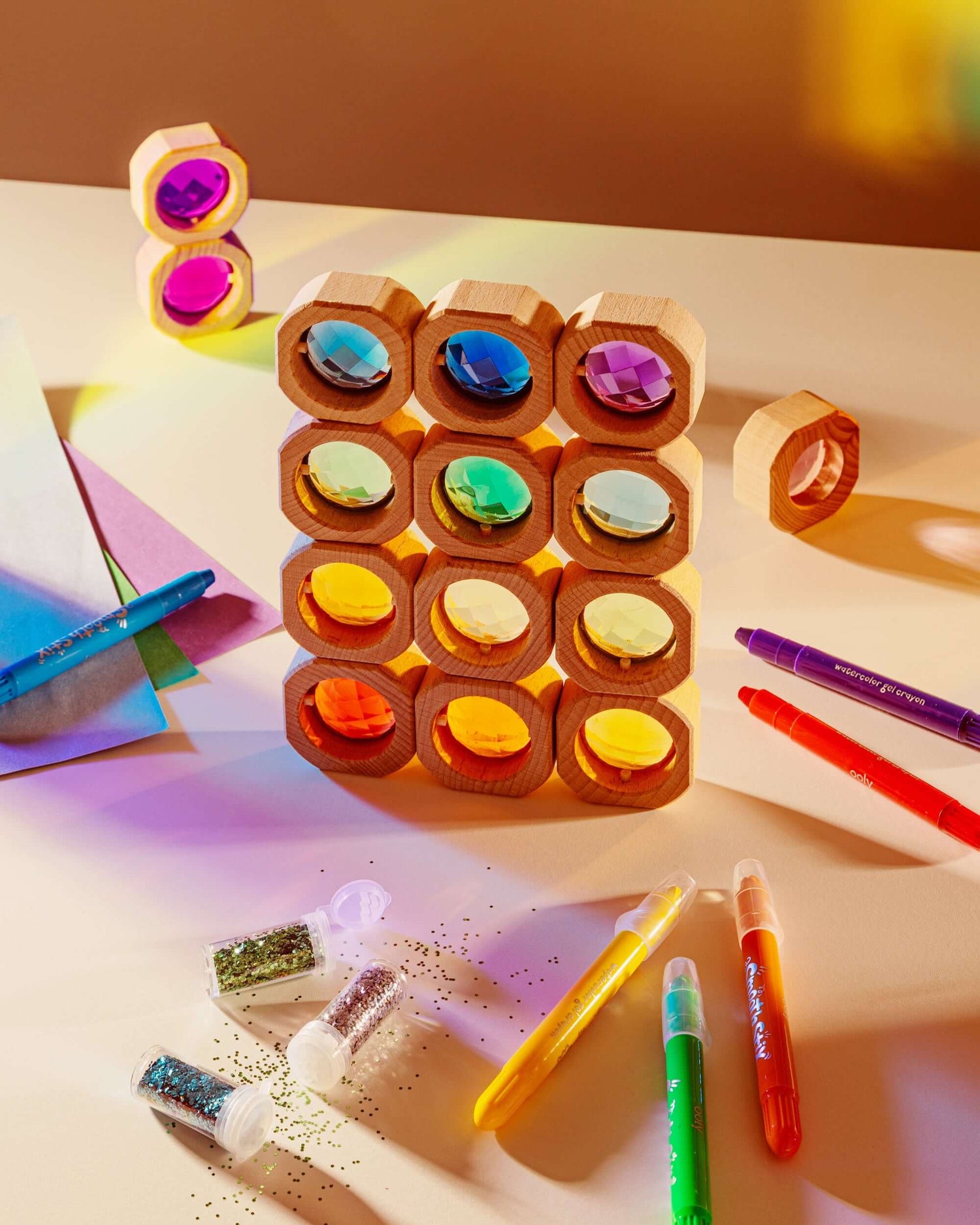
Enchanted Gems (treasure, currency, magical elements)
Toy animals or small figures
Natural materials (pebbles, twigs, leaves)
Small World Play Prompts
🍋 Pretend Lemonade Stand
Use Lucite Cubes as “ice cubes” in cups.
Add:
Play money
Signs
Small cups
Discuss:
“How much does lemonade cost?”
This supports early math and social skills.
🦖 Dinosaur World
Use Lucite Cubes as rocks, lava, or water. Add natural materials from outdoors such as rocks, sticks or leaves. You can also use play-doh.
Create:
Mountain structures
Volcanoes
Forest landscapes
Encourage storytelling:
“What happened before the dinosaurs arrived?”

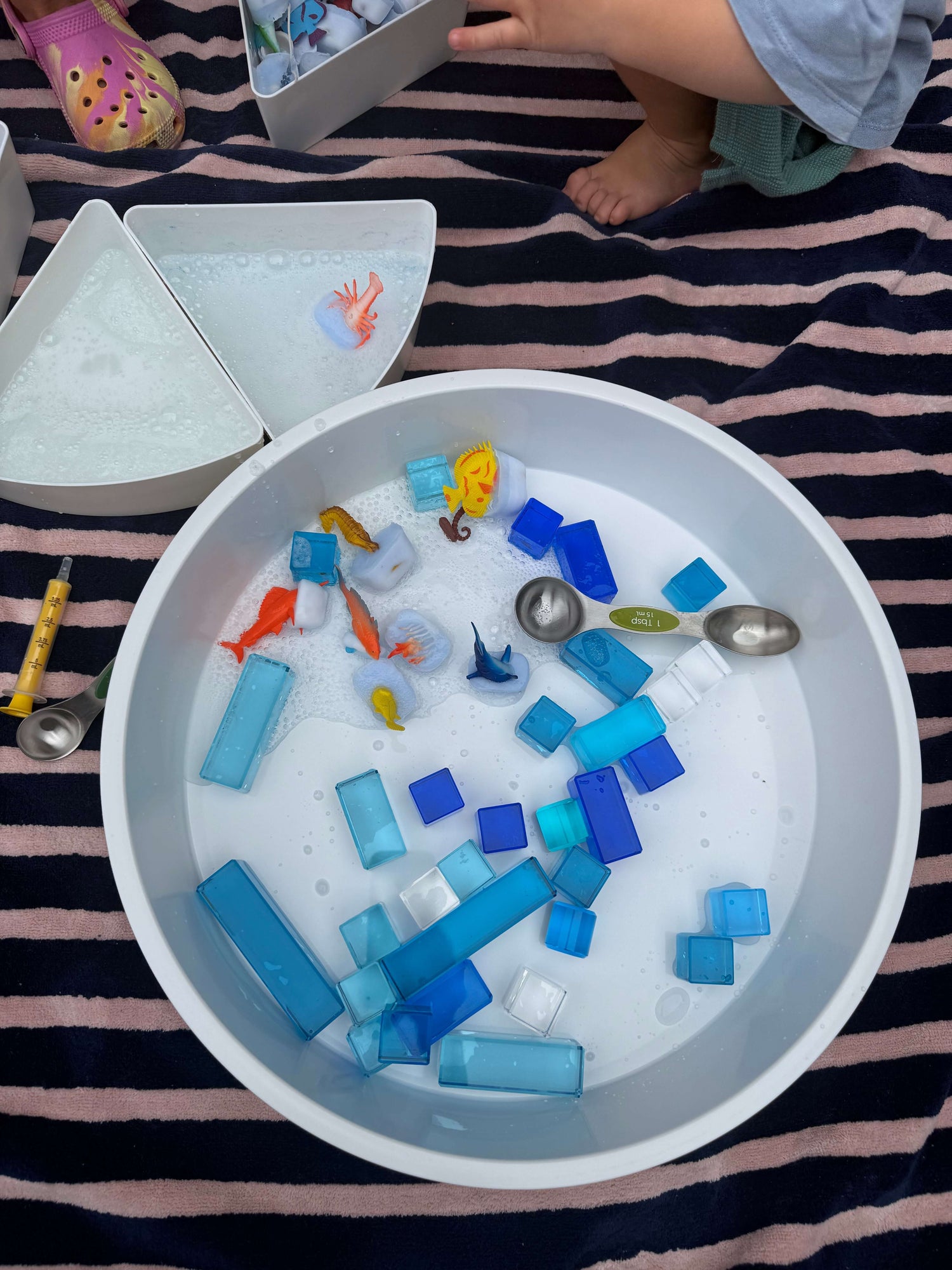
🧊 Antarctica Exploration
Use cubes as icebergs.
Add:
Polar animals
Blue paper for ocean
Extend learning:
“What happens to ice when it melts?”
Try placing a real ice cube in the sun and observe.
🚂 City & Transportation Scene
Use Riley or Barca Blocks as buildings.
Add:
Car tracks
Railroads
Small vehicles
Ask:
“Where are the people going?”
“What buildings do we need in our city and why?”
Encourage Open-Ended Exploration
Allow children to:
Build independently
Collaborate with siblings or friends
Change the story
Rebuild and redesign
There is no “correct” outcome in small world play — and that freedom is where learning thrives.
Why Small World Play Matters
Small world play helps children process emotions, practice language skills, and experiment with social roles.
When children create miniature environments, they are:
Practicing storytelling
Exploring cause and effect
Testing ideas about how the world works
Expressing feelings safely
It’s powerful developmental work disguised as play.
Extend the Learning
After your child builds their scene, follow their interest:
If they build Antarctica:
→ Explore ice melting experiments
→ Read books about polar animals
If they build a city:
→ Learn about community helpers
→ Discuss transportation systems
If they create an ocean world:
→ Read about sea animals
→ Explore water-based sensory activities
Books and real-world exploration deepen their curiosity.
Why Open-Ended Materials Make It Possible
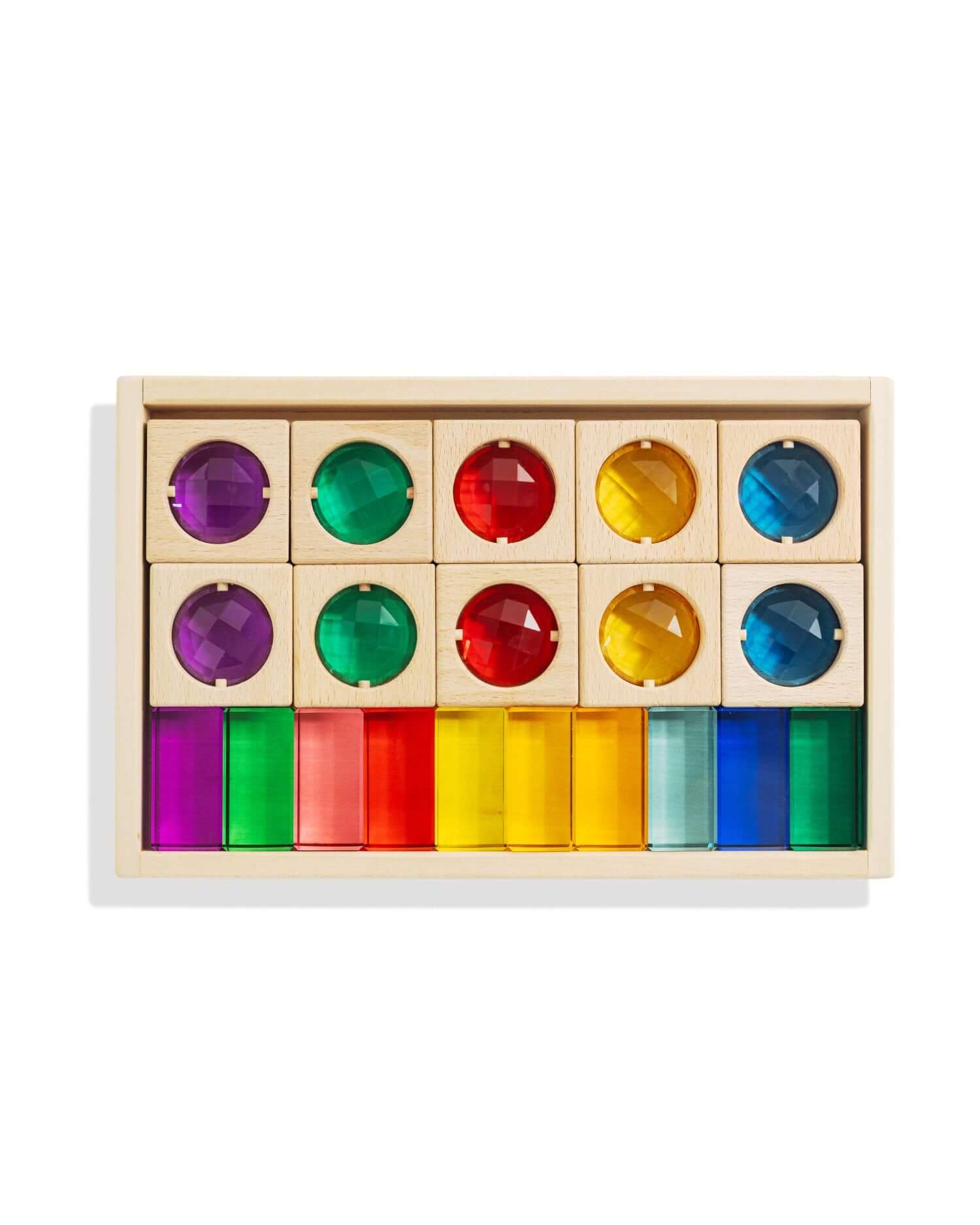
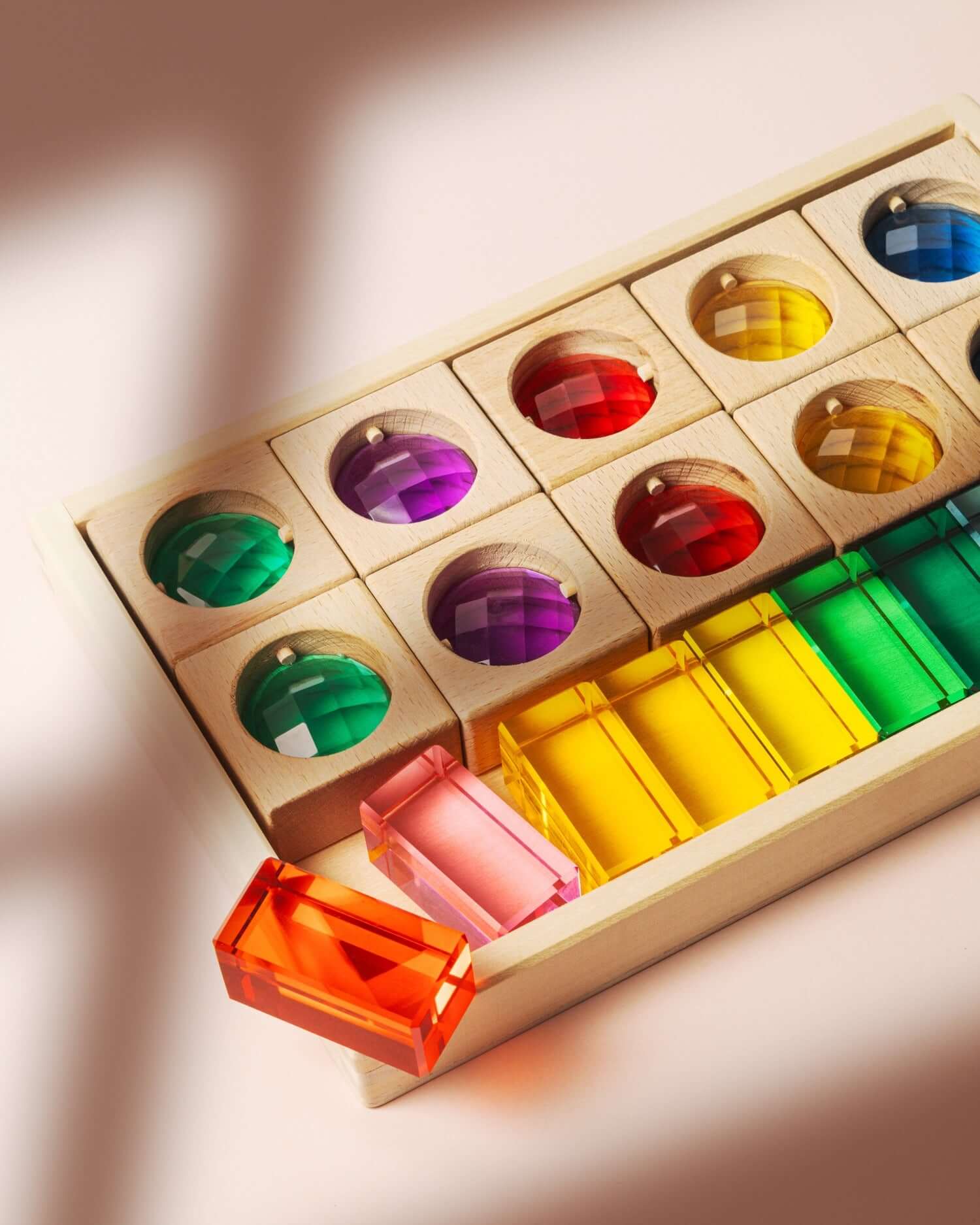
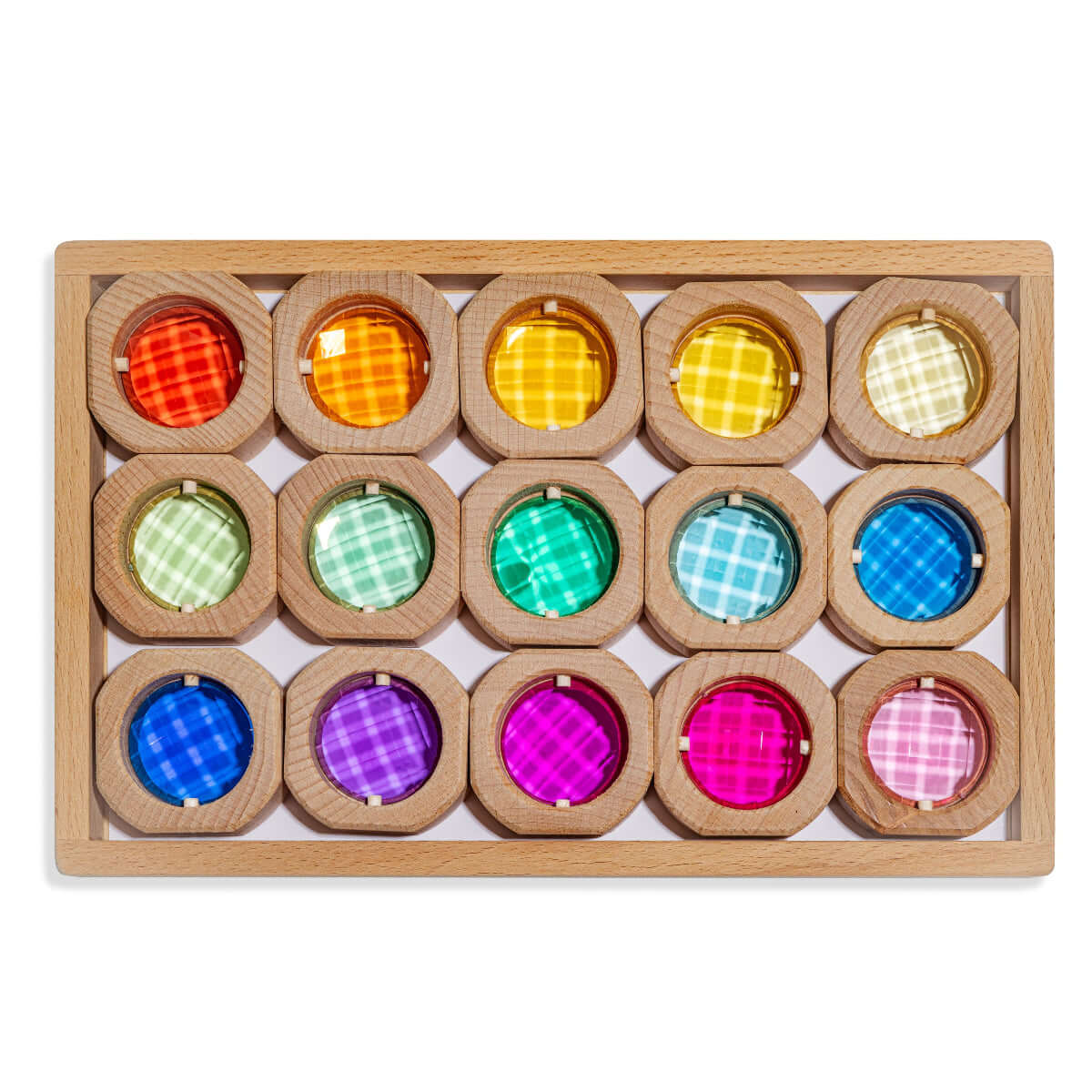
Lucite Cubes, Riley Blocks, Barca Blocks, Bergen Blocks, and Enchanted Gems are designed for open-ended use. Because they aren’t limited to one purpose, they transform easily into icebergs, treasure, buildings, or landscapes — supporting limitless imaginative play.
Shop Open-Ended Play Materials
Explore our collection of building blocks, Lucite cubes, and imaginative play materials designed to support small world exploration.



0 comentarios